
Plenty of people leave the key sitting in the lock at night, convinced it makes the door safer.
The thinking is simple: if there is already a key inside, nobody can push another one in from outside, so it looks harder for a burglar to get in.
The short answer is this: it depends on the type of lock you have.
With a thumbturn cylinder the question never comes up, because you open and close from the inside with the turn knob.
With a clutch cylinder, on the other hand, you can leave the key in without a second thought.
If you have an old lock, it is better to take it out.
And whenever you leave the house, you always take the key with you.
Now let me explain it all in plain words, so you can work out which case is yours and what is worth doing.
In this guide I explain:
- why we think leaving the key in the lock protects us
- the types of cylinder explained simply, including the clutch one
- when it is worth leaving it in and when it is better to take it out
- the myths to clear up, with a table that sums it all up
Why we think leaving the key in the lock is safe
The most common belief is this: if I leave my key turned in the inside of the lock, nobody outside can push another one in.
Many people leave the key in the keyway for exactly this reason, thinking it makes breaking in harder, perhaps impossible.
There is a grain of truth in it, but smaller than it seems.
On a non-clutch European cylinder, a key left inside can stop someone opening from outside with another key, but that is about opening with a key, not real protection against a break-in.
So does the key inside really make you safer? The honest truth is: very little.
At most, with a non-clutch cylinder, it makes it harder to open from outside with another key, but it does not protect against forced-entry techniques such as drilling, pulling out the cylinder or manipulating it.
On an old lock, then, it changes almost nothing.
So the answer to the question people ask on the forums is clear: it is not the key that keeps burglars out, it is the quality of your front door.
The three types of cylinder, explained simply
The cylinder is the part of the lock where you put the key in.
To work out what is best for you, you only need to know which of the three types you have at home.
The standard double-key cylinder is the classic one, which opens with the key from both sides.
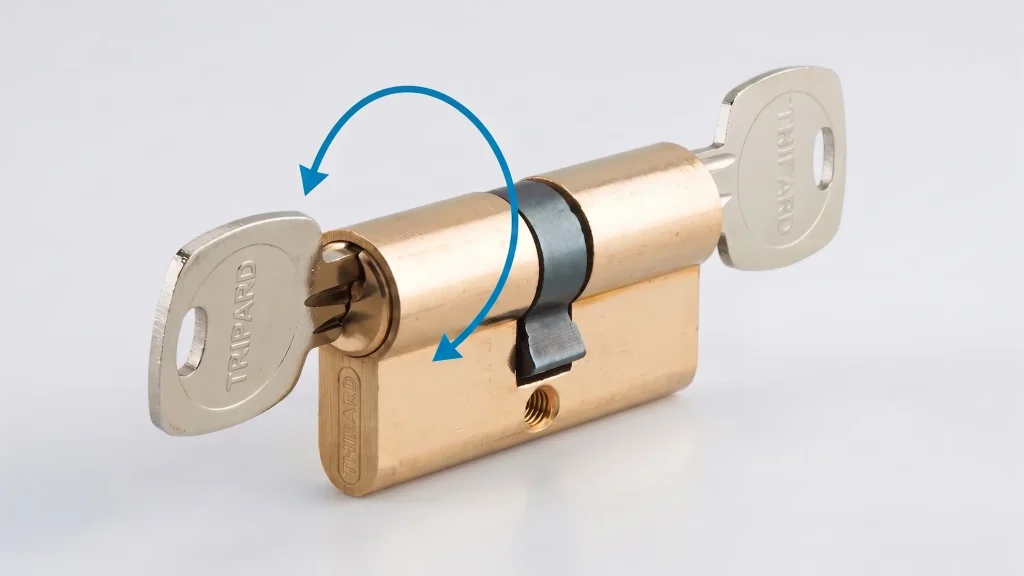
If you leave the key turned inside, you can no longer open from outside, not even with your own copy. This is exactly why people sometimes end up locked out of the house.
The thumbturn cylinder has, on the inside, a round turn knob in place of the keyhole.
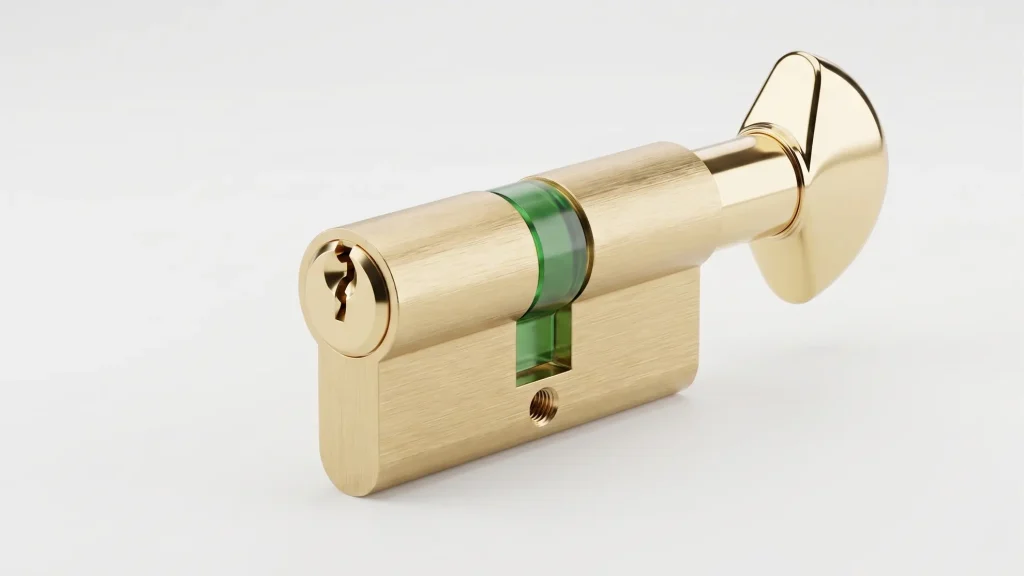
You open and close from inside simply by turning the knob, with no key at all, and in an emergency you get out straight away.
It is convenient and safe on the armoured front door of a home, but you should think twice if there is glazing, small windows or grilles near the door: those are points from which someone could reach the knob from outside.
The clutch cylinder is the cleverest one, with a small internal mechanism, the clutch, that lets you open the door from outside even if the key has been left in on the inside.
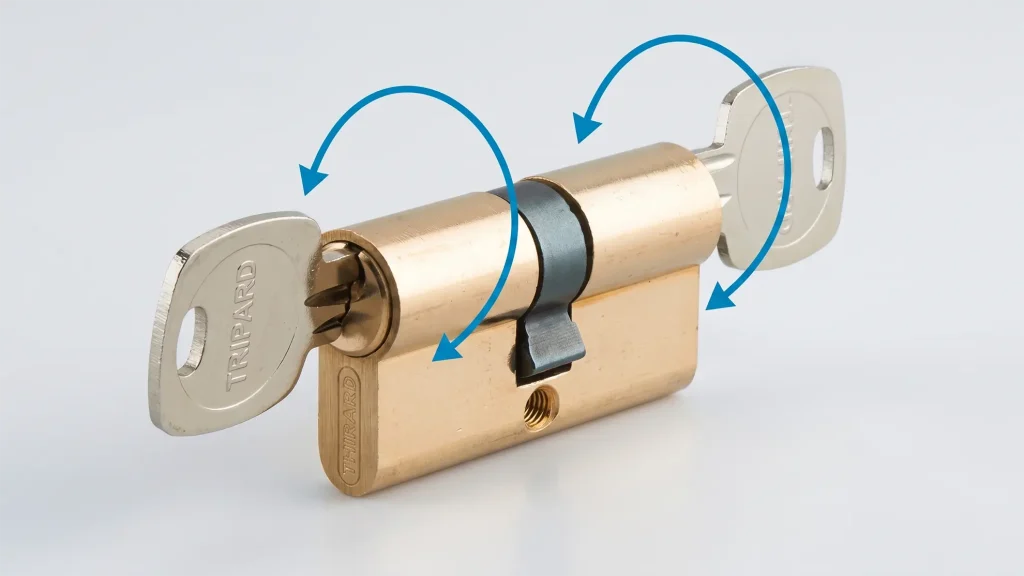
With this type you never get locked out because of a key forgotten in the keyway.
Be careful, though: not every recent cylinder is a clutch one, some have an emergency function and others do not, so it is worth checking yours.
If you want to understand better how it is made and which models are the most reliable, I explain it in the guide on the European cylinder.
When it is worth leaving the key in the lock
Now that you know the three cylinders, the rule becomes easy.
With a thumbturn cylinder there is simply no key to leave, you open from inside with the knob and keep the bunch wherever you like.
With a modern clutch cylinder you can leave it in with complete peace of mind, because the door still opens from outside and you will not get locked out.
With a good-quality European cylinder, at night and while you are at home, it is fine to keep it in, just remembering that as long as it is turned in there, that door will not open from outside.
When it is better to take it out
There are, instead, situations where it is better to take the key out of the keyway.
With an old lock or a double-bit lock, the key inside does not really protect you, it only gives you the illusion of being safe.
An old double-bit lock can be attacked with the Bulgarian key, a technique that works on the double-bit lock itself, rebuilding the profile of the key inside it.
If there are children or elderly people at home, a key turned on the inside can slow down rescuers who need to get in from outside, at exactly the wrong moment.
You will find the same advice on the website of the Italian State Police.
When you leave the house, the key never stays in the lock: lock it with a full turn and take the bunch with you.
The myths to clear up
A few mistaken beliefs go around on this topic, let us sort them out one by one.
“If I leave the key inside, the burglar cannot get in.” False, or almost.
The key in the keyway does not protect against forced-entry techniques such as drilling, pulling out the cylinder or manipulating it, and on old locks it does not stop anyone who knows them.
At most it makes it more awkward to open from outside with another key, but that is a different matter.
“A double-bit lock with the key inside is safe.” False, it is by now a dated lock and the key in the keyway does not change the substance.
If you still have a double-bit lock, the problem is the door, not where you keep the key.
“Always keeping the key in is the most cautious choice.” Not necessarily.
It blocks your escape routes and the way in for rescuers in an emergency, and on many locks it does not add the security you think.
When to leave it in and when to take it out, in brief
Here is the summary of the two things you really care about, whether it is safer and whether you risk getting locked out.
| Type of lock | Does leaving it in make you safer? | Can you open from outside if the key is still inside? | What I recommend |
|---|---|---|---|
| Thumbturn cylinder | The protection comes from the cylinder, not the key | Yes, there is no key on the inside and you open from outside with yours | The most convenient and safest choice |
| Clutch cylinder (to be checked) | Little, the door matters more than the key | Yes, you still open even with the key inside | Feel free to leave it in, but check it really is a clutch one |
| Standard good-quality European cylinder | Little: at most it makes it harder to open from outside with another key | No, as long as it is turned inside you stay locked out | You can keep it in at night while at home, but do not go out without a copy |
| Old lock or double-bit lock | No, it is only a false sense of security | Often no, and you even risk being locked out | Take it out, and consider replacing the door |
Locked out with the key inside?
It happens often: you leave the key turned inside, the door closes and you are outside.
With a standard cylinder, as long as that key is in the inside keyway, you cannot get the other copy in from outside.
The first rule is not to force the armoured door yourself, because you only risk ruining the cylinder and lock and spending more afterwards.
If it is a real emergency, for example a child or an elderly person locked inside, call 112 or 115 straight away: they respond quickly and safely.
For a simple non-urgent opening, instead, people usually call a private locksmith, and bear in mind that some non-urgent technical call-outs by the fire brigade may be chargeable.
At Ariete we build and install armoured doors, we do not carry out emergency openings: but if your door keeps putting you in these situations, it may be time to rethink it.
The door matters more than the key
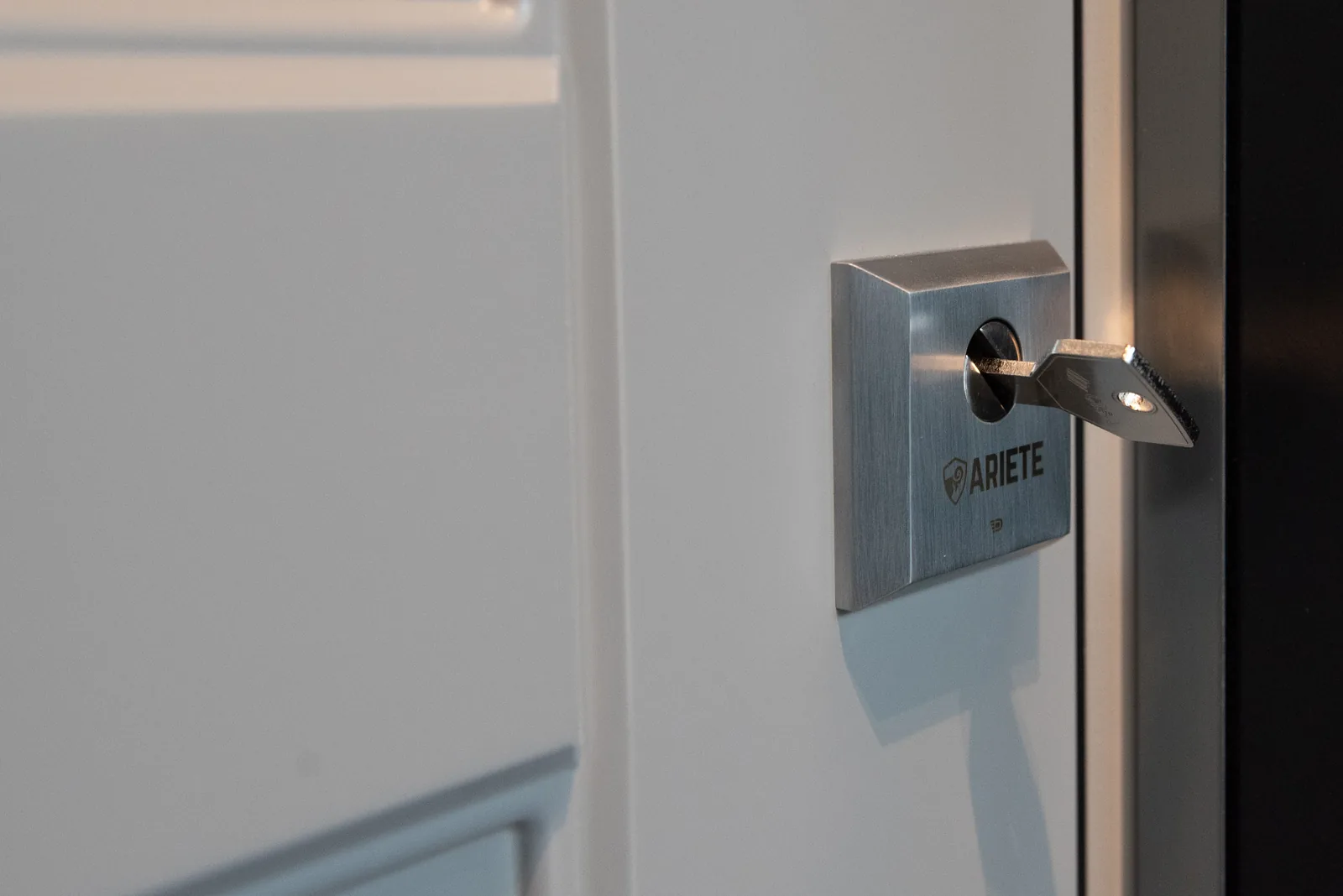
In the end the point is this: where you keep the key matters little if the door is good.
On a serious armoured door the security comes from the whole set of cylinder, defender and lock working together.
Ariete doors come with a patented cylinder, with a key that cannot be copied at just any ironmonger’s: only we duplicate it, once you have proven you are the owner.
Covering the keyway is the square defender with chamfered corners, which hinders attempts to wrench out the cylinder, and I describe it in full in the article on the armoured-door defender.
There is also something that takes away the worry about keys for good: the 5+1+1 system.
If you lose the bunch or it is stolen, with the emergency key you change the cylinder combination yourself, up to twice, and the old keys stop working without you having to replace anything.
Want to work out which armoured door is right for your home? Tell us how your entrance is set up and what you need: a few details are enough to get started.
Conclusion: the door matters more than the key
So, is it better to leave the keys in the lock or take them out? It depends on the cylinder, and now you know how to tell them apart.
With the thumbturn you do not have the problem, with a modern clutch one you can leave it in with no risk, and with a good European cylinder it is fine to keep it in at night.
With an old lock, instead, it is better to take it out, because it only gives you a false sense of security.
And in any case, when you leave the house, you take the key with you and lock it with a full turn.
If you realise your door leaves you in doubt or has already locked you out, the real problem is the door.
Thinking of replacing your armoured door? At Ariete we design and install the complete door, with the lock, cylinder and defender chosen for your home.
Frequently asked questions
Only partly, and only with a non-clutch cylinder. On an old lock it is no use at all and it does not protect against forced-entry techniques. Real protection comes from the quality of the cylinder and defender, not from the key in the keyway.
Nothing bad. The clutch cylinder is designed precisely to open from outside even with the key left in on the inside, so you or a family member can still get in. It is the type that stops you getting locked out because of a forgotten key.
Because the key turned on the inside blocks the mechanism and your copy from outside cannot turn it. Without the clutch, the two keys cannot work together and the door stays closed from outside.
Do not try to force the armoured door yourself, you risk ruining the lock and cylinder. If it is a real emergency call 112 or 115 straight away; for a non-urgent opening you usually need a private locksmith, and some non-urgent call-outs by the fire brigade may be chargeable.
In a fixed spot, away from the door and the windows and out of sight. If you have a thumbturn cylinder you open from inside without a key and the question does not even arise.
