
Do you live in a historic building and your front door lets the noise through, lets the air in and never quite makes you feel safe?
The trouble is that doing something about it is not so simple.
In historic settings, especially in the centres of cities such as Milan, Rome, Genoa or Florence, you cannot overturn the look of the door, let alone disrupt the harmony of the building.
That is why many people give up on improving their door, settling for compromises on comfort and security.
In this guide we look at what you can really do and how to choose a made-to-measure armoured door that improves security and comfort without altering the original appearance.
In brief
If you live in a historic building and want to replace your front door, here is what you need to know straight away:
- Yes, you can fit an armoured door, even in historic buildings
- You must respect the architectural character, keeping a consistent look on the landing side
- A made-to-measure job is almost always needed, because door openings are often non-standard
- You can genuinely improve security, acoustic insulation and thermal insulation
- The cost starts at around €3,500 + VAT and can reach €6,000-7,000 for made-to-measure or electronic solutions
In other words: you can have a door that is completely new in performance, yet identical in its outward appearance.
Armoured doors in historic buildings: what are the challenges?
When you live in a historic building, the front door is almost always a weak point. And in practice, the problems are always the same.
The first is the look: you cannot change it freely.
If you fit a modern door that differs from the existing ones, you risk immediate objections from the other residents. In many cases you are required to keep the same appearance, at least on the landing side, precisely so as not to alter the harmony of the period building.
Then there is the matter of the measurements.
Door openings in historic buildings are rarely standard: they are often taller, wider or slightly out of square. This makes off-the-shelf solutions unusable and calls for made-to-measure work.
From the point of view of comfort, the situation is even more obvious.
Old doors do not insulate: they let the noise through from the landing, let cold air in and often smells from the stairwell too. It is something you notice every day, especially in older, well-used blocks of flats.
Finally there is security.
Many of these doors were fitted decades ago and are not designed to resist today’s break-in attempts. Dated locks and flimsy structures leave them, in effect, vulnerable.
The result is always the same: you have a door that does not really protect you and does not give you comfort, but which at the same time you cannot replace freely.
And this is exactly where the need to find a properly designed solution comes from.
Can you fit an armoured door in a historic building?
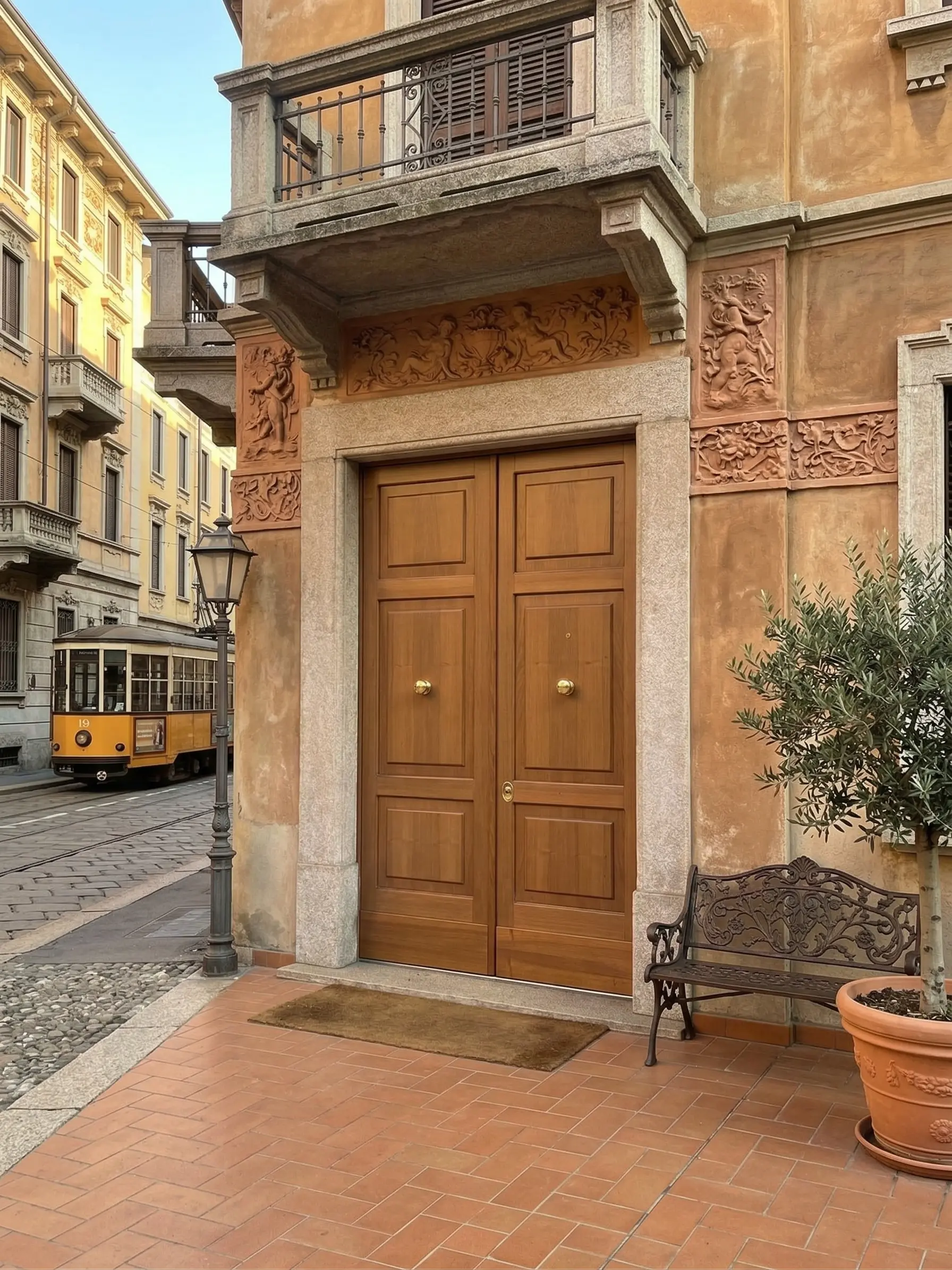
The answer is yes, you can fit an armoured door even in a historic property.
But it is not a completely free-for-all job: there are some rules to respect.
The main reference is the architectural character of the building, protected under Italian law by art. 1120 of the Italian Civil Code, which prohibits works that could alter the appearance of the building in its common parts.
The front door, being visible from the landing, falls precisely within this context.
In practice, you can replace the door and completely improve its security and performance, but the external look must stay consistent with the original or with the other doors in the building.
That is why, in most jobs, the panel on the landing side is reproduced, keeping the same style, colour and finish.
Inside the flat, on the other hand, you have far more freedom. As it is a private part, you can choose materials, colours and design without any particular constraints.
Another aspect to consider is the building’s rules. Under Italian law, art. 1138 of the Italian Civil Code allows residents to set specific rules on the appearance of the common parts, so it is always wise to check for any restrictions before going ahead.
In the most sensitive cases, such as buildings subject to historic or artistic listing, Italy’s Legislative Decree 42/2004 (the Italian Cultural Heritage and Landscape Code) also comes into play. In these situations, you may need to follow more precise guidance or obtain specific authorisations, especially if the work is visible from the outside.
In short, fitting an armoured door in a historic property is almost always possible, but it must be done with respect for the setting.
When the work is designed correctly, you can improve security and comfort without creating any problem with the other residents or with any heritage rules.
What an armoured door for historic buildings should be like
In buildings in the historic centre, not every armoured door is suitable.
Here you need a made-to-measure solution, one that can respect the existing look without giving up on security and comfort.
So let us look at what features a front door for homes in historic buildings should have.
An external panel as close as possible to the existing one
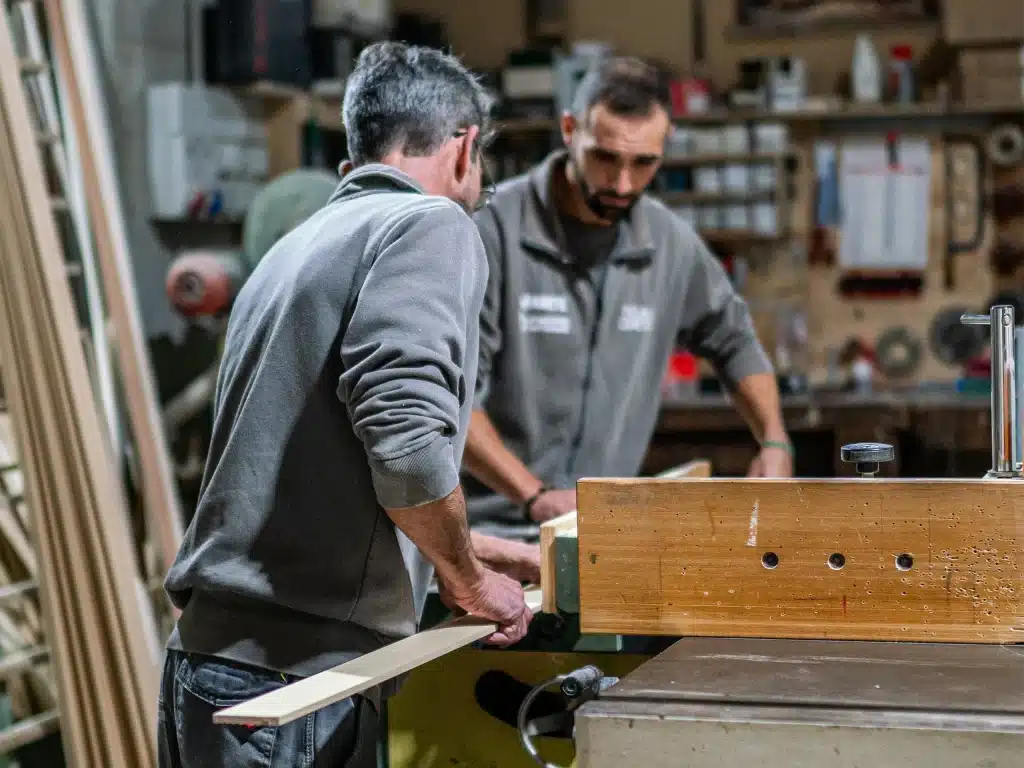
Ariete joiners making a panel for a historic building
When working on buildings of historic value, an armoured door has to solve real problems, not just “be more secure”. And to do that, it has to be precisely designed on several levels.
Let us start with the look on the outside.
It is the most obvious constraint and, often, the most delicate.
In many cases the door has to look identical to the original one, especially in blocks of flats with a strong visual uniformity.
To achieve this result it is not enough to choose a similar panel: you need the ability to faithfully reproduce the existing shapes, finishes and details.
This is where it makes all the difference to have an in-house joinery workshop, as in Ariete’s case, which makes it possible to produce made-to-measure panels that replicate the door’s original appearance, even in the most restricted settings.
Maximum security
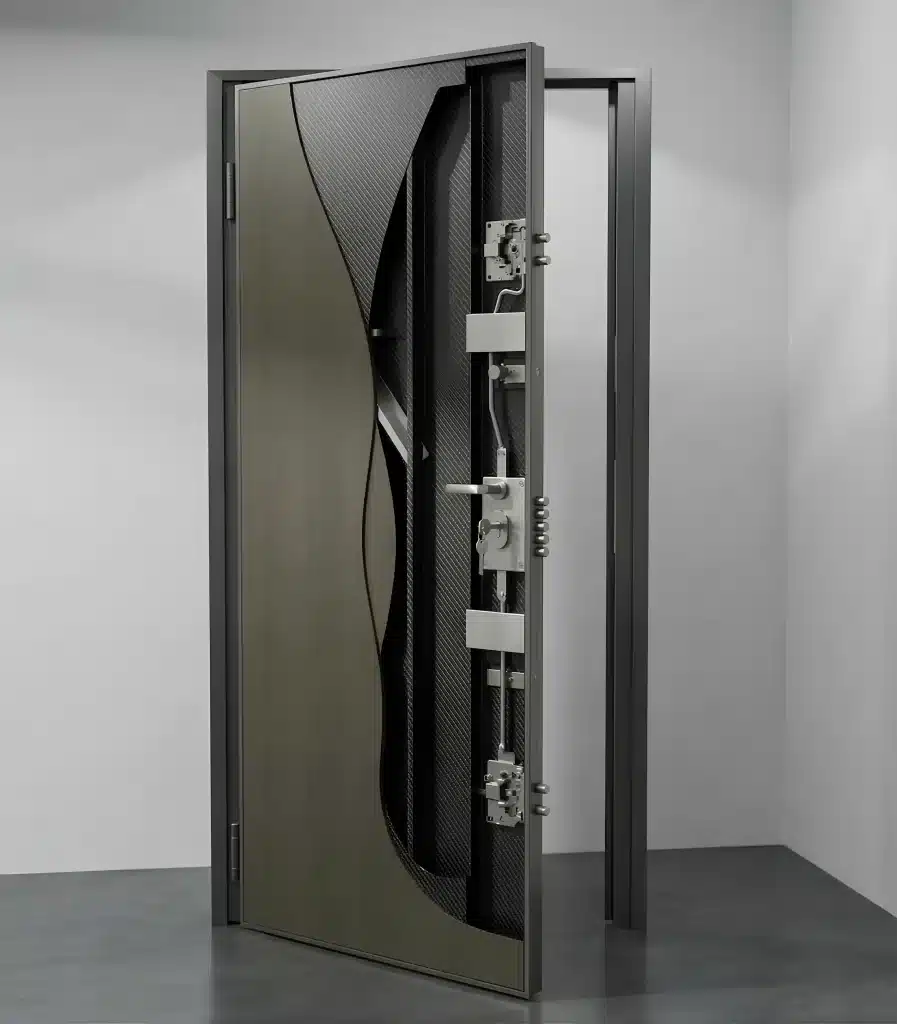
When it comes to security, the difference lies entirely in how the door is built.
A modern armoured door is not just “heavier”: it is designed to resist real break-in attempts.
We are talking about double-sheet steel structures, internal reinforcements that stiffen the leaf, and multi-point locking systems that secure the door on several sides.
To this you add essential elements such as the high-security European cylinder, protected by square defenders, and locks with deadbolts and anti-lever lips that increase resistance to forced entry.
In a block of flats, where the landing is an accessible space, this aspect becomes even more important.
Thermal and acoustic insulation
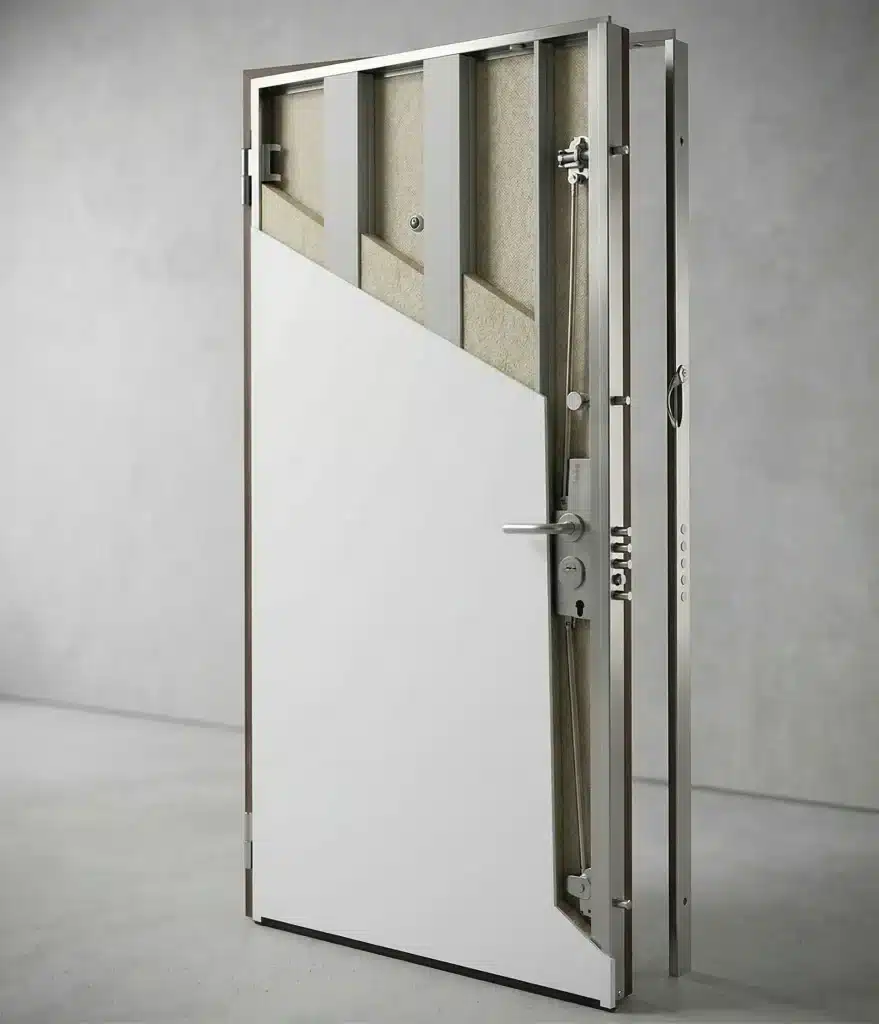
Living comfort is another key point, often underrated until it is finally sorted out.
A well-designed armoured door can deliver acoustic insulation in the region of 39-46 dB, sharply cutting the noise coming from the stairwell, and thermal transmittance (U-value) figures down to around 0.5-1.7 W/m²K, improving resistance to draughts and heat loss.
This is possible thanks to insulating panels, high-seal gaskets and details such as the draught-excluder blade.
Often non-standard measurements
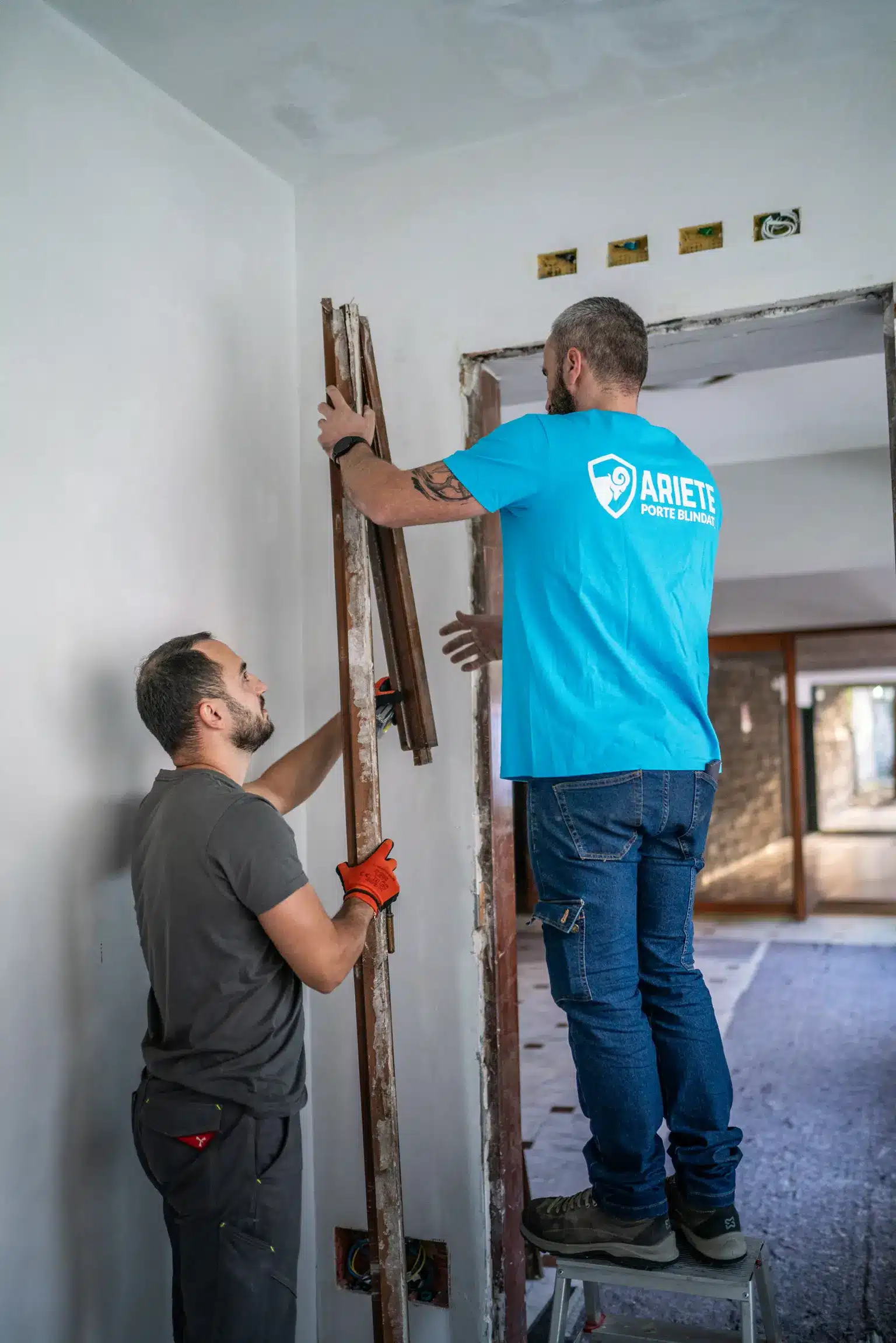
Ariete technicians fitting an armoured door in a historic building
Finally, there is the question of measurements.
In historic blocks of flats it is the norm to find non-standard door openings: the wrong size, out of square, or with walls that are not perfectly aligned.
In these cases adapting a door is not enough: you need a made-to-measure design and precise fitting.
This is why it is essential that the installation is carried out by technicians prepared to work in these settings.
In Ariete’s case, for example, the fitters are trained at the Accademia della Posa in Genoa and work every day on complex situations, where precision and adaptation make the difference.
In short, an armoured door for a historic architectural setting has to manage three things at once: respect the existing look, genuinely raise the level of security, and improve living comfort.
And it is precisely in the balance between these aspects that a truly well-designed solution stands out.
Examples of Ariete doors fitted in historic buildings
So far we have seen what can be done and which aspects to consider. But you really understand the difference when you see real applications, in concrete settings.
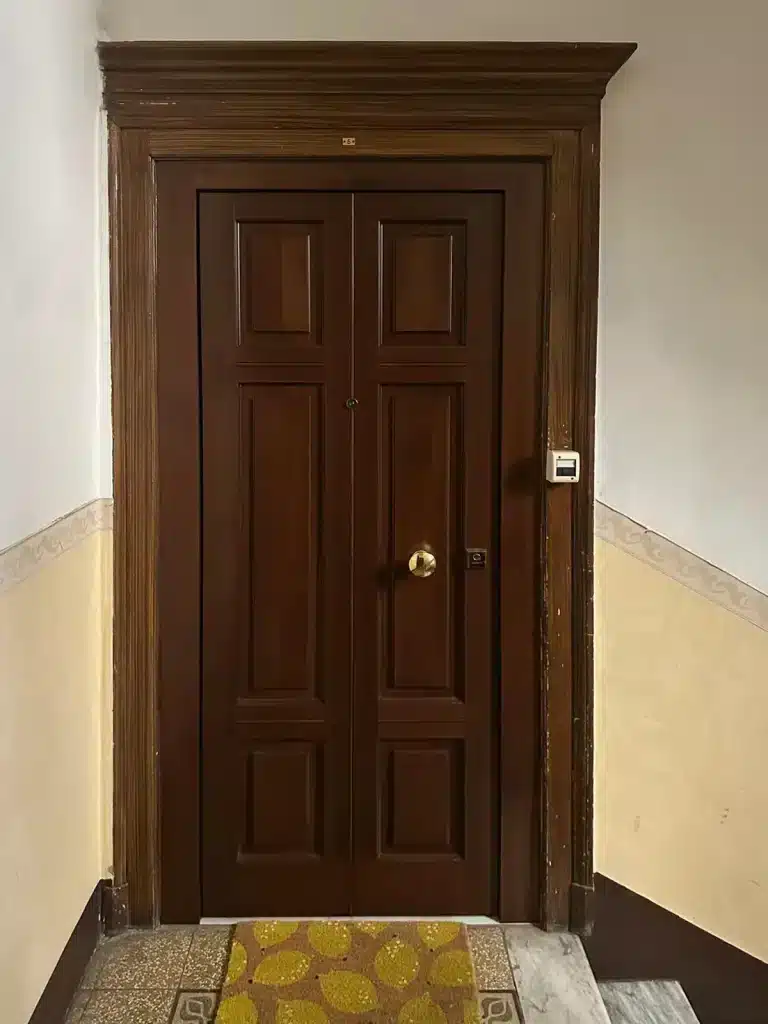
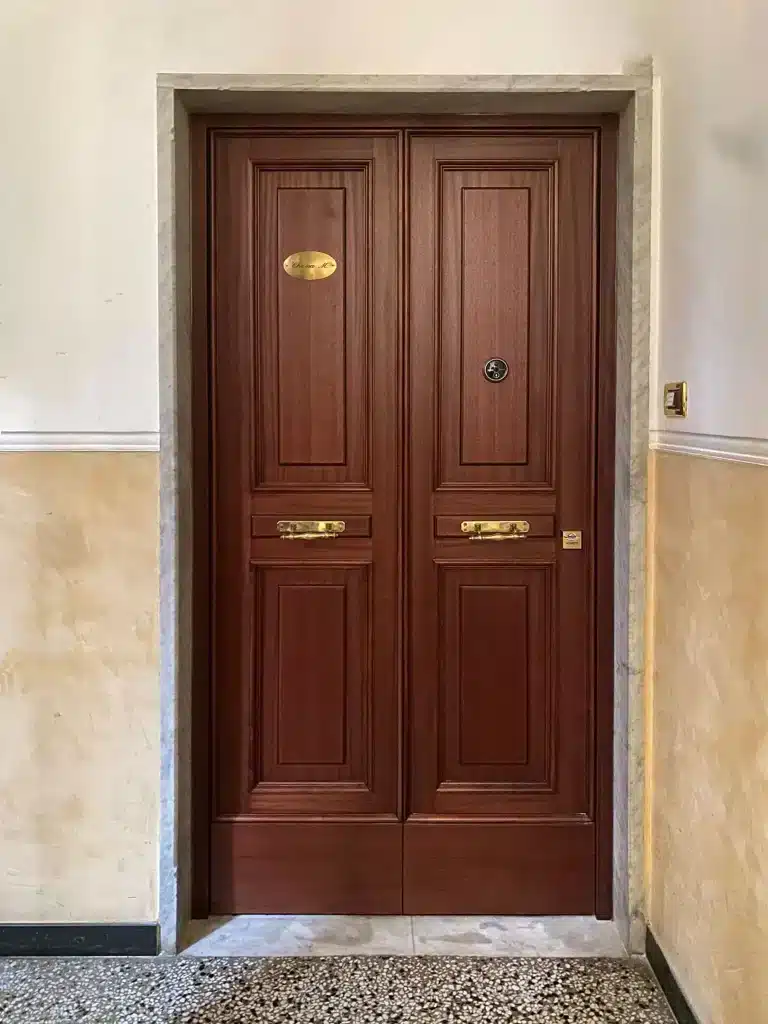
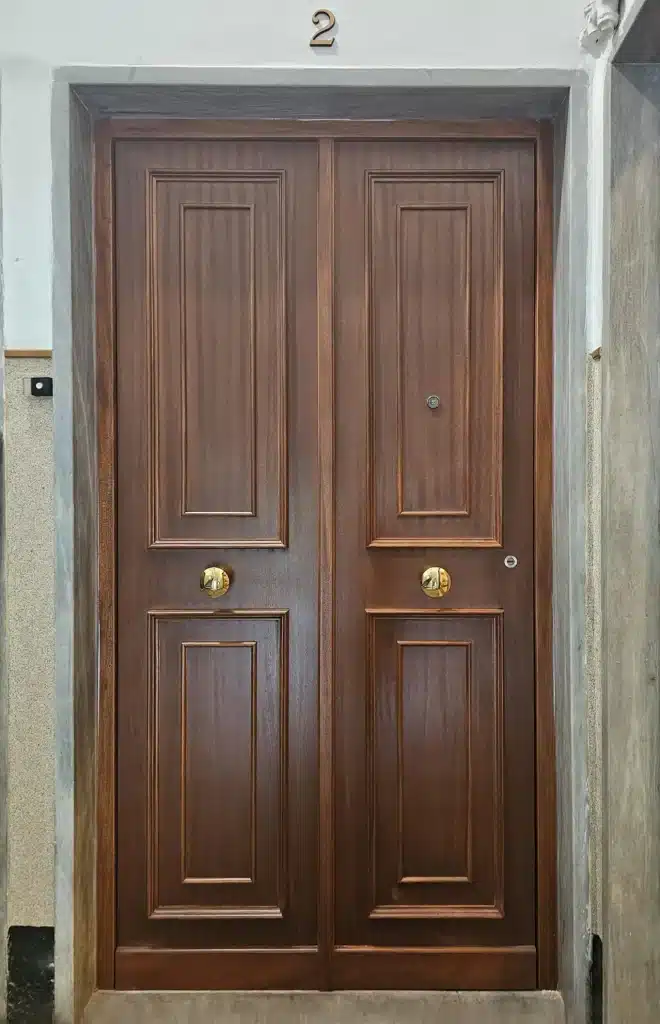
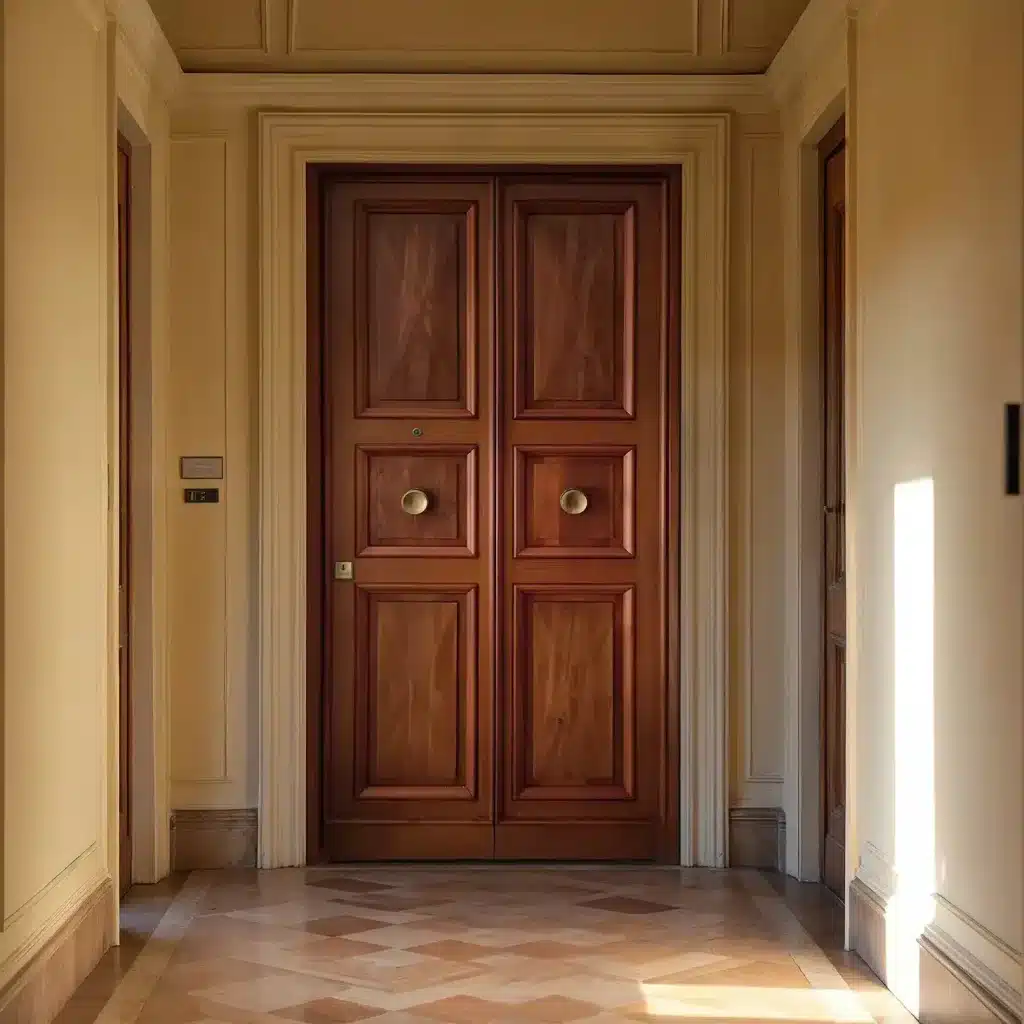
In recent years, Ariete has fitted many armoured doors in flats inside period buildings across various Italian cities, working on situations that are often very different from one another: entrances with original panels to preserve, irregular door openings, precise requests from the other residents or particularly strict aesthetic constraints.
In many cases, the job started precisely from dated doors, which let in air and noise and offered a level of security long since superseded. The aim was not just to replace them, but to genuinely improve comfort and protection, while keeping the exact same visual impact from the outside.
The result is what you would expect from a job done well: from the inside you notice the improvement in insulation and solidity straight away, while from the landing the door still looks perfectly consistent with the others in the building.
In the examples that follow you can see some real projects, with solutions chosen case by case to respect the setting and improve security and comfort.
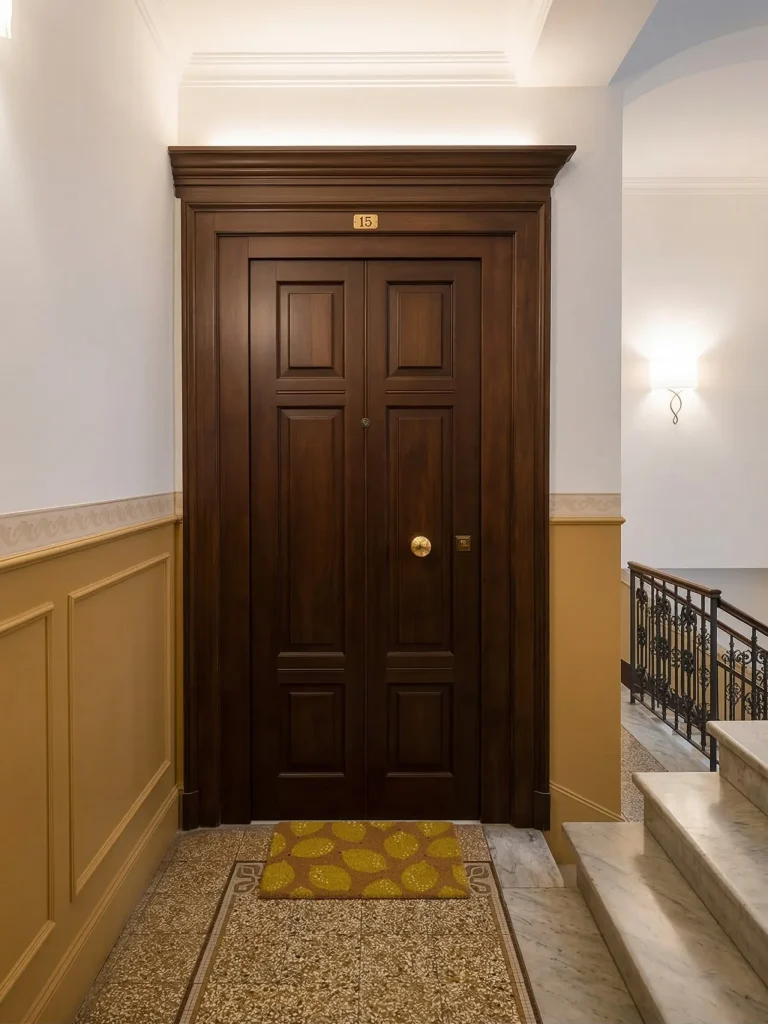
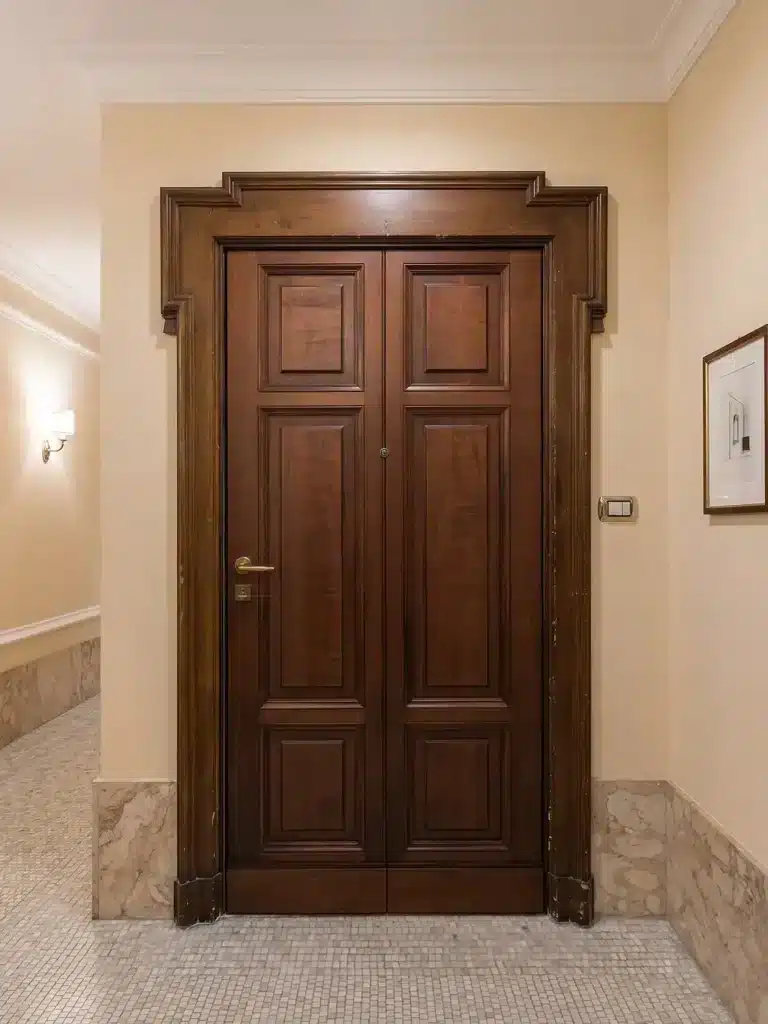
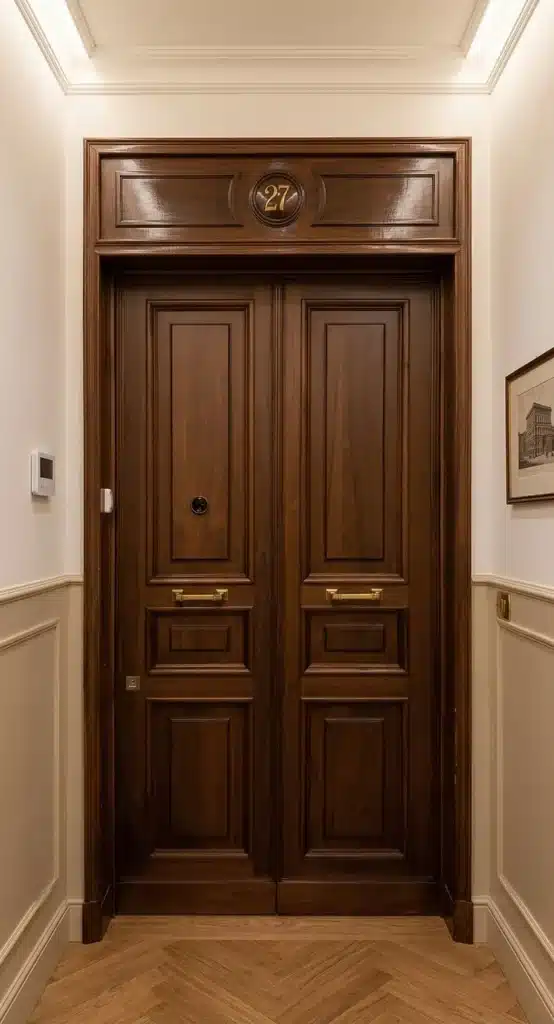
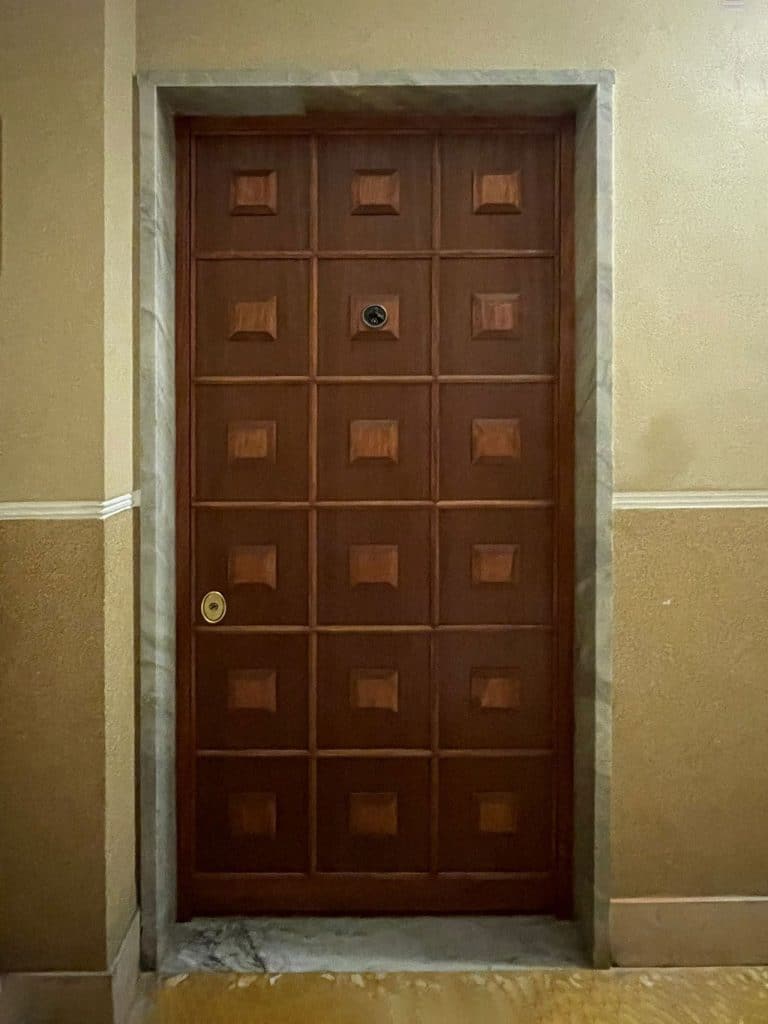
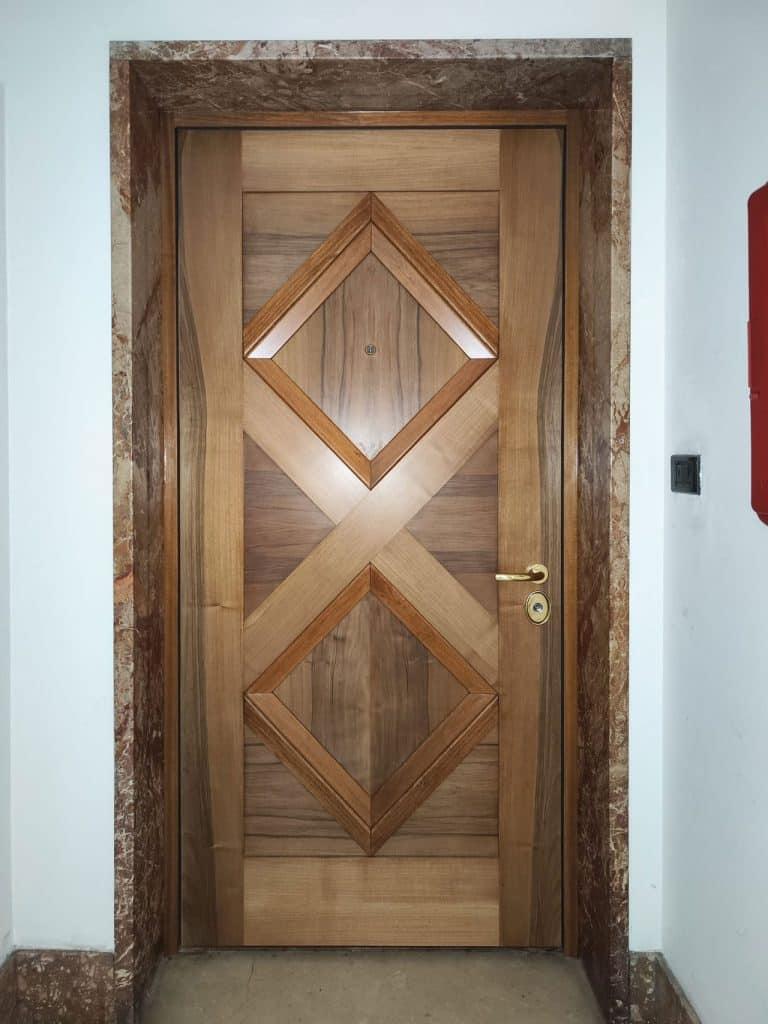
Armoured doors for period buildings in the main Italian cities
The needs of those who live in a historic building are similar across Italy, but each city has specific features that influence the choice of armoured door.
Understanding these differences helps in finding the solution best suited to the setting.
In Milan, for example, many period buildings have entrances in the “Old Milan” style, with wooden front doors and highly recognisable details. Here the attention to looks is very high and the door has to blend in perfectly with the existing ones, especially in the typical balcony-access buildings or in the more central settings.
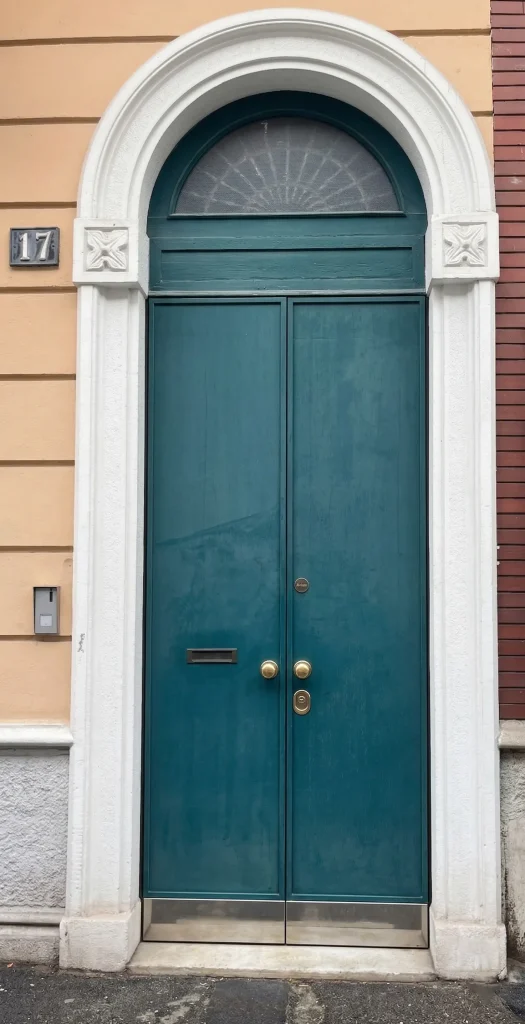
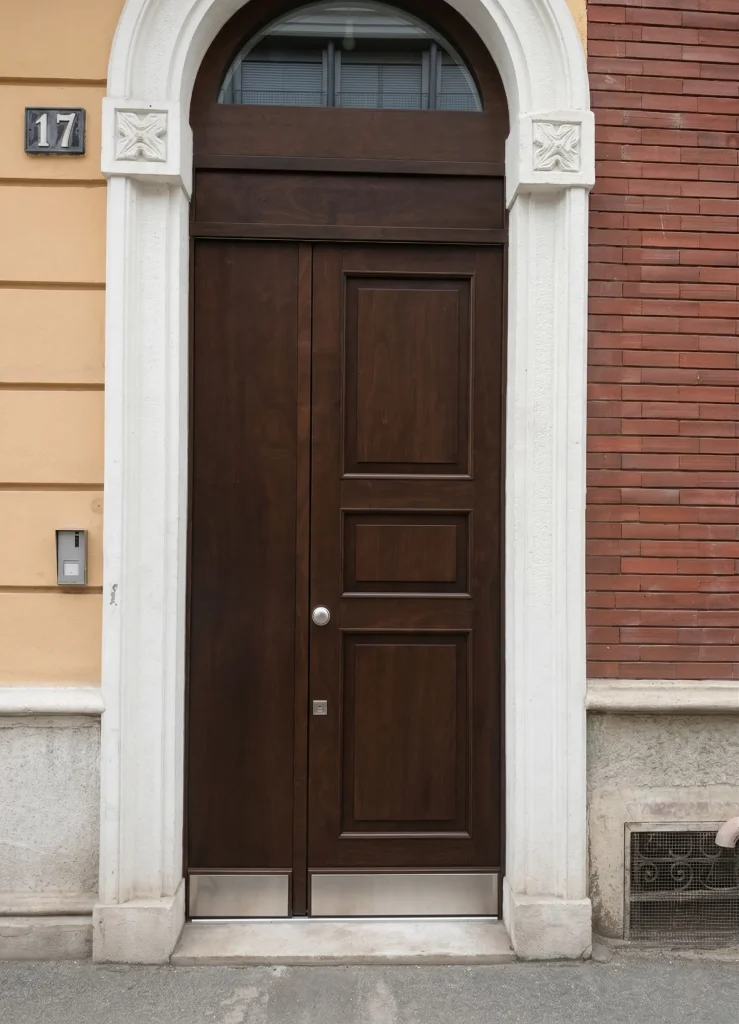
Before and after – armoured door fitted in Milan in a historic building, with a new look chosen by the customer.
In Rome, in most cases, especially in the historic centre, the tendency is to keep the exact same appearance as the existing door.
However, when the setting allows it and there are no specific constraints, you can also choose a different external panel, more up to date or more in line with your own taste.
In the example below, carried out in Rome, the customer chose to completely renew the look of the door, while keeping all the features needed to blend into the setting of the building.
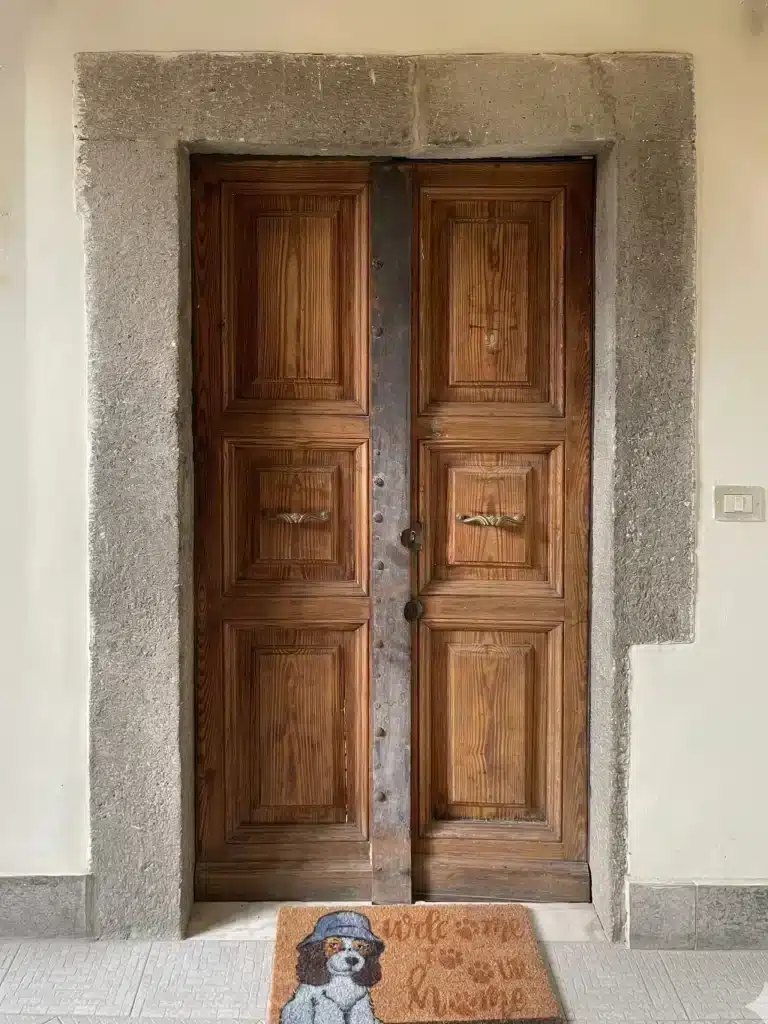
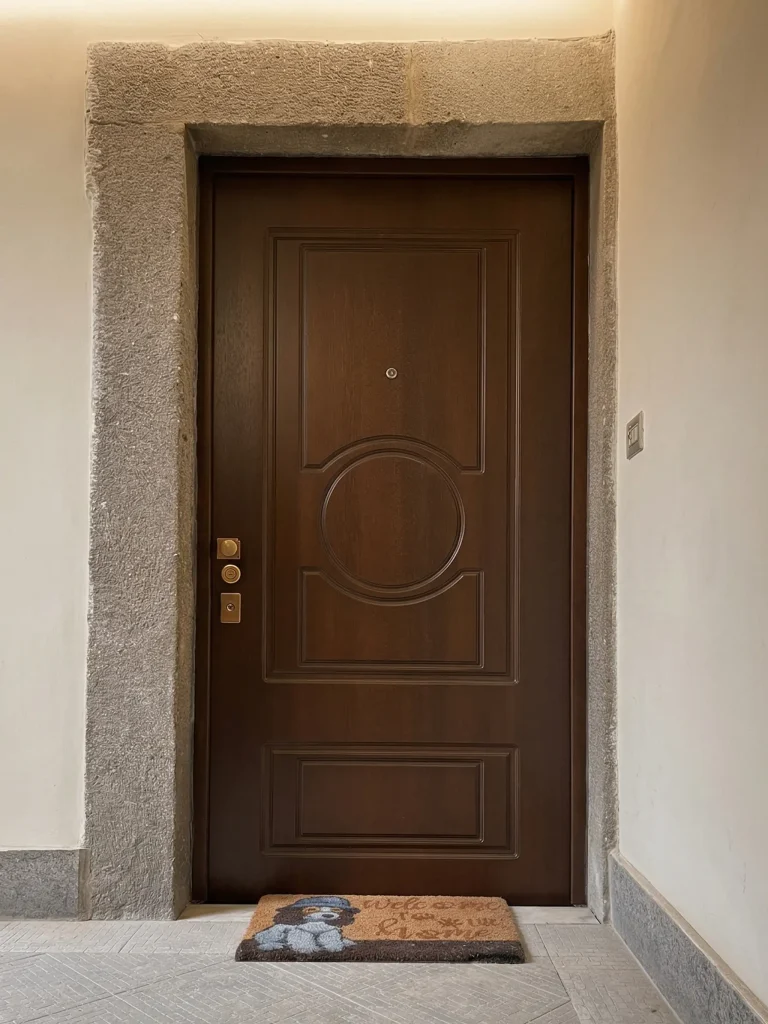
Before and after – rustic armoured door in Rome in a property of historic interest, with a new look chosen by the customer.
In Genoa, on the other hand, it is very common to find irregular door openings, narrow landings and very dated doors. Here the difficulty is not only aesthetic but also technical: made-to-measure work and precise fitting are needed to adapt to often complex spaces.
In Florence and Venice, finally, the main theme is the balance between conservation and updating.
These are settings with strong historic value, where every intervention has to be discreet and consistent. Here too, the ability to faithfully replicate the existing look is essential.
Beyond the differences between cities, the principle always stays the same: in historic buildings there is no standard solution.
Every door has to be designed around the building it goes into, respecting its identity while genuinely improving its performance.
How much an armoured door for a historic building costs
When it comes to historic buildings or buildings with architectural constraints, the price of an armoured door is never standard, because every job is different. Even so, it is possible to give an order of magnitude to help you get your bearings.
An armoured door designed for this kind of setting generally starts at around €3,500 + VAT for already good-quality basic solutions. From there, the price can rise depending on the customisations and the features required.
One of the elements that weighs most is the external panel. When you need to faithfully replicate an existing door, with particular work, raised panelling or specific finishes, the cost can rise significantly. In some cases, a very elaborate external panel can add up to €1,500 to the total value.
The technical configuration of the door also affects the price.
More advanced security systems, high-end components and better-performing insulation solutions all push up the overall level, and with it the cost.
If you then enter the world of electronic armoured doors, with opening by fingerprint, smartphone or other smart systems, the price can climb further still.
In these cases, a complete door can reach as much as €6,000-7,000, especially when you combine advanced security, electronics and made-to-measure work.
| Type of door | Indicative price | When to choose it | Main features |
|---|---|---|---|
| Basic armoured door (standard) | from €2,900 + VAT | Flats without particular constraints | Class RC3, steel structure, European cylinder, basic insulation |
| Advanced armoured door for blocks of flats | from €3,500 + VAT | Prestige settings with aesthetic requirements | External panel replication, class RC3 or RC4, defender, improved acoustic and thermal insulation |
| Made-to-measure armoured door for historic buildings | from €4,000 + VAT | Non-standard openings or major aesthetic constraints | Reinforced structure, made-to-measure replicated panel, insulation up to ~40 dB, specialist fitting |
| Armoured door with complex handcrafted panel | from €4,500 + VAT | Historic doors with particular work | Faithful reproduction by in-house joinery, handcrafted work (adding up to +€1,500) |
| Electronic armoured door | from €5,500 + VAT | Those who want maximum comfort and technology | Opening by fingerprint/app, access management, class RC3/RC4 structure, advanced security |
In short, more than the price itself, it is important to understand what lies behind it: a door for a historic building is not a standard product, but a project designed to blend perfectly into the setting and genuinely improve security and comfort.
Armoured doors in historic buildings: frequently asked questions
Yes. You do, however, need to respect the building’s architectural character, keeping a look consistent with the other doors, especially on the landing side.
Not always. If the new door keeps the same external appearance, formal authorisation is usually not required. Even so, it is always advisable to check the building’s rules.
It depends on the setting. Where there are aesthetic constraints or in historic centres, you often have to replicate the existing panel. If, on the other hand, there are no particular restrictions, you can choose a different design.
A modern armoured door can blend in perfectly even in an old building, provided it is designed in the right way.
The key point is to keep the look on the outside consistent with the original, replicating existing panels, finishes and details.
This way, from the outside the door stays visually identical, while inside it changes completely in terms of security, insulation and comfort.
In short, you can have an armoured door that looks very old and prestigious on the outside, and very modern and minimal on the inside.
Yes, and it is the most widely used solution. Thanks to made-to-measure work and in-house joinery, it is possible to faithfully replicate the panels, finishes and details of the original door.
Yes. A quality armoured door can significantly reduce the noise coming from the landing, with acoustic insulation levels that can exceed 40 dB.
Timescales vary with the complexity of the project. Generally, from order confirmation to installation it can take 9-12 weeks, especially for made-to-measure work. The installation itself, on the other hand, takes a day, barring surprises.
Yes, it improves security, comfort and the overall feel of the home, and also increases its appeal if you come to sell.
Yes, if the work is designed correctly, the job can be carried out without invasive changes.
Yes, replacing an armoured door falls under the tax relief provided by the Italian Renovation Bonus.
In 2026 you can recover 50% of the cost for your main home or 36% in other cases, with the deduction spread over 10 years.
Both the door and the installation are included, provided payment is made by traceable bank transfer and everything is documented.
For more information, read the article on the Italian tax deduction for armoured doors.
If the existing opening is in good condition, the installation can be carried out without any building work.
The job mainly involves removing the old door and fitting the new one, with any adjustments to the opening.
The fitting generally takes a day and the disruption is limited.
In the most complex cases (for example with subframes built into the wall), the work may require additional jobs, but it is always managed to keep the impact in the home to a minimum.
The simplest way is to ask for an assessment of your specific case.
Every historic building is different, and only a proper assessment makes it possible to define the most suitable solution.
You can fill in the form on the site and receive an initial consultation, or arrange an appointment with a technician directly.
This way you can understand from the outset what can be done, which solutions to adopt and have an accurate quote.
Conclusions
Fitting an armoured door in homes inside historic buildings is absolutely possible, but it calls for a different approach than in a modern setting.
It is not just about replacing a door, but about working precisely on looks, security and comfort, while at the same time respecting the building’s rules.
We have seen how essential it is to keep visual consistency on the outside, adapt to often non-standard openings and choose solutions that genuinely improve the insulation and protection of the home.
In the same way, we have understood how much the installation matters, especially in complex settings like those of properties of historic interest.
When all these elements are handled correctly, the result is a door that from the outside looks identical to before, but which on the inside completely changes the way you live in your home.
If you are considering a job of this kind, our advice is to start from a concrete assessment of your specific case. Every building has its own features, and only a proper assessment makes it possible to understand which solution is really suitable.
If you live in a historic building and are thinking about buying an armoured door, our advice is to talk to a technician and look at your specific case.
Fill in the form below, get a personalised quote and receive a made-to-measure proposal.
