
Which burglar deterrents actually stop a break-in, and which ones only give you the illusion of being protected?
Let me tell you straight away, no beating around the bush.
The best burglar deterrent is anything that makes a thief waste time and raises the risk of being seen or caught. A burglar is not looking for a challenge: they want an easy, quick job. If your home costs them too many minutes and too much exposure, they move on and go somewhere else.
The trouble is that half of what you read online about burglar deterrents is overhyped. Some solutions work very well, others are theatre that an experienced burglar sees through in three seconds. And spending on the wrong ones leaves you with a lighter wallet and a home that is just as exposed as before.
In this guide I will explain:
- how a burglar thinks before choosing a home
- the deterrents that really work, in order of effectiveness
- the overrated ones, which only make you feel safe
- the zero-cost tricks that are often worth more than a purchase
Let us go through it point by point, starting with how the person who wants to open that door thinks.
What burglar deterrents are and how a burglar thinks
A burglar deterrent is anything that discourages a break-in before it even begins. It can be physical, electronic or even just behavioural.
To work out which ones work, you need to get inside the head of the person breaking into your home. A burglar targeting a property always weighs up four things, in a few seconds, before deciding.
Time: how long it takes to get in. If the front door holds out for a few minutes instead of giving way at once, the burglar’s calculation changes completely.
Noise: how much of a scene it makes. A breaking pane of glass or a whirring drill are signals that draw attention, and attention is their worst enemy.
Visibility: how exposed they are while working. A well-lit, visible spot forces them to operate out in the open, and nobody wants to be seen forcing an armoured door.
The risk of being caught: the sum of everything else. The higher it is, the sooner they give up.
Every serious deterrent acts on at least one of these four fronts. Everything else is for show. Keep this in mind as you read: it is the yardstick for telling what protects from what merely decorates.
The burglar deterrents that really work
Let us start with the ones that genuinely tip the scales. These are the deterrents that increase the time, noise, visibility or risk for anyone attempting the break-in.
The physical barrier: an armoured door and serious frames
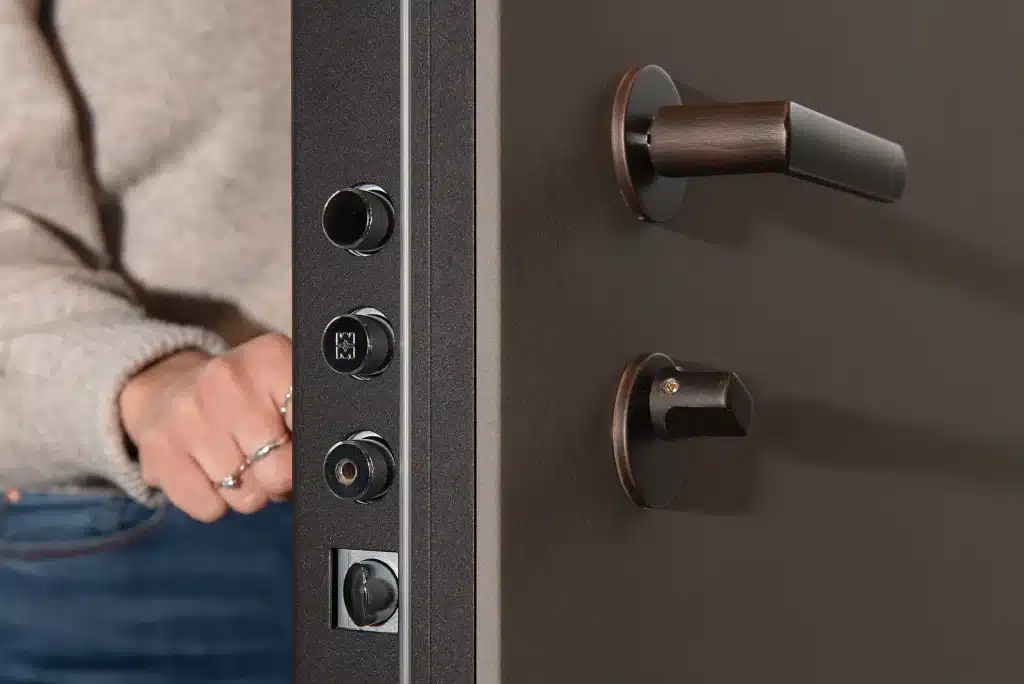
The physical barrier is the most underrated deterrent and, at the same time, the most concrete one. While a sign can be ignored, a serious armoured door cannot be bluffed: either you break it down, which costs you minutes and noise, or you move on.
A front door certified to class RC3 or class RC4 is designed to resist break-in attempts with increasingly aggressive tools, for a time measured in the laboratory. Those minutes of resistance are exactly the time the burglar does not want to spend. If you want to understand how the resistance levels work, I have explained them all in the article on the burglar resistance classes of armoured doors.
The same applies to ground-floor windows, where anti-shatter glass turns a quick way in into a long, noisy job.
A word of caution, though: a door is only as good as its fitting and its components. An armoured door fitted badly, or with an outdated lock, is false security. I will come back to this further on, because it is the heart of the matter.
An alarm linked to a monitoring centre, not just the siren
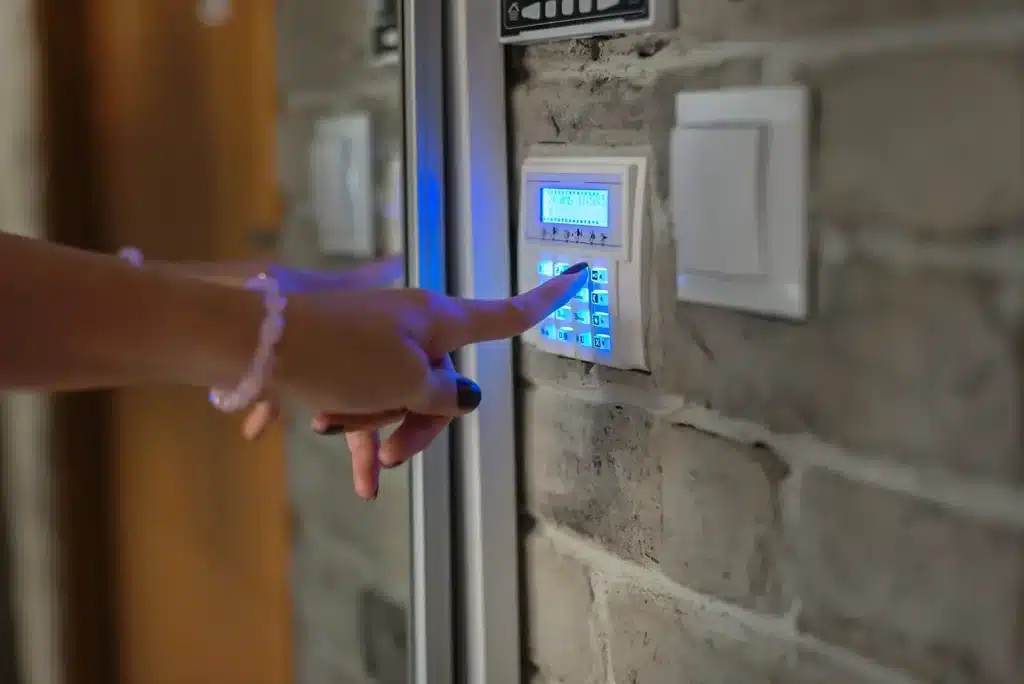
An alarm system is an excellent deterrent, but only if it is linked to a monitoring centre that responds. A siren wailing into the void, in a building where nobody calls anybody, frightens the burglar for a few seconds and is then ignored.
The difference is made by the response: when the alarm goes off, someone checks and, if needed, sends help. It is that concrete reaction that raises the risk of being caught, and risk is what really makes them run.
An alarm set up badly, which goes off at every passing cat, ends up being ignored even by the neighbours. The quality of the sensors and the way it is managed matter more than the price of the system.
Real cameras and sensor-activated lighting
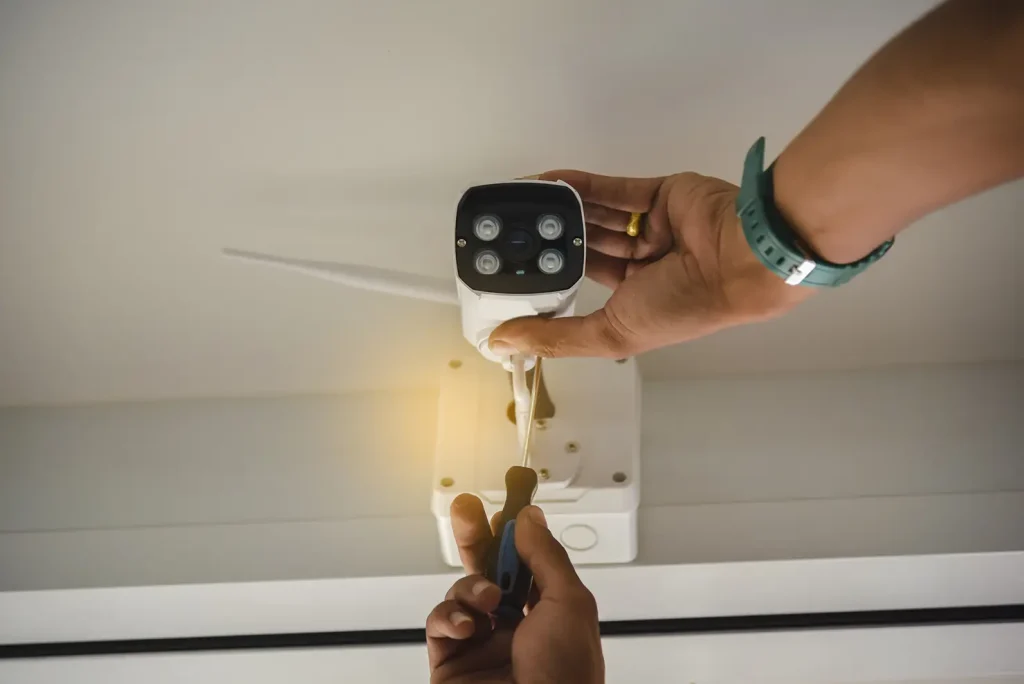
CCTV cameras work as a deterrent on one condition: that they are real and clearly visible. An experienced burglar spots a fake camera at a glance, and at that point they realise the rest of your security is probably just as fake.
Outdoor lighting with a motion sensor works on visibility, which is one of the four fronts a burglar weighs up. A light that suddenly comes on as someone approaches the front door puts them out in the open at the worst possible moment.
Cameras and lights together create an environment in which the burglar feels watched. And it is precisely the feeling of being seen that makes them give up.
Access deterrents: anti-climb devices, window grilles, locks
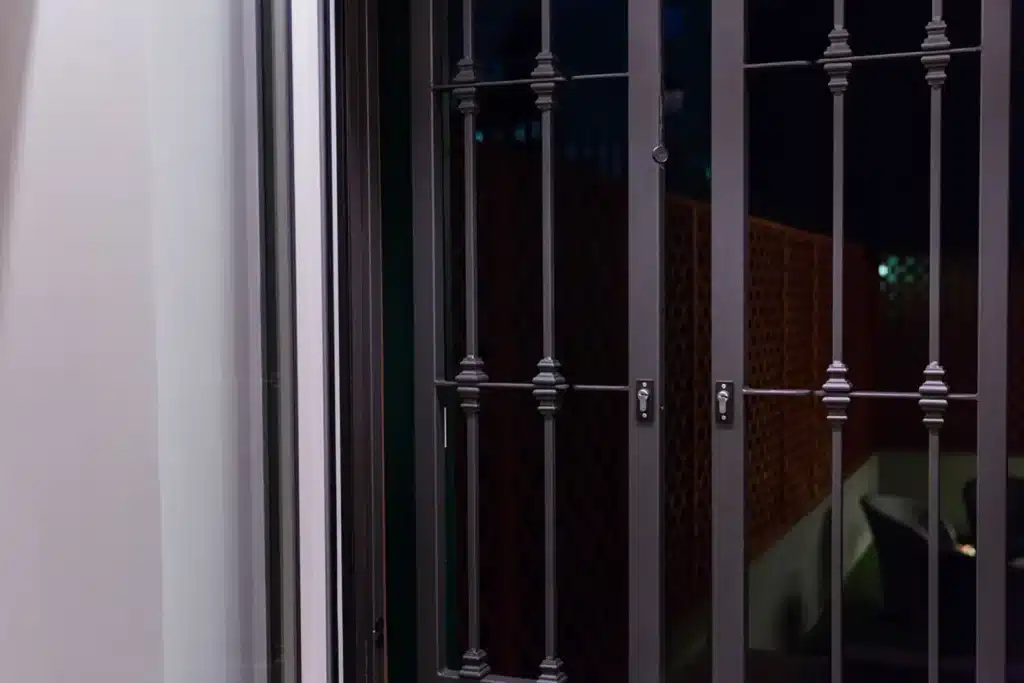
Under this heading come all the devices that make simply getting near the house longer and more awkward. Grilles on the windows, bars on sliding windows, anti-climb devices on low walls and fences, locks for roller shutters.
They work because they act on time and effort. Every extra obstacle is a point where the burglar has to stop, expose themselves and make noise.
They make most sense on the lower floors and in detached houses, where access from windows, balconies and drainpipes is the real weak point. On the upper floors they lose much of their usefulness.
The overrated burglar deterrents
Here is the part the others do not tell you, because they often sell these very things. Some “deterrents” only work in your head, not in the burglar’s.
Fake cameras and signs with no system behind them
The fake camera and the “CCTV in operation” sign with no system behind it are the two most useless purchases around. The idea looks clever on paper: I spend little and pretend to be protected.
The trouble is that someone who steals for a living knows these tricks better than you do. A camera with no wiring, no LED, badly mounted, is recognised in a few seconds. And a sign on its own, on a house that is otherwise undefended, communicates exactly the opposite of what you want.
There is more: a fake deterrent that gets found out lowers your overall credibility. The burglar reckons that, if you bluffed there, you have probably bluffed about the rest too.
The guard dog and other false myths
The dog is often mentioned as a deterrent, but it is a solution full of limits. A dog used to people is quietened with little effort, a dog left alone in the garden is manageable for anyone with experience, and in any case it remains a living creature you have to look after, not a security system.
The same goes for other urban-legend remedies: the radio left on all the time, a man’s shoe by the door, the homemade fixes that have been doing the rounds for years. They may have a small effect, but none of them stops a determined burglar.
The problem is not that they are harmful. It is that they make you feel protected when you are not, and that is the most dangerous thing of all.
The zero-cost burglar deterrents
Before you spend a penny, there are habits worth more than many purchases. They are free and act directly on the burglar’s calculation.
Mimic being at home when you are away. Use a timer that switches lights and the radio on and off at varying times, so the home looks lived in. A house that seems occupied is a house the burglar avoids.
Do not announce your absences on social media. Holiday photos posted in real time are the easiest way to let strangers know your home is empty. Post them when you get back.
Build a network with your neighbours. Swapping phone numbers and keeping an eye on each other’s homes is one of the most effective deterrents there is, and it costs nothing. A neighbour who notices something odd and calls the police is worth more than many devices.
Look after the details that give away a long absence. Post piling up in the letterbox, shutters always closed in broad daylight, bins never moved: these are signals a burglar reads perfectly. Ask someone you trust to handle them while you are away.
These habits are no substitute for a serious door, but they complete it. And they often make the difference between a house that gets chosen and one that gets passed over.
Why the door is the deterrent you cannot bluff
Let me bring you back to the central point. Of all the deterrents, the front door is the only one you cannot fake and that works around the clock, with no batteries, no subscriptions, no constant maintenance.
A sign you ignore, a fake camera you recognise, a disconnected alarm you wait out. A quality armoured door, on the other hand, is right there, physical, and it forces the burglar to spend the minutes and the noise they do not want to spend.
This is where the real quality of the door comes into play. The defender, the steel plate that protects the lock cylinder, is one of the most attacked points.
Traditional round defenders are vulnerable to techniques such as the scaffolding pipe, which levers them off and tears them away. The square defender with chamfered corners, fitted by Ariete, is designed precisely so that this manoeuvre gets no grip.
The same reasoning applies to the cylinder. An old double-bit lock is now easily attacked with the Bulgarian key, a technique that works the cylinder directly in the keyway. A patented euro cylinder, anti-drill, anti-bumping and anti-picking, is another story altogether.
Want to work out which armoured door is right for your home’s security?
Tell us about your situation and the kind of home you want to protect: we need this to tell you, with the figures in hand, which solution genuinely makes sense for you.
Fill in the form with a few details about your home: we need them to put together a proper quote, not a figure plucked out of thin air.
The Ariete armoured door as a burglar deterrent
An experienced burglar knows what kind of door they are dealing with. An armoured door built and fitted well makes it clear straight away that there is no easy job to be had here.
Ariete doors are built for this. No break-in attempt has ever succeeded on an Ariete door, and behind that result lies a sum of concrete choices: the square defender with chamfered corners, a patented cylinder with a key that cannot be reproduced at the hardware shop, the 5+1+1 system that lets you recode the cylinder on your own up to twice if you lose your keys or they are stolen.
Then there is a factor that changes everything and is often forgotten: who fits the door. An armoured door fitted badly is a weak door dressed up as a strong one. Our fitters are trained at the Door Fitting Academy in Genoa, because fitting is part of the security, not a final detail.
Replacing an old front door also means choosing the right combination of leaf, frame, lock, cylinder and defender for your home. If you want a sense of the costs, you will find everything in the dedicated article on armoured door prices.
Conclusions
The most effective deterrent against burglars is not a single object, but a home that costs too much time and too much exposure to be chosen. An alarm linked to a monitoring centre, real cameras, sensor-activated lighting and access deterrents all do their job. The zero-cost habits, from mimicking presence to the neighbourhood network, are often worth more than a purchase.
All of this, though, revolves around one fixed point: the front door. It is the only deterrent you cannot fake, that stays in operation at all times and that the burglar cannot get round with a trick. To go deeper into the behavioural side, I also recommend our guide on how to protect your home from burglars, and for official advice the one from the Italian State Police on home burglaries.
If you are thinking of replacing your armoured door and want to understand which level of security your home really needs, request a quote for your armoured door: we help you choose with no hard sell.
Frequently asked questions
The best deterrent is whatever makes the burglar waste time and raises the risk of being seen or caught. A quality armoured door is the most reliable because it is physical, cannot be faked and works at all times. An alarm linked to a monitoring centre, real cameras and good lighting reinforce it, but the physical barrier remains the foundation.
Only if there is a real system behind them. A sign on its own, on a house that is otherwise undefended, is quickly seen through by someone who steals for a living and sometimes has the opposite effect. It makes sense as an extra signal when you genuinely have an active alarm or CCTV.
Almost never. An experienced burglar recognises a fake camera in a few seconds, and once it is found out it lowers your overall credibility. Better one real, clearly visible camera than three fake ones.
They hate time and being seen. Anything that drags out the break-in and exposes them to the gaze of the neighbours or a real camera pushes them to give up and look for an easier target.
Use a timer that switches lights and the radio on and off at varying times, so the home looks lived in even when nobody is there. Add a trusted person who collects the post and opens the shutters, and avoid posting your holiday on social media in real time.
It is the most solid foundation, but the best result comes from combining it with sensible habits and, where needed, an alarm and lighting. The front door remains the fixed point: without a serious armoured door, the other deterrents protect far less.
