
Which armoured door lock should you choose today, and how much does it cost to replace one?
Then you are in the right place.
The safest lock in 2026 is a high-profile European cylinder paired with a square defender: it resists picking, bumping, drilling and the scaffolding-pipe technique, and it can be replaced in 5 to 25 minutes at a cost of between €80 and €200 for the cylinder alone.
And this is exactly where the game is won or lost.
The lock is the heart of an armoured door: it decides whether your entrance withstands a 5-minute break-in attempt or a 30-minute one.
Fitting a sturdy door with a mediocre lock is like putting a paper chain on a steel safe: the weak point ruins the whole system.
In this guide you will see the types of locks for armoured doors on the market today, which models are the safest in 2026, how much it costs to replace one and what to do if it suddenly jams.
Read on to understand what to ask when the time comes to choose.
Types of armoured door lock
The lock of a door is the mechanism that opens and closes the armoured door by driving the bolts that enter the frame.
When you turn the key, it is not the key that “pushes” the door: it is the lock that moves the bolts into the jamb, anchoring the leaf.
Security locks fall into two broad families: double-bit and European cylinder.
Double-bit lock
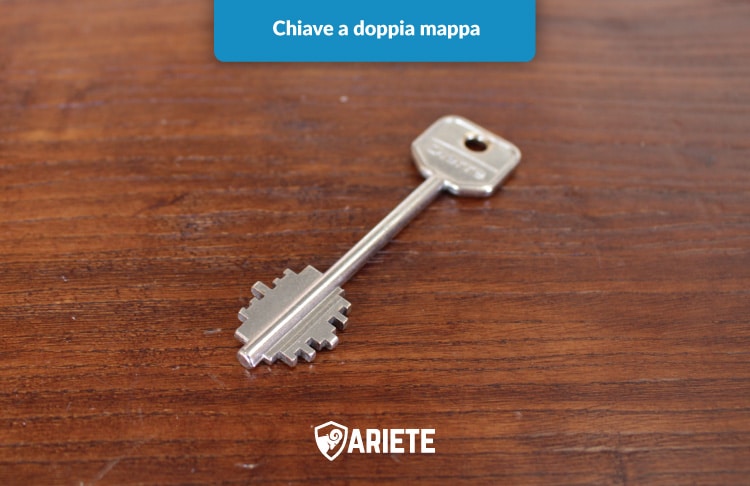
The double-bit lock is the first lock ever designed for armoured doors, and is now outdated by more recent technologies.
The mechanism is a metal box with a carriage to which the locking pistons are attached.
Turning the double-bit key moves the carriage, which in turn drives the pistons into the frame.
Inside you find the levers, small coded plates that prevent other keys from operating the lock.
The real weakness of this lock is one: the keyway is very wide.
That physical space allows lock picks and break-in tools to be inserted, and above all it makes the double-bit lock vulnerable to the Bulgarian key: a technique with which burglars create a cast of the original key in just a few minutes, working directly inside the keyhole.
That is why, if your home still has a double-bit lock, it is worth considering the switch to a European cylinder.
You will find the details on the double-bit lock in the dedicated article.
European cylinder lock
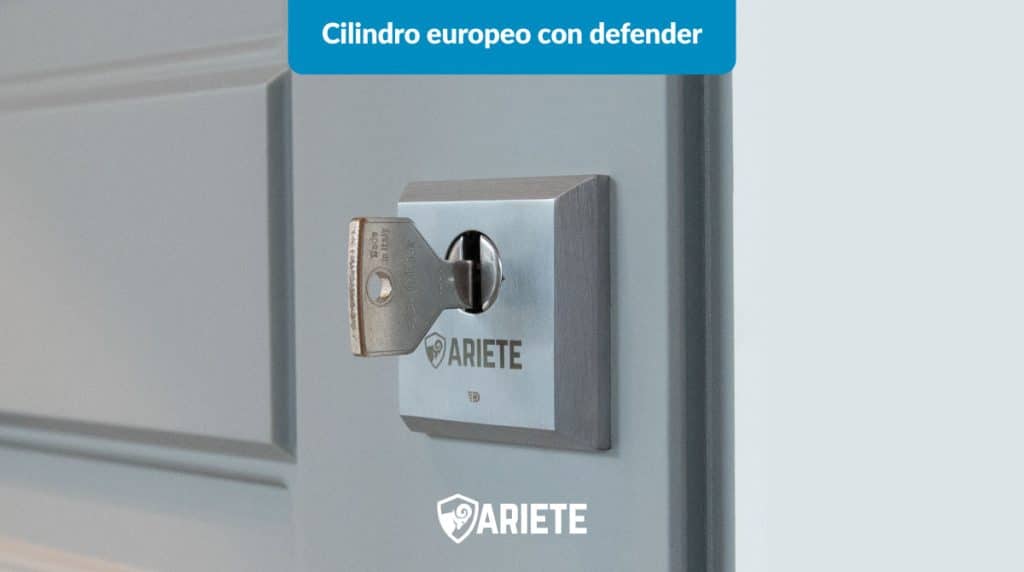
The European cylinder lock is today the security standard for armoured entrance doors.
The name comes from the cylinder, a metal body that houses the plug into which the key is inserted.
When you turn the key, the plug drives the cam that sets the lock itself in motion.
The advantage over the double-bit lock is clear:
- the keyway is narrow: it is hard to insert break-in tools;
- the cylinder is reinforced with hardened steel pins that are anti-drill and anti-bumping;
- key duplication is controlled, possible only at authorised centres with an ownership card.
The European cylinder is also interchangeable: if you need to replace it, you remove just the cylinder without touching the lock.
A major difference from the double-bit lock, which is replaced as a whole unit.
To recognise a quality cylinder, check that it carries the UNI EN 1303 certification, in particular the certified number of operating cycles: the top grade is 100,000 cycles, a guarantee of durability.
Then check for the anti-drill, anti-picking and anti-bumping certifications.
Anti-pull protection, on the other hand, is not a feature of the cylinder: it is a function of the defender that protects it from the outside, which we cover further down.
Anti-picking is the most important: it blocks the technique with which burglars manipulate the cylinder pins using thin tools.
There are also four types of European cylinder worth knowing before you buy:
- European cylinder with ownership card: a card that certifies title to the keys and allows duplication only at authorised centres;
- armoured anti-pull European cylinder: a certified European cylinder combined with an anti-pull defender already built in;
- re-codable cylinder: it can be reprogrammed on your own to a new set of keys, without replacing the cylinder. It is the right choice in three situations: rental homes or B&Bs with frequent key turnover, a lost set of keys, or stolen keys. Ariete armoured doors include a 5+1+1 system: with one emergency key you can re-code the cylinder yourself up to twice, without calling anyone;
- master-keyed cylinder: a “master” key opens several cylinders set up as a group, while each cylinder keeps its own individual key. Used in blocks of flats and business settings.
Want to go deeper? You will find all the details on the European cylinder and on its safest variants in the dedicated article.
The best armoured door locks in 2026
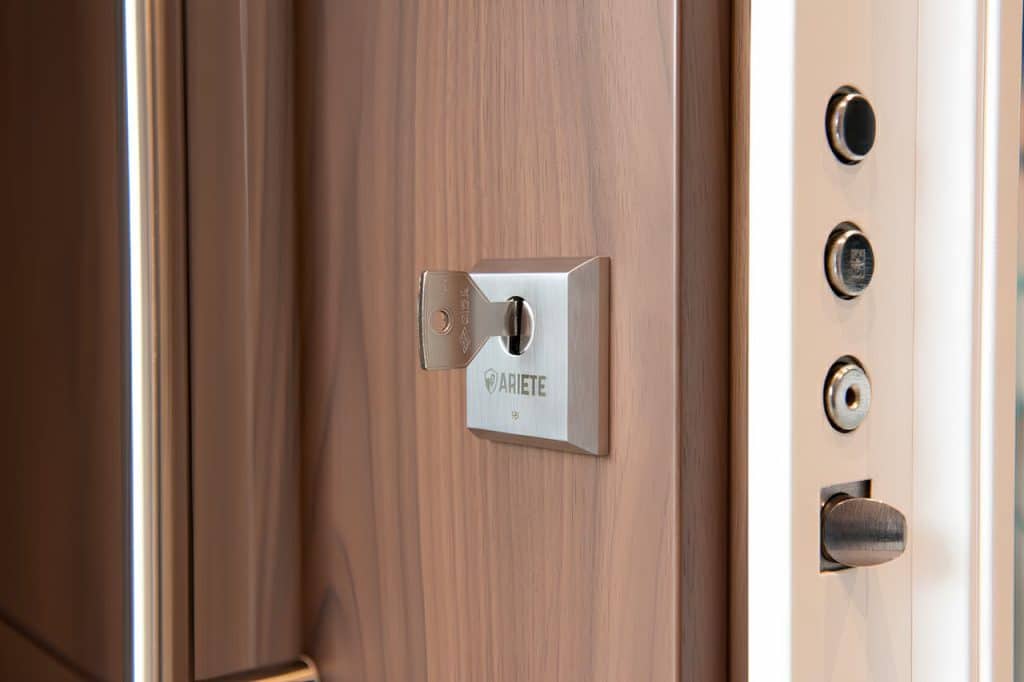
You are probably wondering which is the safest lock on the market today.
The answer is less obvious than it seems: the safest lock is often the least advertised one.
The reason is simple.
Before forcing a lock, a professional burglar studies it by buying it at a hardware shop or ordering it online.
Their attention focuses on the most widespread models, because those are the ones they will find in most homes.
An uncommon lock is not worth the study.
The Italian State Police too, in its official guide on home burglaries, points to the armoured door paired with a European cylinder key as one of the most effective passive security measures against break-ins.
The leading brands on the Italian market are few and all of a high technical standard:
- Mul-T-Lock: a patented key that cannot be copied at a hardware shop, one of the most widespread in the high-end segment.
- Cisa: excellent value for money, a wide range of profiles, duplication managed through a card.
- Iseo: a popular choice on armoured doors with electronic opening, thanks to its integration with smart-home systems.
- Mottura, Dom, Kaba, Keso, Evva, Yale: the big names in the sector, each with its own line of high-profile certified cylinders.
They all guarantee good levels of mechanical security, but the model to choose depends on how your door is built and on the burglar resistance class of the unit.
Are you thinking of replacing your armoured door?
A high-end lock performs at its best only when fitted to a certified, well-installed door with a suitable defender.
At Ariete we do not replace single locks: we design and install the complete armoured door, with the combination of lock, cylinder, defender and fitting tailored to your home.
Fill in the form below with a few details about your current door and we will prepare a serious quote for the replacement.
How much an armoured door lock costs
The price of an armoured door lock depends on three variables: the type of work (cylinder or whole lock), the brand and model chosen, and labour.
The ranges below are indicative for 2026 and apply to standard work, leaving aside special cases such as custom-size doors or obsolete locks that have to be replaced as a whole unit.
Replacing a European cylinder: price and timing
Replacing the cylinder alone is the most frequent and quickest job.
It is done when the key no longer turns smoothly, when the cylinder has been forced, or simply when you want to change the keys (for example after losing a set).
The cost ranges from €80 to €200 for a mid-quality cylinder.
It rises to €200-400 for high-profile cylinders certified anti-picking and anti-bumping.
For electronic cylinders the cost settles at around €700.
The work takes between 5 and 25 minutes: removing the fixing screw, pulling out the old cylinder, inserting the new one, testing the key.
Replacing the whole lock: price and timing
Changing the whole lock is a far more demanding operation.
It is needed when you want to move from a double-bit lock to a European cylinder, or when the internal lock is damaged beyond repair.
The job requires removing the leaf from the hinges, taking off the panels, replacing the lock in its housing and refitting everything.
The cost is €350-500 in standard cases and can reach €800 for latest-generation locks.
It takes 2-3 hours on a non-armoured door and 4-8 hours on an armoured door, because every step calls for millimetre precision.
| Type of work | Indicative price 2026 | Timing |
|---|---|---|
| Replacing the European cylinder | €80 to €200 (high-profile €200-400; electronic ~€700) | 5-25 minutes |
| Replacing the whole lock | €350 to €800 | 4-8 hours (armoured door) |
Be wary of online purchases at suspiciously low prices: these are often uncertified cylinders, with inferior materials and no guarantee on key duplication.
A cheap lock today is the first gift to a burglar tomorrow.
How to change the lock on an armoured door
Before calling a locksmith, let us clear up a difference that is often confused: changing the cylinder is not the same as changing the lock.
Changing the cylinder vs changing the whole lock
Changing the cylinder is a simple operation.
You undo the screw that holds the cylinder in its housing, pull out the old cylinder, insert the new one and screw it back in.
It takes a few minutes and does not require dismantling the door.
This video shows you how.
Changing the whole lock is another matter entirely.
You need to:
- remove the leaf from the hinges;
- take off the internal panel;
- extract the whole lock from the housing cut into the leaf;
- install the new lock, set up the cylinder and defender;
- refit the panels and the leaf.
As a general rule: if you want to turn a double-bit lock into a European cylinder, you have to replace the whole lock.
If instead you already have a cylinder lock and the key no longer turns smoothly, you only need to change the cylinder.
Moving from a double-bit lock to a European cylinder
Yes, it can be done on any armoured door.
The internal housing of the leaf is standardised: any door that currently has a double-bit lock can take a European cylinder lock, you simply replace the entire internal mechanism.
The real question is another one: is it really worth it, or is it better to replace the whole door?
In most of the cases we see in the showroom, it is worth replacing the complete door.
A double-bit lock is almost always fitted to an old door of 25-30 years or more: the frame is now out of alignment, the panels are worn, thermal and acoustic insulation is poor, and the seals have hardened.
Changing only the lock on a door like that means spending €350-800 on a unit that stays old in everything else, and that will need replacing anyway within a few years.
Replacing the whole armoured door costs more as a single investment, but it lifts the level of security, comfort and insulation by a whole category.
You recover years of draughts and heat loss on your energy bills, you remove every weakness on the old frame, and you get an entrance that lasts another 25-30 years.
On top of that, on a complete replacement you can claim the Italian Armoured Door Bonus or, if the insulation values qualify, the Italian Ecobonus.
If instead the door is recent and in good structural condition, and the only problem is the outdated double-bit lock, then the switch to a European cylinder makes sense.
The lock-only replacement costs €350 to €800 (see the table above) and takes 4-8 hours on an armoured door, within the day.
The role of the defender
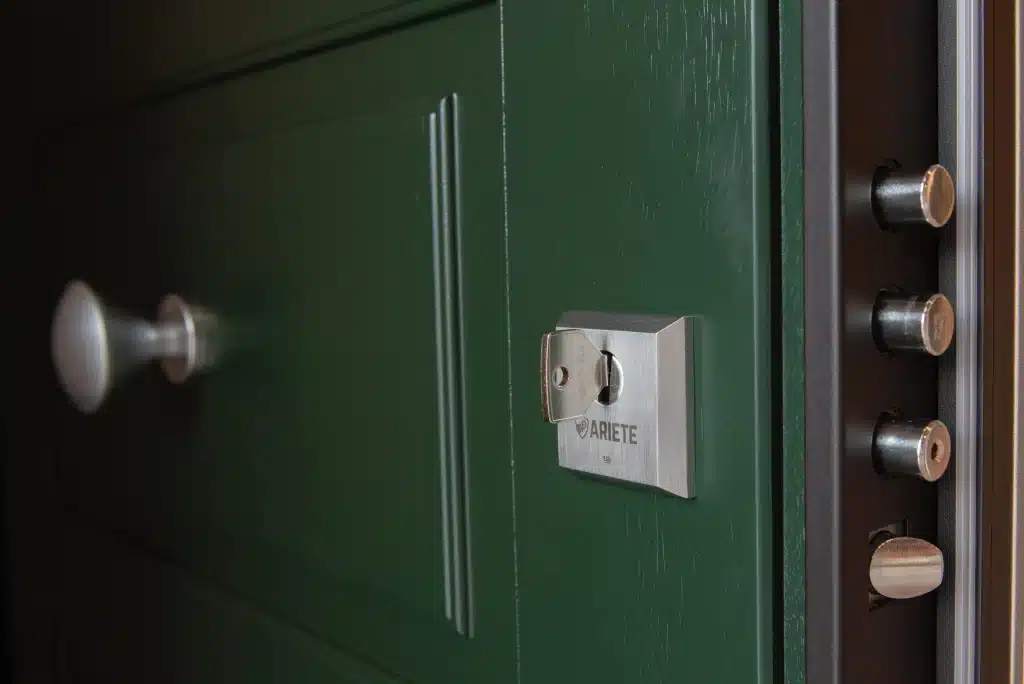
Together with the cylinder, a defender is installed, a block of hardened steel that physically protects the cylinder keyhole: it prevents drilling, pulling, milling and the insertion of break-in tools.
It is here that the anti-pull function comes into play, not in the cylinder.
The shape of the defender is decisive.
A square defender with bevelled corners gives a burglar’s tools nothing to grip.
The Ariete square defender with bevelled corners, in particular, is the only one on the market designed to defeat the scaffolding-pipe technique: the method with which burglars “pull” a circular defender off by wedging in a metal pipe.
The best defenders combine anti-pipe, anti-drill, anti-pull, anti-milling and anti-break-in protection.
Jammed armoured door lock: causes and solutions
It happens: you get home, slide the key into the entrance door lock and it no longer turns.
The golden rule is just one: do not force the key.
Persisting means risking bending or breaking the key inside the cylinder, making the problem worse and increasing the cost of the repair.
There are five causes of a jammed lock, each with its own solution.
Key stuck due to dirt or rust
Modern keys have small holes and grooves that over time get clogged with dust, rust and dirt particles.
The result: the key goes in with difficulty or does not turn.
The solution is to lubricate the lock with a graphite-based product or a technical spray such as WD-40: a small amount in the cylinder and on the key, then turn slowly.
Never use oil or grease: they trap dust and after a few weeks the problem comes back worse than before.
You will find the details on how to lubricate a European cylinder lock in the dedicated article.
Key left in from the inside of the door
It sounds trivial, but it is the most frequent cause of night-time lockouts.
If someone leaves the key in from the inside, in the case of a “non-clutched cylinder” the cylinder cannot turn from the outside.
In over 30 years of jobs it has happened to me dozens of times.
Knock, ask whoever is at home to take the key out from the other side: nine times out of ten the problem disappears.
Key snapped in the lock
The key has broken and part of it has stayed in the cylinder.
If the tip is visible and sticking out, you can try to extract it with fine-tipped tweezers or a crochet hook.
If it is stuck deep inside, do not persist: you risk pushing the fragment in even further and ruining the cylinder.
Call a technician: in most cases the key can be recovered without drilling the cylinder.
The armoured door needs adjusting
If the key turns effortlessly with the door open but struggles with the door closed, the problem is not the lock: it is the door.
Over time, the leaf can drop by a few millimetres on its hinges, throwing the bolts out of line with the holes in the frame.
The solution is a hinge adjustment: 10-15 minutes of work for a technician.
It is a matter of routine maintenance, not a fault.
Damaged European cylinder
If the cylinder has been forced in the past or is very old, it may have suffered internal micro-deformations that prevent it from turning.
In this case there is no alternative: the cylinder has to be drilled out and replaced.
It is the only scenario in which replacing the cylinder calls for an expert technician.
For the details on how to handle these situations, read the guide on how to free a jammed armoured door lock.
Conclusions
The armoured door lock is the component that decides how well your home resists a break-in attempt.
Choosing it well is worth more than half the price of the door.
The certified European cylinder is today the standard.
Anti-picking, anti-bumping and anti-drill are the three minimum certifications to demand: together they block the most widespread break-in techniques.
The square defender is the natural complement to the cylinder: it physically protects the keyhole and neutralises the scaffolding-pipe technique.
Choosing one with the right shape saves you from having to rebuild the entire entrance after a successful attempt.
The leading brands on the market are Mul-T-Lock, Cisa, Iseo, Mottura, Dom, Kaba, Keso, Evva and Yale.
They all guarantee build quality, certifications and a network of authorised centres for key duplication.
The prices are transparent: €80-200 for a standard cylinder, €200-400 for a high-profile cylinder, €350-800 for a complete lock replacement.
Be wary of anyone offering suspiciously low figures online.
If the lock jams, never force the key.
The causes are almost always resolved without damage, as long as you do not persist and you call an expert technician in good time.
If your door is more than twenty years old and has a double-bit lock, seriously consider a complete replacement: spending €350-800 to change the lock on an old unit is almost always a waste.
At Ariete we design and install the whole armoured door, with the combination of lock, cylinder, defender and fitting tailored to your home.
Get a quote for your armoured door: fill in the form with a few details and we will prepare a serious quote.
FAQ: frequently asked questions about the armoured door lock
The cylinder is only the part the key goes into: it is replaced in 5-25 minutes without dismantling the door, at a cost of €80-200 for a standard model.
The whole lock is the internal mechanism that moves the bolts: to change it you have to remove the leaf, work for 4-8 hours and spend €350-800.
In the vast majority of cases of armoured doors with a European cylinder lock, you only need to replace the cylinder.
A good-quality European cylinder lock easily lasts 15-20 years of normal use, the equivalent of around 100,000 operating cycles certified by the UNI EN 1303 standard.
The real lifespan depends heavily on maintenance: lubricating with graphite every 12-18 months and never using oil noticeably extend the working life of the mechanism.
There is no fixed deadline. The cylinder is changed when the key starts to resist despite cleaning, when you have lost a set of keys, when you notice signs of tampering, or when you move into a new home and are not sure who still has copies of the keys. For short-term lets the frequency is much higher: in those cases a re-codable cylinder is the better option.
Yes, by a wide margin. The double-bit lock has a wide keyway that makes it easy to insert picks and break-in tools, and it is vulnerable to the bulgarian key. The European cylinder has a narrow keyway, built-in anti-drill pins and key duplication controlled by a card. It is the reason why, for at least 15 years, no serious manufacturer has fitted double-bit locks to newly produced doors.
Technically yes: you need a screwdriver and five minutes. The hard part is not the fitting but choosing the correct size: the cylinder must be measured in millimetres starting from the fixing screw, in two separate dimensions (inside and outside). Getting it wrong by a few millimetres means the cylinder protrudes from the defender, defeating the protection. At Ariete we advise against DIY on security doors: the risk of weakening the entrance is high.
In the high-end segment the leading brands are Mul-T-Lock, Cisa, Iseo, Mottura, Dom, Kaba, Keso, Evva and Yale: they all guarantee certified cylinders with a patented key and controlled duplication. More than the brand, though, what counts is the combination of lock, cylinder, defender and fitting: an excellent brand poorly installed is worth less than an average lock fitted by a trained technician.
First of all, do not force the turn. Check that no one has left a key in from the inside, try a second set of keys and inspect whether the main key is bent or dirty. If the key does not turn even with the door open, the cause is almost always in the cylinder or the levers. If it turns smoothly with the door open but resists with the door closed, the problem is the alignment of the leaf: it needs a simple hinge adjustment, not a lock change.

6 Responses
Ciao Mauro, sono Silvano,
ho un problema alla serratura delle porta blindata, datata.
Vorrei fissare un appunta per conoscere cosa fare, tempi e costi.
Grazie, saluti.
S. GALMARINI.
PS: WAPP. 3406617036 Varese città.
Buongiorno Silvano,
Ti informo che non effettuiamo sostituzione della sola serratura.
Se volessi sostituire l’intera porta blindata, puoi richiedere un preventivo.
Un caro saluto,
Mauro
Ottimo articolo, perfetto per i meno esperti e per garantire una buona assistenza e durata nel tempo! Complimenti!
Ottimo articolo, perfetto per i meno esperti e per garantire una buona assistenza e durata nel tempo! Complimenti!
Grazie lello.
Un caro saluto,
Mauro
chiaro e dettagliato! Grazie