
Biometric entry is an access system that uses unique physical features of the user, such as fingerprints, facial recognition or iris scanning, to unlock the door.
This method offers an advanced level of security, removing the need for traditional keys and reducing the risk of theft or unauthorised duplication.
For more information, discover the Ariete electronic armoured door.
Biometric entry on armoured doors
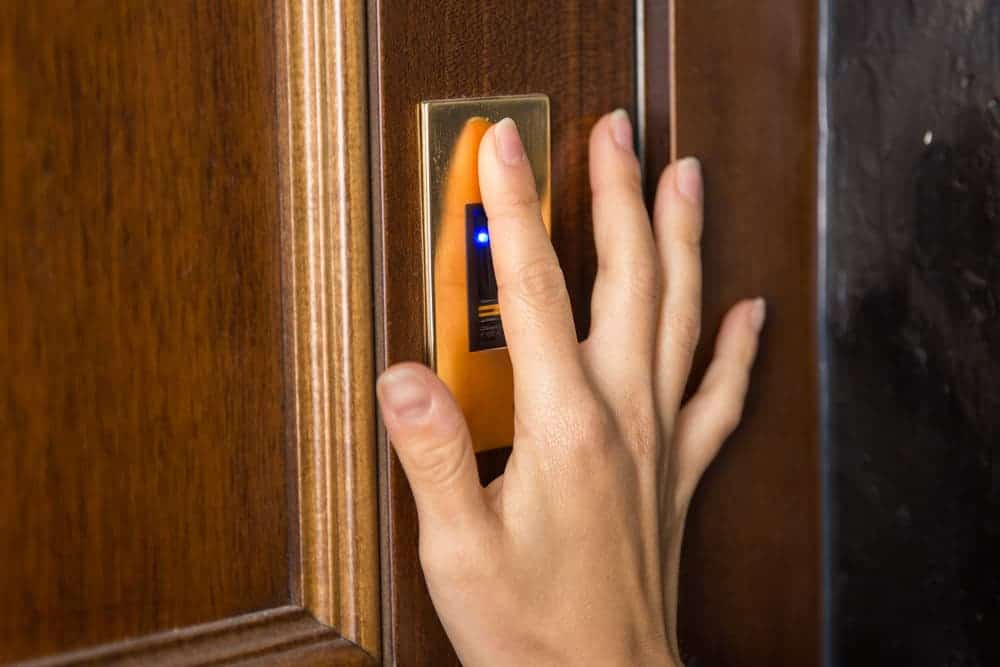
Ariete armoured door with fingerprint entry
On armoured doors, biometric entry is one of the most innovative solutions for access control.
This system replaces or works alongside traditional European cylinder locks, offering greater convenience and security.
The biometric recognition mechanism is built into the door’s electronic lock and can be connected to home automation systems for remote control.
Armoured doors with biometric entry work through advanced identification sensors, which analyse unique user data to grant or deny access. These systems use various technologies, including:
- Fingerprint readers, which store and recognise the registered fingerprints, preventing access by unauthorised people.
- Facial recognition, which uses cameras and artificial intelligence algorithms to identify the user’s face.
- Iris or retina scanning, a highly secure technology used mainly in very high-protection settings.
- Hybrid systems, which combine biometrics with other access methods, such as PIN codes or RFID badges, for multi-level security.
Benefits of biometric entry on armoured doors
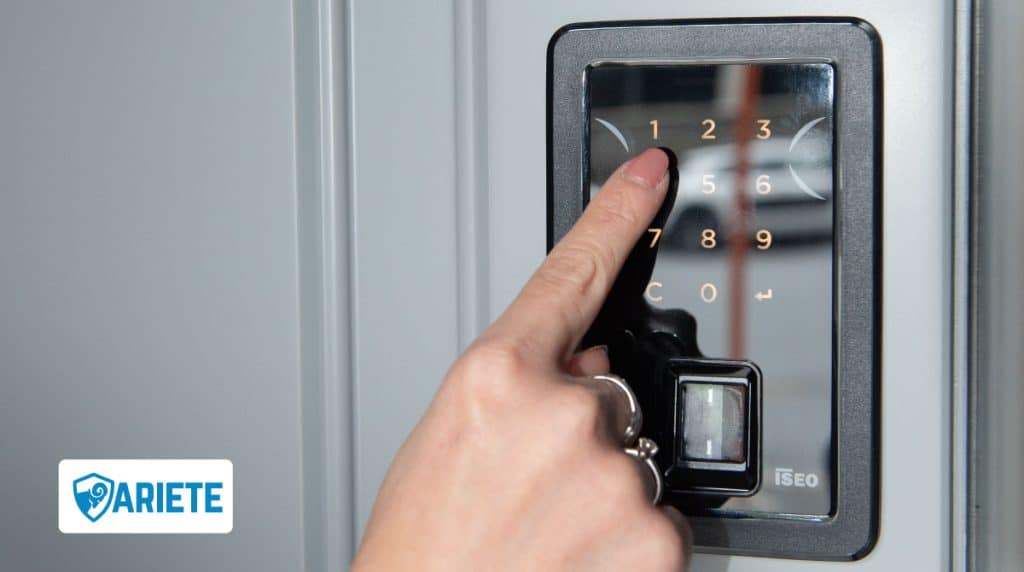
Ariete armoured door with multi-reader (entry via keypad and fingerprint)
One of the main benefits of this technology is advanced security, since biometric features are unique and cannot be easily replicated.
This system removes the risk of stolen keys and unauthorised duplication, guaranteeing exclusive access only to registered users.
Ease of use is another strong point of biometric entry, as it lets you get in without having to search for keys or type in codes.
It is especially useful for families with children, older people or professional settings with a high number of controlled accesses.
From an access management point of view, these systems make it possible to monitor and record who comes in and who goes out, with the option of customising permissions by time or day of the week.
Some advanced models can be controlled remotely through a smartphone app, allowing you to unlock the door from a distance or to receive notifications in the event of unauthorised access.
Another important aspect is resistance to digital and physical attacks.
Armoured doors with biometric entry are designed to be protected by anti-hacking and anti-tampering systems, preventing unauthorised access through attempts to falsify biometric data or through electronic attacks.
When to choose an armoured door with biometric entry
This technology is ideal for anyone looking for a combination of advanced security and ease of use.
It is especially suited to private homes (including flats in a block), luxury residences, offices with controlled access, high-protection settings such as laboratories or confidential archives, and anyone wishing to do away with the physical handling of keys.
Conclusion
Biometric entry on armoured doors is one of the safest and most innovative solutions in the field of access protection.
Thanks to the use of advanced recognition technologies and digital management systems, it guarantees effective, customised control of entries, offering a higher level of protection than traditional locks.
When paired with sturdy materials and anti-intrusion systems, it makes the door a true stronghold of security for homes and professional settings.