
The leaf of a door is the moving part that opens and closes within the frame.
In armoured doors, the leaf is a key element for ensuring security, insulation and resistance to external attacks.
Unlike traditional doors, the leaf of an armoured door is built from reinforced materials and designed to withstand break-in attempts, impacts and mechanical stress.
The leaf in armoured doors

The leaf of an Ariete armoured door
The leaf of an armoured door is made up of several layers of different materials, each with a specific function.
The main structure is usually made from galvanised steel or manganese steel, materials that are extremely resistant to drilling and bending.
Inside, structural reinforcements, omega profiles and stiffening bars can be fitted to improve mechanical resistance.
To ensure adequate thermal and acoustic insulation, the leaf can contain sound-absorbing and thermally insulating materials, such as rock wool, expanded polyurethane or special insulating panels.
These elements help to reduce heat loss and increase living comfort.
The outer covering of the leaf can be made from various materials, such as wood, laminate, aluminium or PVC, allowing you to personalise the look of the door without compromising security.
Main features of the leaf in armoured doors
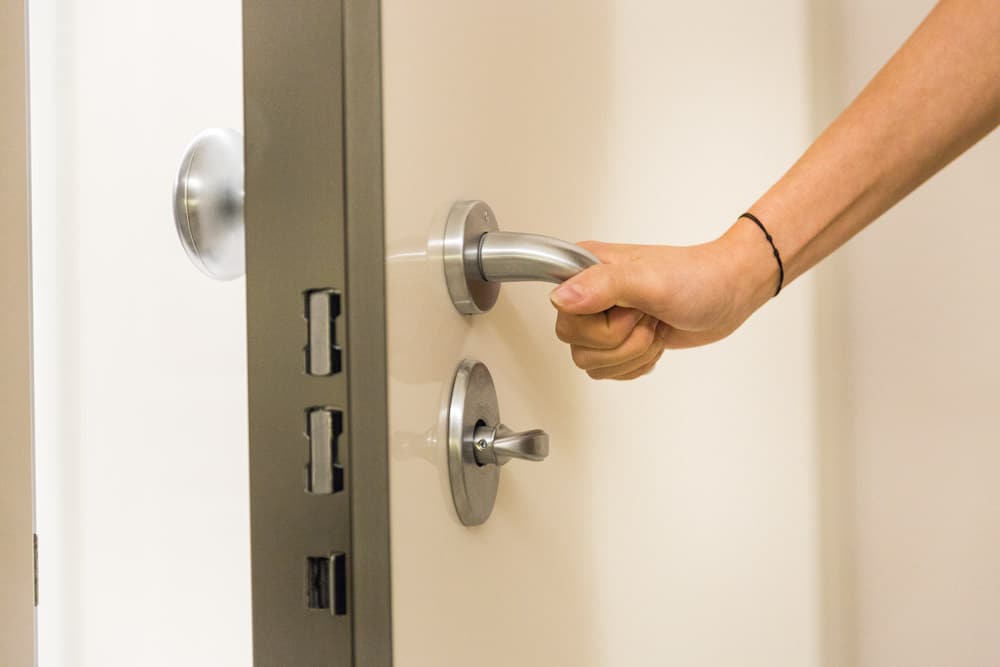
One of the most important aspects of an armoured leaf is the locking system, which features locking points distributed along the sides to prevent the door from being forced off.
The best armoured doors are fitted with a multi-point lock, which connects the leaf to the frame at several points at once, increasing resistance to attacks with levers or break-in tools.
The thickness of the leaf is also a decisive factor for the security and insulation of the door.
Doors in the highest security classes have leaves with increased thickness, which can range between 50 mm and over 80 mm, depending on the level of protection required.
Benefits of a reinforced leaf in armoured doors
A well-designed leaf provides protection against break-ins and forced-entry attempts, as it prevents drilling and withstands violent impacts.
It also ensures optimal thermal and acoustic insulation, reducing the passage of noise and keeping the temperature inside the home constant.
From an aesthetic point of view, the leaf can be personalised with decorative panels, wood finishes or coverings in weather-resistant materials, fitting in perfectly with the style of the building.
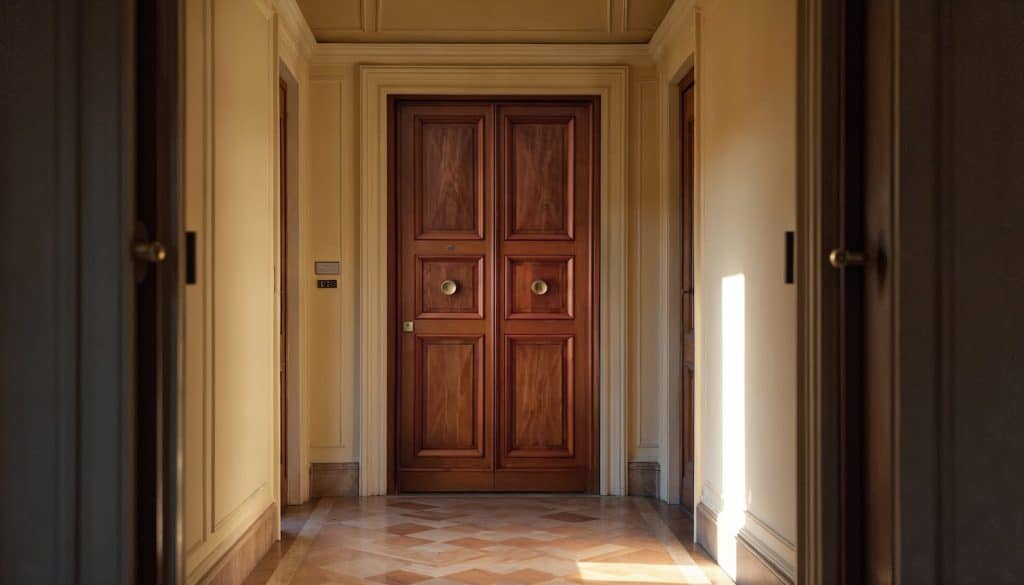
Ariete armoured door with a custom external panel
What is the difference between the “leaf” (battente) and the “leaf” (anta) of an armoured door?
- Battente is a technical term used mainly in the world of armoured and security doors, and it refers to a single moving unit of the door, complete with its internal structure and security components.
- Anta is a more generic term, also used for windows, wardrobes and furniture. In the world of door and window frames it is a synonym for “battente”, but less precise. People speak of a “single leaf” or “double leaf”, referring to the number of openings.
In short: in an armoured door the “anta” can be understood as the “battente”, but “battente” is the correct term for the moving element with a structural and protective function.
Conclusion
The leaf of an armoured door is much more than a simple moving element.
Its reinforced structure, insulating materials and advanced locking system determine the door’s resistance to external attacks and the comfort of your home.
Choosing a door with a well-designed leaf means investing in security, durability and good looks.