
The leaf is the moving part of a door or window: the panel that opens and closes to let you through. Put simply, if you picture a door, the leaf is the part you move to go in or out.
It can be single or double and, in joinery, it is mounted on a fixed frame. In some configurations a window or door can also have fixed leaves, which do not open but add to the overall structure.
In windows, the double-glazed unit sits inside the leaf profile: two or more panes of glass that improve thermal and acoustic insulation.
The leaf in armoured doors
In an armoured door, the leaf is not a simple moving panel but a structural element that is essential for security. Inside it you find steel reinforcements, insulated panels and advanced locking systems that make it resistant to break-in attempts.
Unlike an ordinary door, the leaf of an armoured door is far sturdier and thicker, with an internal steel structure. The outer covering can vary to suit your taste, with materials such as wood, laminate or lacquered panels.
Types of leaf in armoured doors
Armoured doors come with different leaf configurations, depending on the space available and your security needs. The most common version is the single leaf, used in most home entrances.
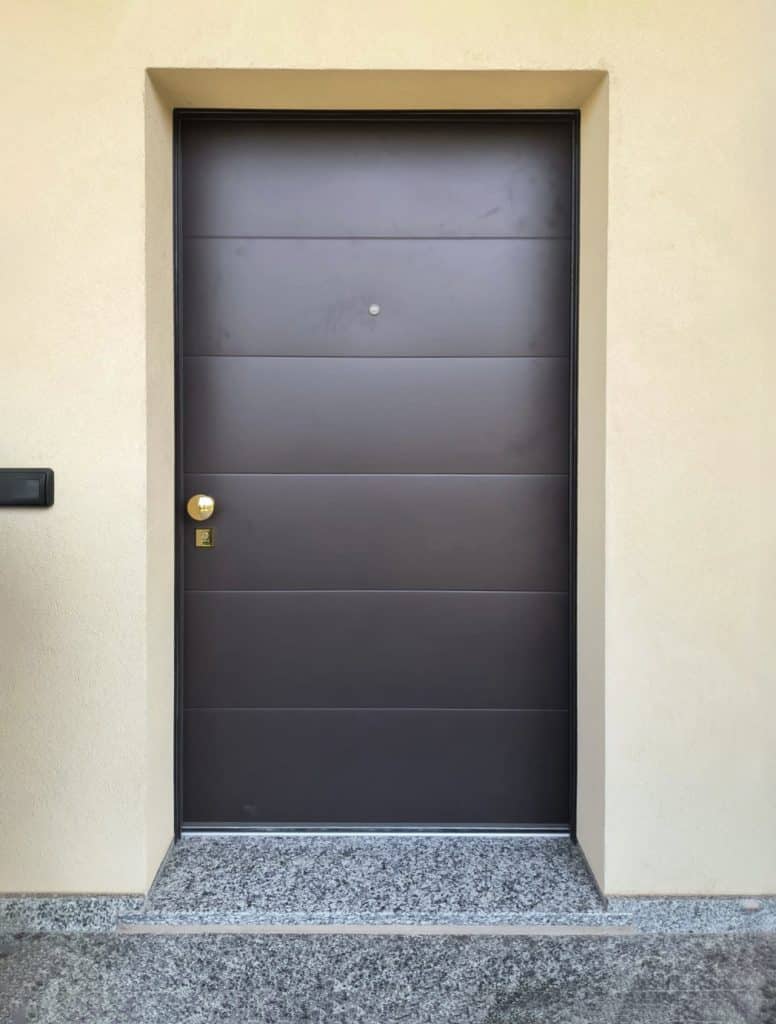
Single-leaf Ariete armoured door
When you need to cover a wider opening, the choice is a double-leaf door, where a main leaf sits alongside a secondary leaf that can be locked or released when needed.
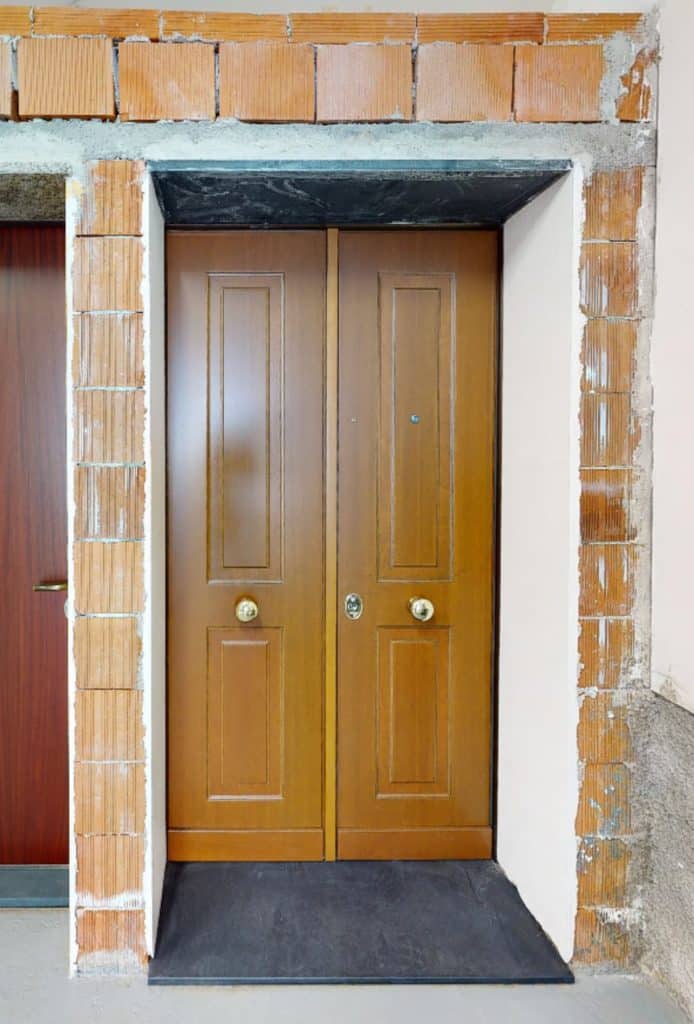
Double-leaf Ariete armoured door
In some cases the leaf can be paired with fixed elements such as a transom light, a glazed panel set above the door, or a sidelight, set to one side. These solutions improve the look and the natural light of the entrance without compromising security.
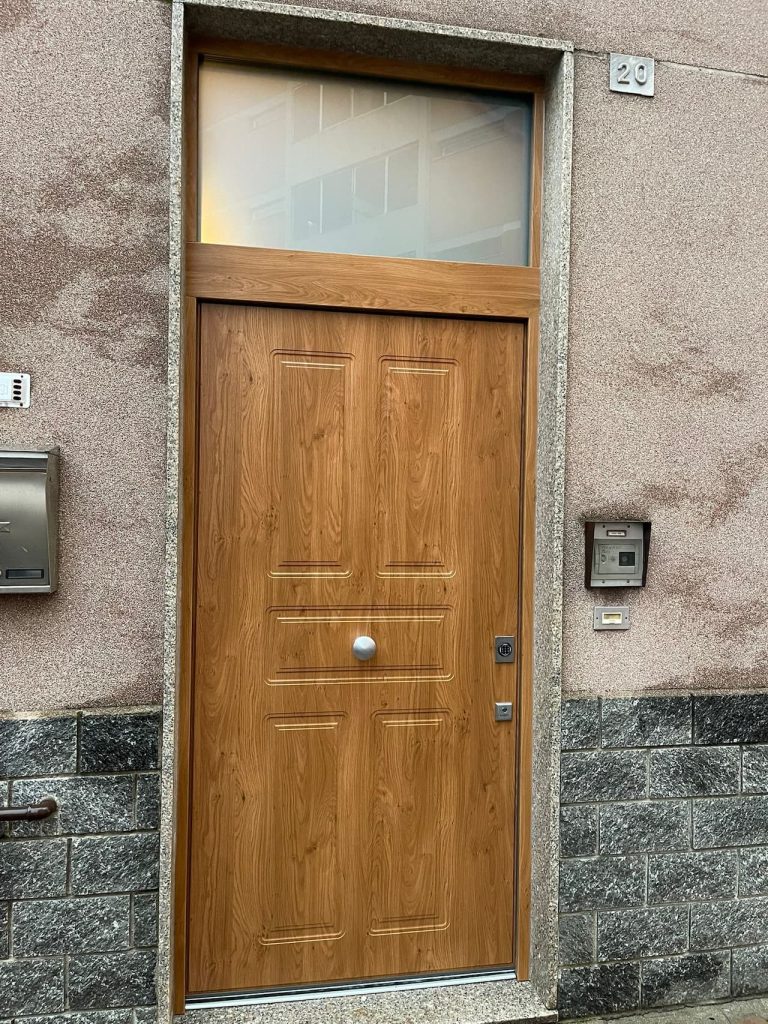
Single-leaf Ariete armoured door with transom light
The structure of the leaf in an armoured door
The leaf of an armoured door is made up of several layers and materials, each with a specific job. The main structure is built in galvanised steel or other high-strength materials, with internal reinforcements that make it stronger.
To improve comfort at home, insulated panels are fitted between the layers of the leaf, adding to thermal and acoustic insulation. The outer covering, on the other hand, is both decorative and protective, and comes in many finishes to match the style of your home.
Another key element is the seals, which improve the airtight fit and cut down on noise and draughts. The hinges matter just as much: on an armoured door they must be sturdy and impact-resistant, often with anti-lift systems that stop the leaf being forced off its mountings.
Why the leaf matters in an armoured door
The leaf of an armoured door is not just a decorative element but a security system in its own right. A good leaf has to be designed to resist break-in attempts and offer excellent protection against forced entry and intrusion.
It also has a direct effect on comfort at home: a well-insulated leaf helps keep the indoor temperature stable, cutting heat loss in winter and limiting heat coming in during summer.
Acoustic insulation is a key factor too, especially if you live on a busy road or in a building with several flats.
Looking after the leaf of an armoured door
To keep the leaf of your armoured door in perfect condition, it is important to carry out regular checks. The hinges and the locking system should be inspected to make sure they work smoothly, without friction.
Cleaning the covering panels matters too: depending on the material, use specific products that will not damage the surface.
Another good habit is lubricating the lock and the closing mechanisms, to prevent any jamming or faults.
Regular maintenance not only extends the life of your armoured door, it also keeps your home’s security at its highest level at all times.