
The draught excluder is the element that closes the gap between the bottom of the door and the floor, stopping air, dust and noise from getting through when the door is shut.
On quality entrance doors it is not the classic “sausage” cushion you rest on the floor, but an automatic blade built into the leaf, also called a drop-down threshold seal, which lowers by itself when you close the door and lifts when you open it.
It is one of the elements that make the difference to the thermal and acoustic insulation of an armoured door, together with the perimeter seals.
What the draught excluder is for
The draught excluder is there to eliminate the draught that comes in under the door, the most exposed point of any entrance.
When the door is shut, the blade seals the bottom gap and blocks the draughts, the dust and most of the noise coming from the landing or the stairwell. In winter it keeps the heat inside the home, in summer it keeps the warm air out, reducing the entrance’s heat loss.
On a well-made armoured door this job is handled by the integrated drop-down threshold, which delivers a constant seal without any extra accessories.
The difference between a draught excluder and a door seal
The draught excluder and the door seals work together, but they are not the same thing.
The draught excluder acts only at the bottom of the door: it closes the horizontal gap between the leaf and the floor. The door seals, on the other hand, run along the three perimeter sides (the two vertical jambs and the top of the frame) and seal the contact between leaf and frame.
For insulation that really works you need both: the seals close the perimeter, the draught excluder closes the bottom. If either one is missing, the draught will always find its way in.
Types of draught excluder
There are two clearly distinct families, which often get confused.
The integrated draught excluder (automatic drop-down threshold) is the professional component fitted into the leaf of armoured doors. It is a blade, usually with an aluminium profile and a soft seal, that lowers automatically when the door closes thanks to a pressure mechanism. It is the one that gives the best, longest-lasting seal, because it is part of the door.
The add-on draught excluders, by contrast, are the DIY products you fit to any door: the fabric sausage cushion you rest on the floor, the self-adhesive rubber or silicone strips, the brush seals with bristles, the arched PVC profiles. They are cheap and easy to fit, but they are makeshift solutions for doors that do not have an integrated threshold.
On a quality armoured door the sausage cushion is not needed: the drop-down threshold already does the job, better and without any clutter.
In the video below you can see the drop-down threshold draught excluder in action, lowering automatically as the door closes.
How to adjust the draught excluder threshold
The drop-down threshold can be adjusted so the blade meets the floor at just the right point.
If the blade drops too far, the door struggles to close and scrapes; if it drops too little, it lets the draught through.
To adjust the draught excluder blade, turn the screw on the bottom edge of the leaf: anticlockwise the blade lowers, clockwise it rises.
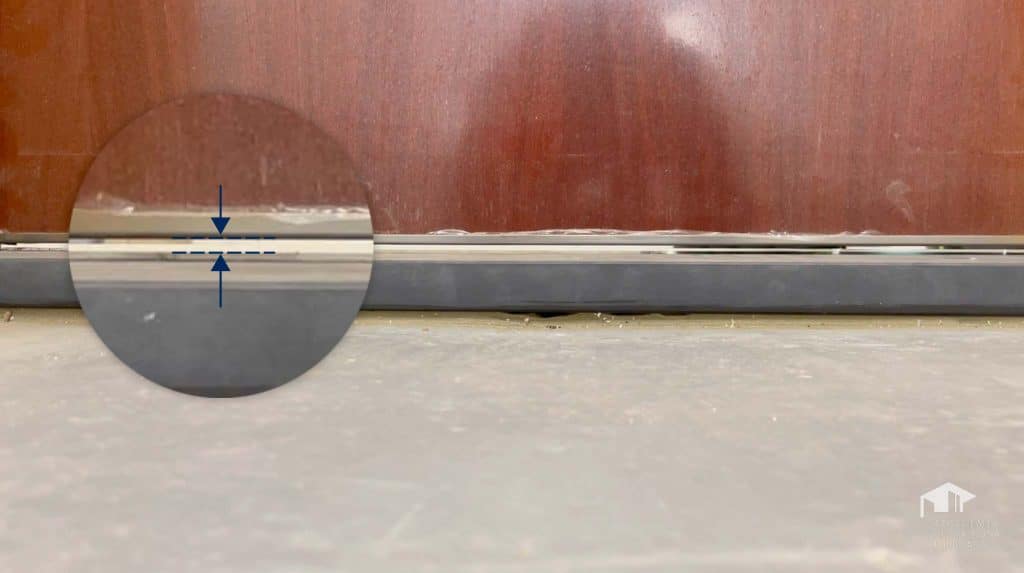
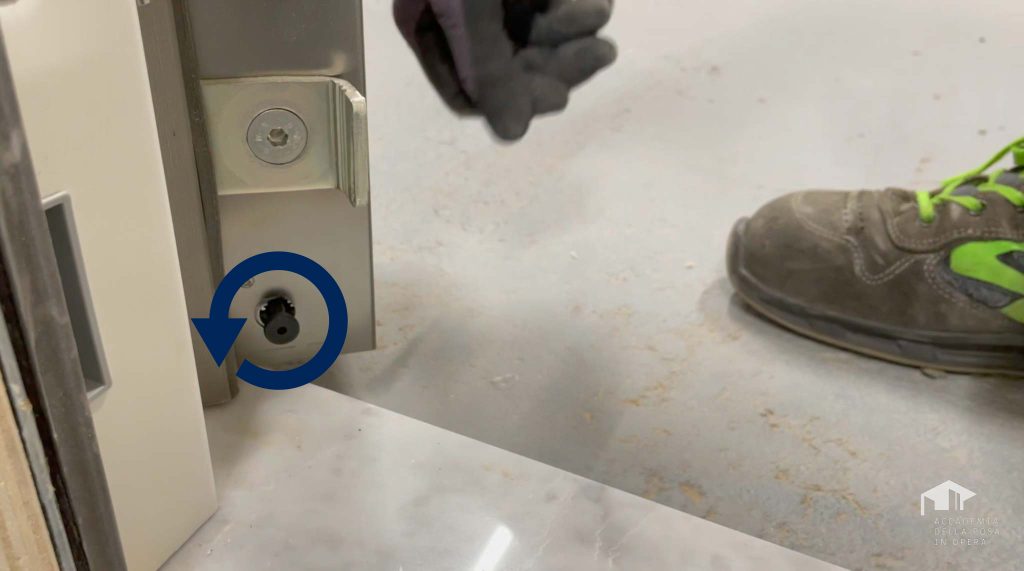
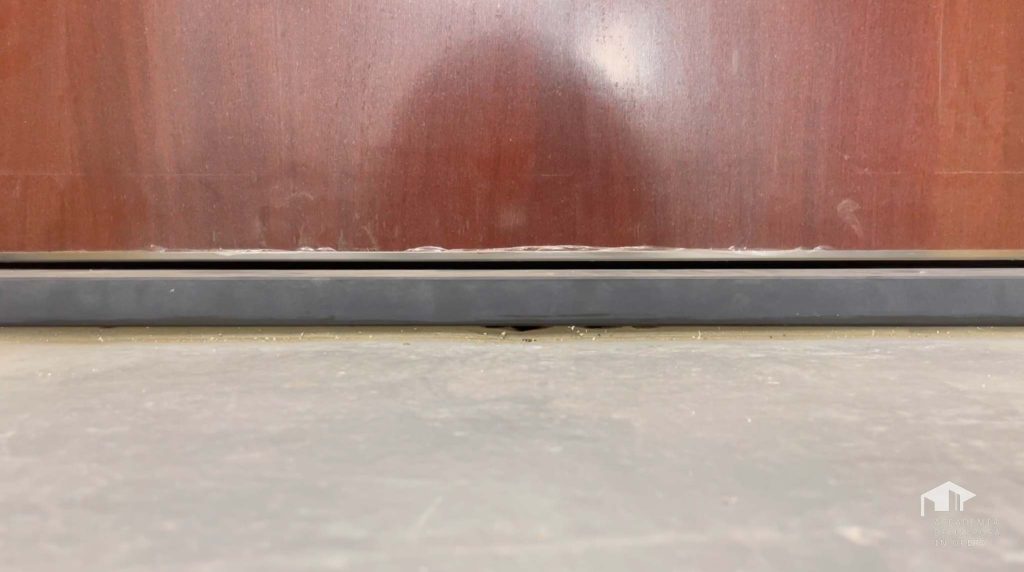
It is a task that is part of the fitting and adjustment of the door: a properly set threshold is one of the signs of a job done to a high standard.
The draught excluder on Ariete armoured doors
Ariete armoured doors build the drop-down threshold draught excluder straight into the leaf, as part of the insulation system.
Together with the perimeter seals, it contributes to maximum thermal and acoustic insulation: no draughts, no currents from the stairwell, less noise from the landing. The adjustment is carried out by our in-house technicians during fitting, so the blade works perfectly from day one.
If your soundproof armoured door is letting draughts in at the bottom, it is often just a matter of adjusting the threshold. If, on the other hand, the door is old and has no integrated threshold, it is worth considering replacing it.
Frequently asked questions
The draught excluder closes the bottom of the door, the seal closes the three perimeter sides. The draught excluder seals the horizontal gap between leaf and floor, while the door seals run along the jambs and the top rail of the frame. They work together: you need both for good insulation.
It is a blade built into the leaf that lowers by itself when you close the door and lifts when you open it. The movement is driven by a pressure mechanism: as the door closes, the blade drops and rests its seal on the floor, sealing the bottom gap without you having to do anything.
Yes, but on quality doors it is already built in. If your armoured door has the drop-down threshold, you just need to adjust it well and nothing else is needed. Add-on draught excluders (sausage cushion, self-adhesive strips) are makeshift solutions for doors that have no integrated threshold and let air through at the bottom.