
RFID technology (short for Radio Frequency Identification) is an automatic identification system based on electromagnetic waves.
In plain terms, it is a technology that can recognise and track objects, people or animals without any direct contact or line of sight between the reader and the item to be identified.
How RFID technology works
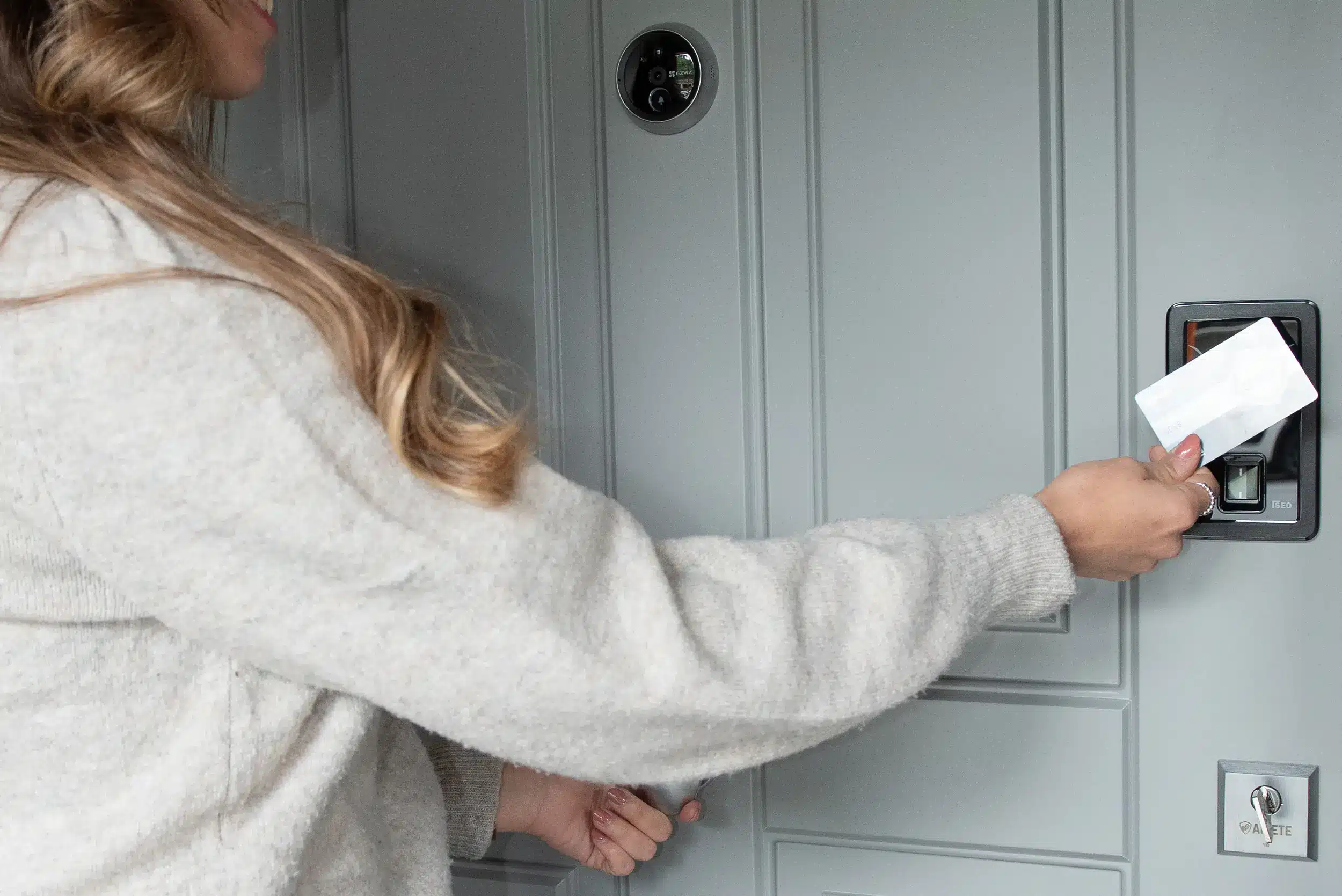
An RFID system is made up of three main parts:
- RFID tag (or transponder): a small device that holds a microchip with encoded information. It can be passive (no battery, activated by the reader) or active (fitted with its own battery to transmit the signal).
- RFID reader: a device that sends out a radio signal to query the tag and receive the information held within it.
- Antenna: transmits and receives radio signals between the reader and the RFID tag.
When an RFID tag comes within range of the reader, the reader activates it and receives the data stored on the microchip, allowing the object or person to be identified instantly.
Depending on the frequency used, RFID technology can be short-range (used, for example, in access badges) or long-range (as in motorway toll systems or logistics tracking).
Applications of RFID
This technology is widely used across several sectors, including:
- Access control and security (badges, electronic locks, electronic armoured doors);
- Logistics and traceability (goods management and automated inventories);
- Healthcare and personal identification (wristbands for patient monitoring);
- Contactless payments (credit cards, electronic keys in hotels).
RFID technology in armoured doors
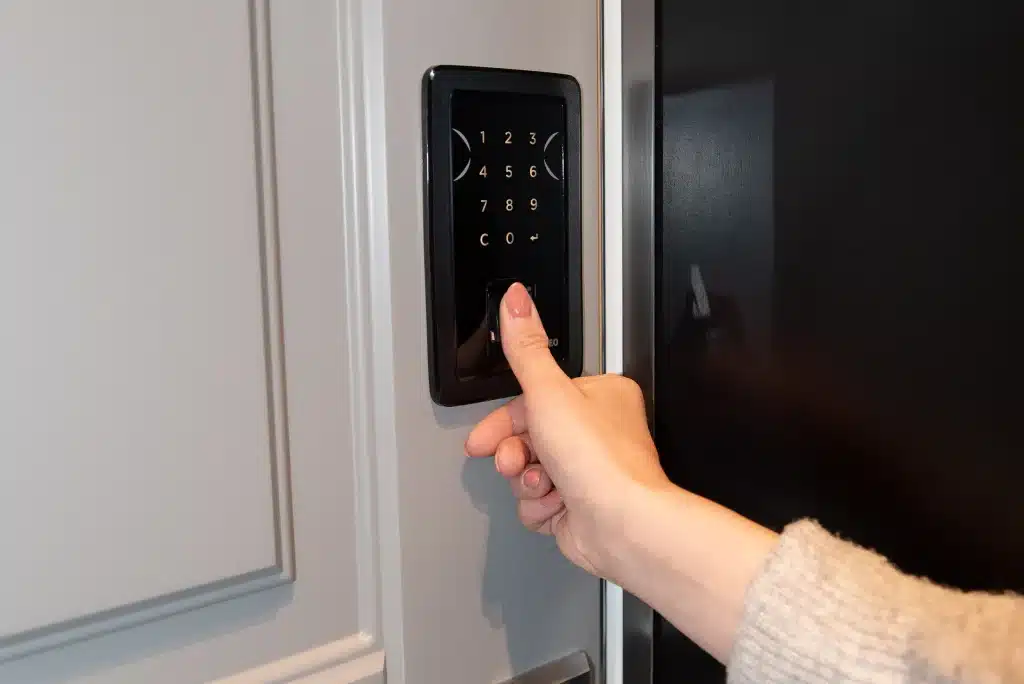
RFID is also used in the armoured door sector, making these doors safer, more convenient and more efficient to use.
How RFID works on armoured doors
Armoured doors fitted with an RFID electronic lock can be opened without a physical key, using a badge, a remote control or even a smartphone with NFC or Bluetooth technology. The mechanism is simple:
- The owner holds an enabled device (badge, smartphone or electronic key) up to the door.
- The RFID reader recognises the tag’s unique code.
- If the code is authorised, the lock releases automatically.
Benefits of RFID locks on armoured doors
Using RFID technology on armoured doors offers a number of advantages over traditional locks.
- Advanced security: the RFID code is unique and very hard to clone, reducing the risk of break-ins.
- No physical key: it removes the problem of losing keys or having to cut copies for other family members.
- Remote access: some doors fitted with RFID locks can be controlled through an app, letting you open the door even when you are away.
- Access management: you can grant temporary access permissions, which is handy for short lets or domestic staff.
- Compatibility with home automation: many armoured doors with RFID integrate with smart home systems, allowing them to be managed through voice assistants or home automation setups.
Types of RFID locks for armoured doors
RFID armoured doors can be fitted with several different opening systems:
- RFID badge: just like in hotels, it lets you open the door with a contactless card.
- Smartphone with Bluetooth/NFC: the smartphone acts as a virtual key, opening the door with a simple tap.
- Numeric keypad: some doors combine RFID with a PIN code for added security.
- Biometric reader: alongside RFID, some doors feature a fingerprint reader for an extra layer of protection.
Limitations of RFID technology on armoured doors
Despite its many benefits, RFID technology also has a few limitations:
- Need for electrical power: RFID electronic locks rely on batteries or mains connections. In the event of a power cut, they must have a backup system (for example, mechanical emergency keys).
- Higher cost: RFID locks are more expensive than traditional locks, but they offer advanced features that can justify the investment.
Conclusion
RFID represents a revolution in security and access management.
Applied to armoured doors, it delivers a secure, practical and intelligent system, perfect for anyone seeking advanced protection without giving up convenience.
Thanks to the option of remote control and integration with smart home systems, RFID locks are becoming ever more widespread and are set to become the standard in home security.