
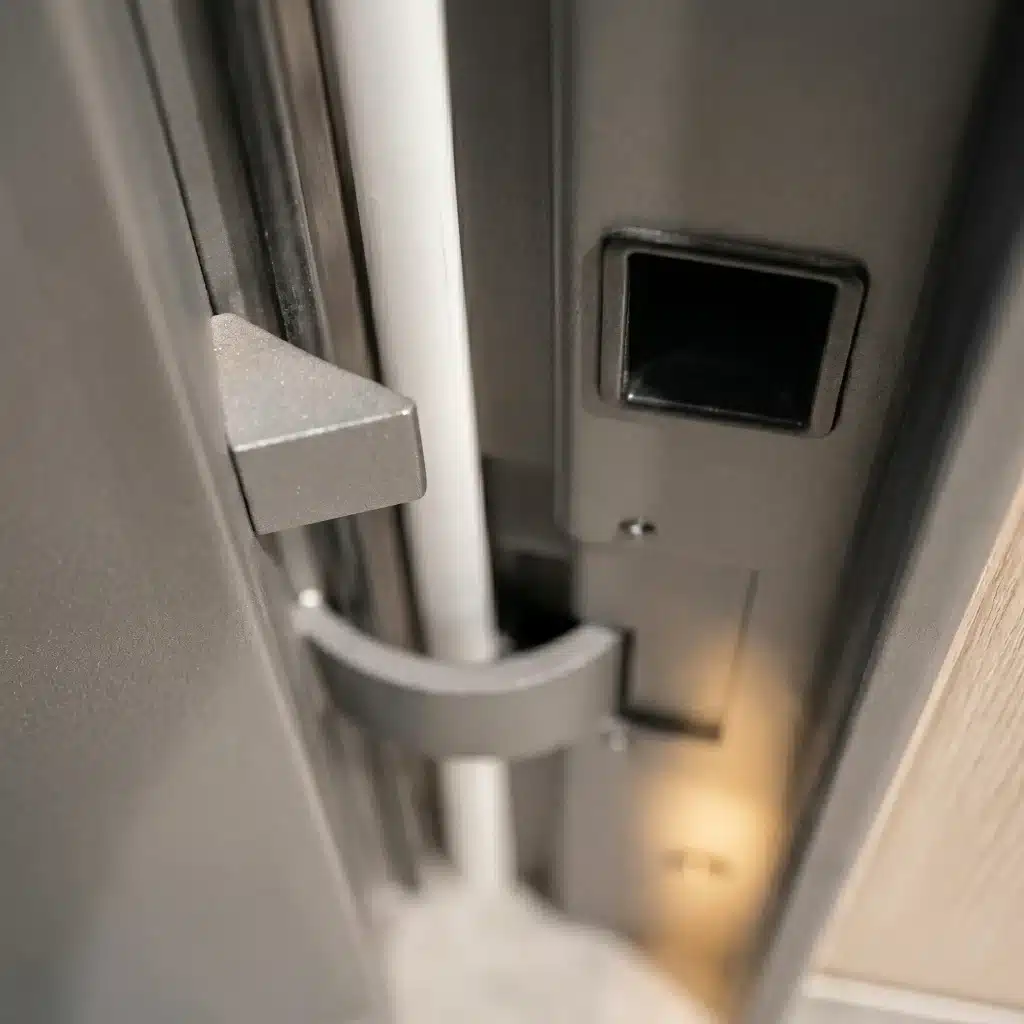
Security dog bolts are steel elements fixed to the leaf of an armoured door which, when the door is closed, slot into matching housings in the frame.
They sit on the hinge side, that is, on the opposite side to the lock.
They are also called anti-lever dog bolts and have a precise job: to stop the door being levered off, even if the hinges come under attack.
What security dog bolts are for
An armoured door is almost always attacked from the lock side.
The hinge side, though, is just as much of a weak point as the lock side if it is left unprotected.
A skilled burglar can in fact try to force the hinges with a lever or a crowbar, bending or breaking them, to pull the leaf out of the frame.
At that point, with nothing else holding it in place, the door falls away.
Dog bolts solve exactly this problem.
When the door is closed, they lock into the frame like locking pins, holding the leaf firmly on the hinge side whatever happens to the hinges themselves.
Even if the hinges are damaged, the dog bolts stay inside the frame and the leaf does not come out of its seating.
In a well-designed armoured door, hinges and dog bolts work together as a single passive security system on the hinge side.
Fixed dog bolts are the most common type on armoured doors.
They are steel pins or elements that project from the leaf, always visible even when the door is open.
When you close the door, they engage passively inside the frame housings: they do not need to be operated with the key.
Pin dog bolts and the continuous dog bolt
A less well-known distinction, but a very important one for anyone after a serious door, concerns the shape of the dog bolt.
The traditional system uses several separate pin dog bolts, spread across 2 or 3 points along the hinge side.
Each pin slots into a matching hole in the frame.
It is a tried-and-tested, widespread system, but it has a weak point: under very strong levering pressure, the individual holes in the frame can widen, and the pins risk slipping out.
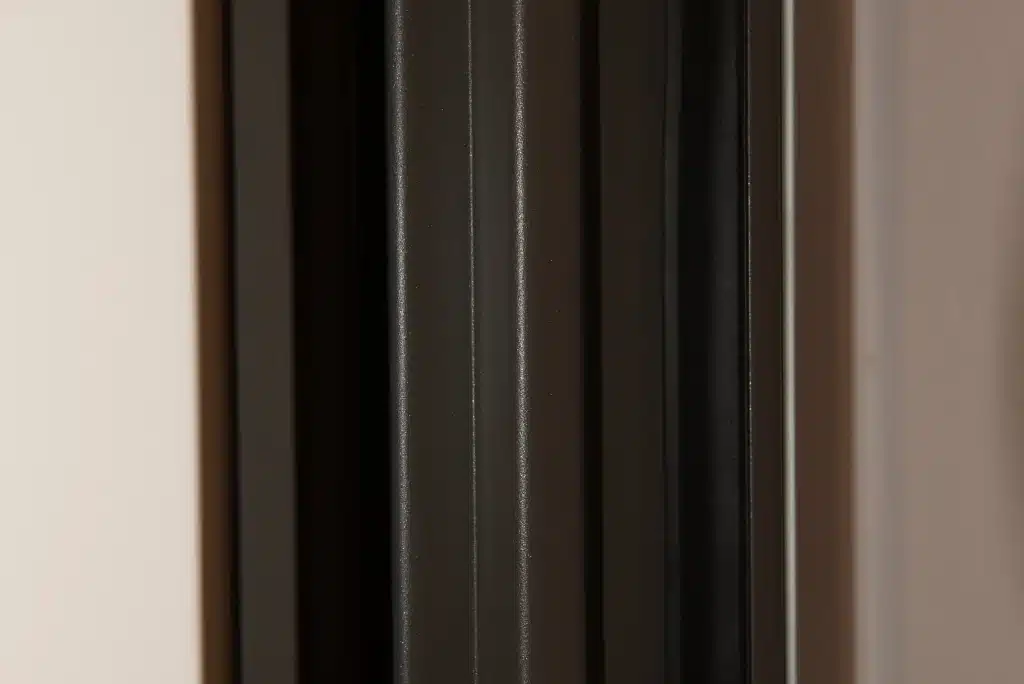
The advanced system is the continuous dog bolt: a single steel element that runs the full height of the hinge side and slots into a continuous channel in the frame.
This way the resistance to levering is spread along the full height of the door, rather than concentrated at two or three points.
Tearing the dog bolts out becomes, in practice, almost impossible: to pull the leaf out you would have to deform the entire frame along its full height.
Security dog bolts in Ariete armoured doors
Ariete armoured doors come with steel security dog bolts on the hinge side, sized and positioned according to the model’s burglar resistance class.
On RC3 models we work with a full 3 fixed dog bolts, spread along the hinge side and paired with frame pins sized to resist tearing.
On RC4 models, however, we fit the continuous dog bolt: a single steel element that runs the full height of the hinge side.
It is a solution most of the market does not offer, and one that considerably raises the door’s resistance to levering attacks.
The dog bolt system works together with the hinges, the anchoring of the frame in the masonry and the defender that protects the cylinder on the lock side.
All our fitting technicians are trained at the Accademia della Posa in Opera: an important detail, because a badly fitted dog bolt is a useless dog bolt.
If you are thinking of replacing your front door or building a home, request a quote and let us work out together the right level of hinge-side protection for your situation.
Frequently asked questions
Dog bolts work to stop the door being levered off on the hinge side.
When the door is closed they slot into the frame and hold the leaf anchored, so that even if a burglar attacks the hinges with a lever the door cannot come out of its seating.
They are the passive defence of the side opposite the lock.
The dog bolts are on the door leaf, on the hinge side, that is, on the opposite side to the lock.
They are visible when the door is open, and when it is closed they disappear into the dedicated housings cut into the frame.
More than the number, what counts is the quality and the shape of the dog bolts.
A serious RC3 armoured door generally works with 2 or 3 well-sized dog bolts.
On RC4 doors the technically most advanced solution is the continuous dog bolt, a single element that runs the full height of the leaf on the hinge side.
Yes.
A continuous dog bolt spreads the resistance to levering across the full height of the door, whereas pin dog bolts concentrate the force on 2 or 3 specific points.
Under very strong pressure, the holes for pin dog bolts can widen and the pins risk slipping out: something technically impossible with a continuous dog bolt, because to pull the leaf out you would have to deform the entire frame along its full length.