
The key turns of a door are the full rotations of the key that drive the bolts of the lock.
Each turn slides the bolts into the frame, increasing the door’s grip on the jamb.
On an armoured door they are the main mechanism of deliberate locking: a door with the key turns left open is no better than an ordinary door pulled to, even if the structure is armoured.
For this reason, an armoured door only truly becomes “armoured” the moment you complete all the key turns.
What key turns are for
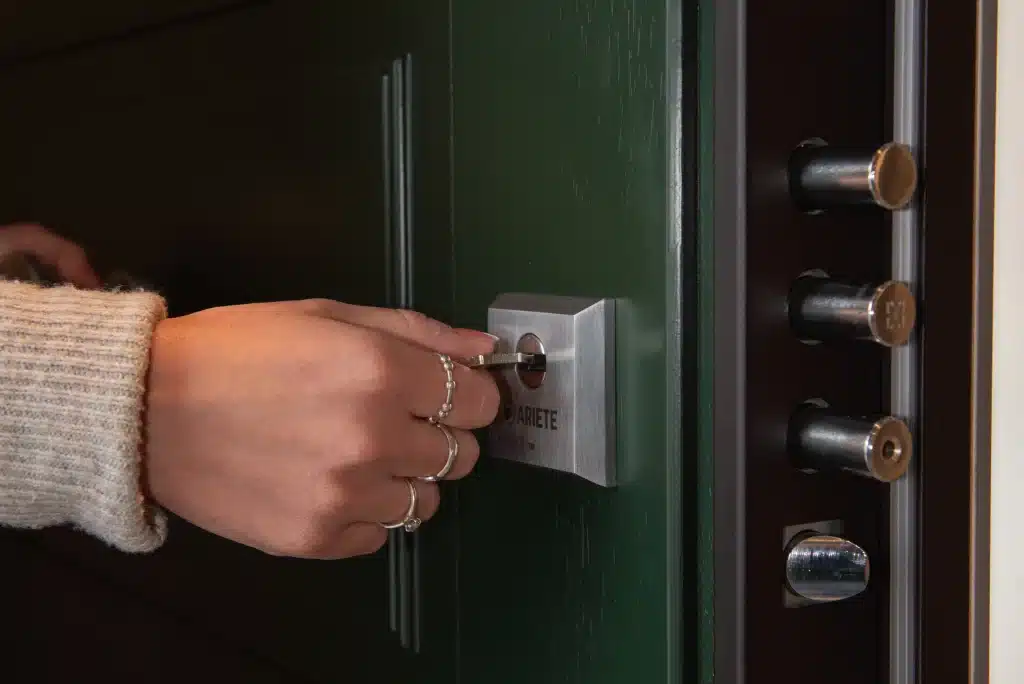
When you turn the key, the movement passes through the cylinder of the lock and reaches the internal mechanism, which pushes the bolts out.
These slide into metal keeps in the frame, creating the locking points that hold the door firmly in place.
Each key turn corresponds to a full rotation of the key (360°).
In many modern locks all the bolts come out on the first rotation, and the following turns drive them further into the frame, increasing the door’s resistance to forced entry.
In other locks, by contrast, each turn engages additional components such as auxiliary bolts and deadbolts, which lock the leaf at the top and bottom as well.
Key turns should be distinguished from the latch.
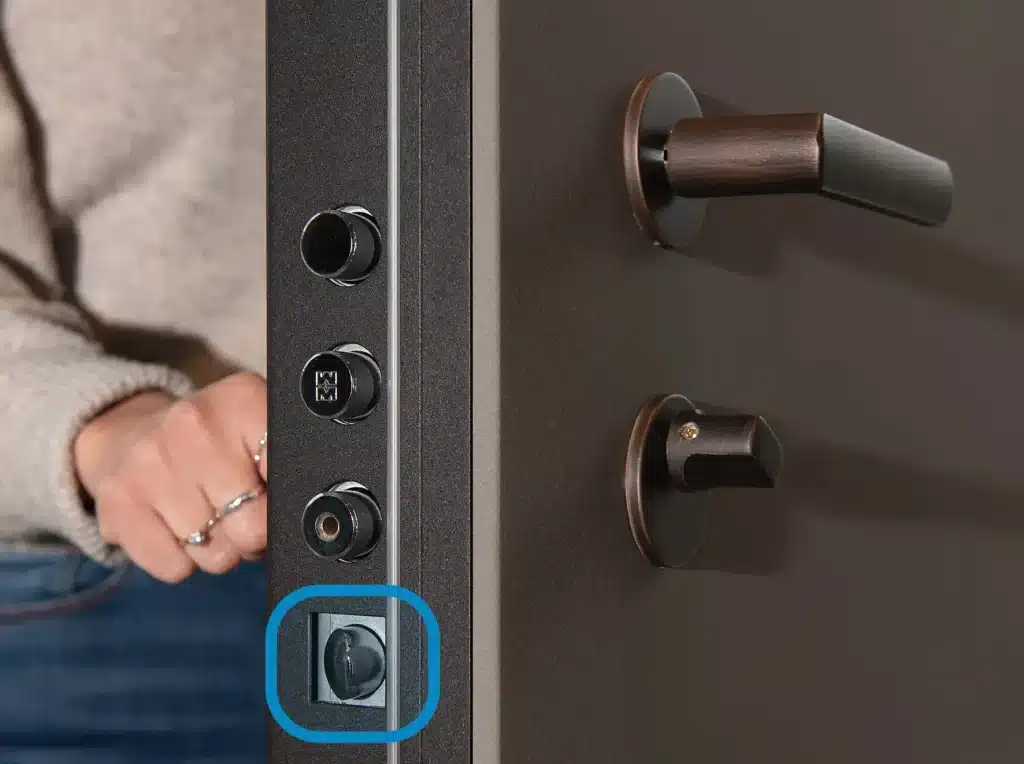
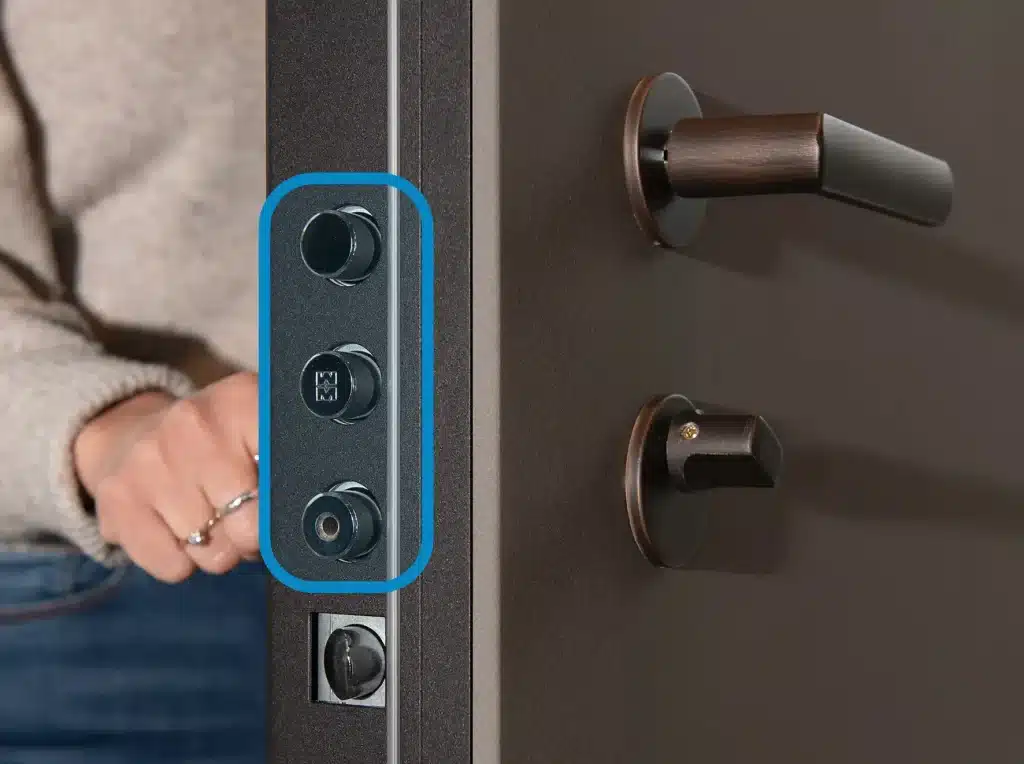
Armoured door latch (photo 1) and the lock’s key turns (photo 2)
The latch is the small angled bolt that catches on its own when you pull the door to, and it only holds the door pulled to.
Key turns, on the other hand, are active locking: they only engage if you turn the key and lock the door structurally.
In the video below you can see how the key turn mechanism works.
How many key turns an armoured door has
Good quality armoured doors lock with 3 or 4 key turns, depending on the lock fitted.
This is the typical range for mid to high-end models.
The number of key turns depends on the type of system:
- Double-bit lock: typically works with 3 or 4 key turns, but it is now considered less secure because it is exposed to break-in techniques such as the Bulgarian key.
- Euro cylinder lock: the standard for modern armoured doors, usually with 3 or 4 key turns, paired with anti-drill, anti-bumping and anti-extraction systems.
Take care not to confuse key turns with locks.
The phrase “locking with a double turn” means giving the key two full rotations on the same lock, not having two separate locks.
In the same way, a door with a “triple turn” has a single lock operated with three rotations of the key.
The number of key turns, however, is not on its own the parameter that measures the security of a door.
What matters far more is the overall quality of the locking system: the cylinder, the defender that protects it, the auxiliary bolts, the deadbolt, and above all the certified burglar resistance class of the door as a whole.
A 4-turn lock fitted on a weak door is worth less than a 3-turn lock fitted on a seriously engineered door.
Key turns on Ariete armoured doors
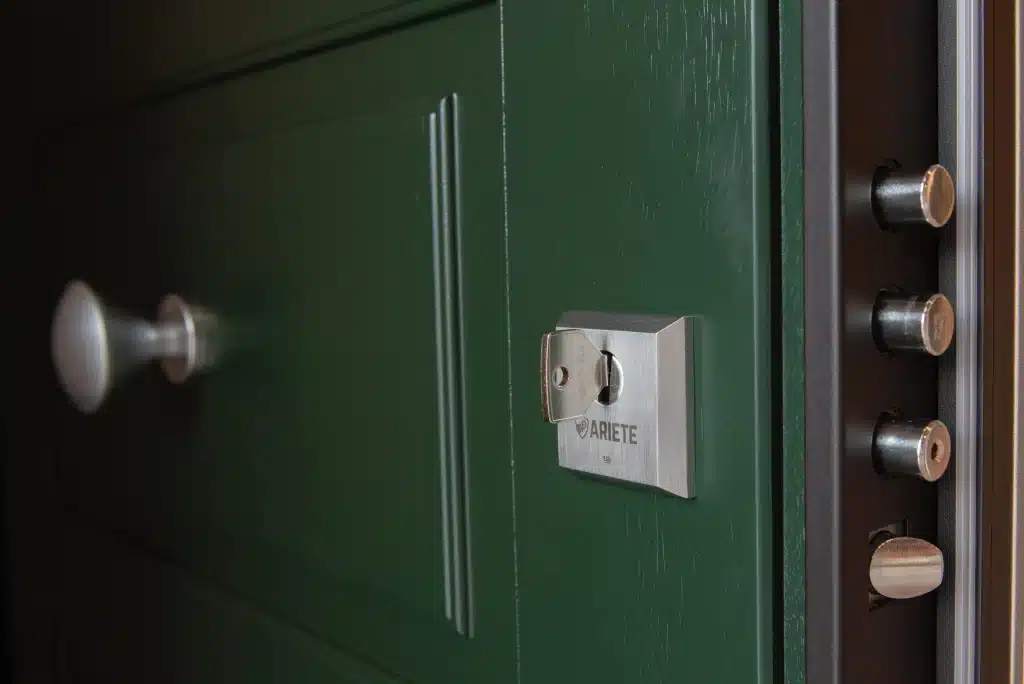
On Ariete armoured doors the locking system is engineered so that every key turn is genuinely hard to force, not just plentiful.
The cylinder that drives the key turns is protected by the square Ariete defender with chamfered corners, a geometry unique on the market that thwarts the scaffolding pipe technique.
This is one of the most widespread break-in methods for pulling out the cylinder and operating the key turns without a key.
The patented Ariete key cannot be copied at a hardware shop: only the holder of the original can complete a key turn.
If the key is lost, the 5+1+1 system lets you recode the cylinder yourself with an emergency key, without having to call a technician or change the lock.
If you are thinking of replacing your front door or are building a home, request a quote to work out which locking system best suits your situation.
Frequently asked questions
Good quality armoured doors lock with 3 or 4 key turns.
More than the number itself, what matters is the overall quality of the locking system: cylinder, defender, auxiliary bolts, door restrictor and certified burglar resistance class.
A 4-turn lock on a weak door is less secure than a 3-turn lock on a seriously engineered door.
They are two different mechanisms.
The latch is the small angled bolt that catches on its own when you pull the door to: it keeps the door closed but not locked.
The key turn, by contrast, is active locking that engages only when you turn the key, and it locks the door structurally by driving the bolts into the frame.
It means giving the key two full rotations on the same lock, not having two separate locks on the door.
With each rotation the bolts advance further into the frame or, in some locks, additional auxiliary bolts and deadbolts are engaged.
The number of key turns does not directly correspond to the number of locking points: in modern locks all the bolts come out on the first rotation, and the following turns only drive them further in.
The real difference in security lies not in the number of key turns, but in the quality of the cylinder, the defender, the materials and the installation.
A serious armoured door is worth its complete system, not how many times the key turns.
Yes.
An armoured door with the key turns left open is structurally armoured but functionally just pulled to: the bolts are retracted inside the leaf and the door can be opened with a push, an “shim” or a basic break-in tool.
The key turns should all be completed, every time you leave home, even for a few minutes.