
Replacing the entrance door in a block of flats is a job that, even though it concerns private property, must comply with the Italian Civil Code and with any block management rules.
One of the most important things to bear in mind is the building’s shared appearance, because the entrance door, visible from the communal areas, contributes to the architectural character of the building.
Many owners wonder whether replacing an armoured door in a block of flats needs a specific authorisation or can be done freely.
In this article we look together at whether the doors in a block of flats all have to be the same, whether you can change your entrance door and how to avoid disputes with the other residents.
Armoured door in a block of flats: do you need the residents’ meeting to approve it?
In most cases you do not need a formal resolution from the residents’ meeting to replace your own entrance door, provided the work does not alter the building’s architectural character.
That said, it is always wise to check the block management rules and inform the managing agent before going ahead.
The rules on replacing an armoured door in a block of flats
Let’s start with the most important question:
Can you change the entrance door in a block of flats?
Simple answer: yes.
Detailed answer: under Article 1122 of the Italian Civil Code, every owner has the right to make changes to their own property, as long as these do not harm the communal areas or compromise the building’s architectural character.
In addition, if the block management rules set out specific restrictions, these must be respected to avoid legal disputes.
The difference between meeting-approved rules and contractual rules
It is important to distinguish between meeting-approved block rules and contractual rules.
The contractual rules, attached to the purchase deeds, can impose stricter limits on the appearance of entrance doors.
The meeting-approved rules, on the other hand, cannot place an outright limit on an individual owner’s right to improve the security of their own home, provided the building’s architectural character is not compromised.
When it comes to replacing the entrance door, the main constraint concerns the door’s external appearance, which must be consistent with the other doors in the block.
What does architectural character mean?
But what does “architectural character” actually mean in practice?
It is not about preventing every change, but about avoiding obvious alterations to the building’s visual harmony.
Colour, panel design, raised mouldings, routing and finishes must be consistent with those already present in the communal areas.
If the new door looks different from the others, the residents’ meeting could ask for it to be replaced with one in keeping with the building’s appearance.
In most cases, when the external panel is reproduced faithfully, no disputes arise with the block.
For this reason, it is always advisable to inform the managing agent in advance and, where necessary, obtain the residents’ meeting’s approval.
Do the doors in a block of flats all have to be the same?
If you want to replace your armoured door without running into problems with the block, you need to reproduce the external panel as close as possible to the original, both in design and in colour.
The reason most disputes arise is not the replacement of the door itself, but the lack of visual consistency of the external panel.
This is why a careful site survey of the measurements and of the original details is essential.
At Ariete we offer an ideal solution for anyone who wants to change their armoured door without running into problems with the block.
Thanks to our in-house joinery, we can reproduce the panel of the existing door as faithfully as possible.
During the site survey we examine:
- the design and geometry of the raised mouldings
- the depth of the routing
- the shade and finish of the colour
- any fittings to be kept
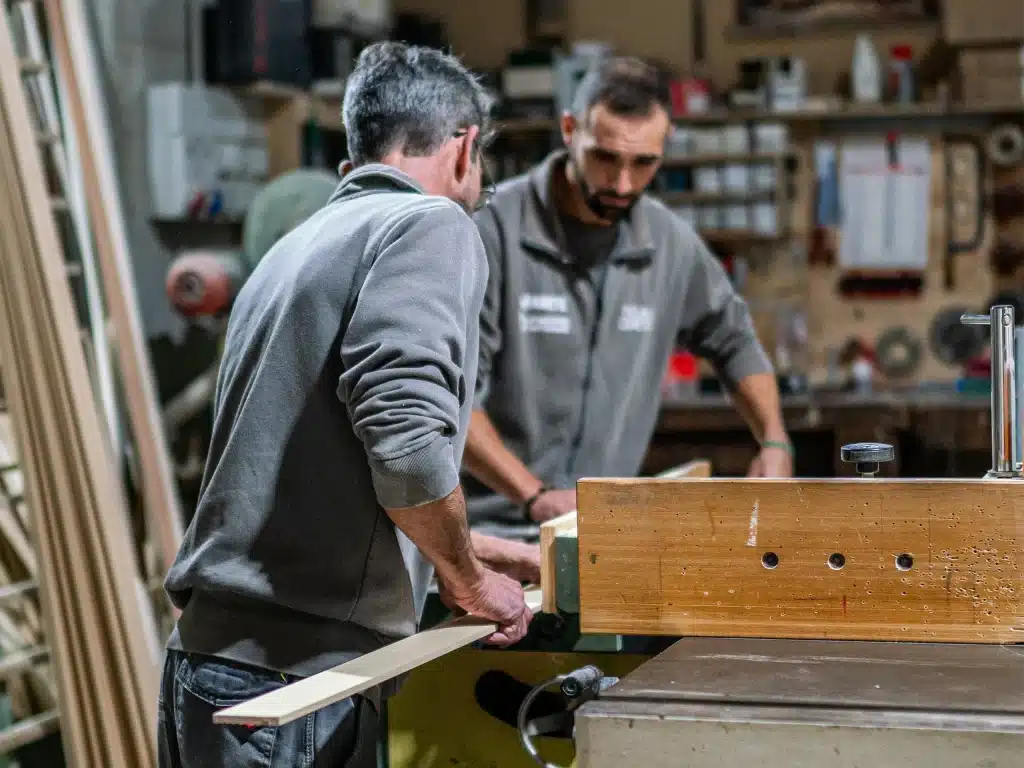
The Ariete joinery making a panel for an armoured door
This guarantees not only compliance with the block’s rules, but also better security and improved thermal and acoustic insulation.
Here is our method for taking the measurements to pass on to the joiner so they can reproduce an external panel as close as possible to the existing one.
Real examples of armoured door replacements in blocks of flats
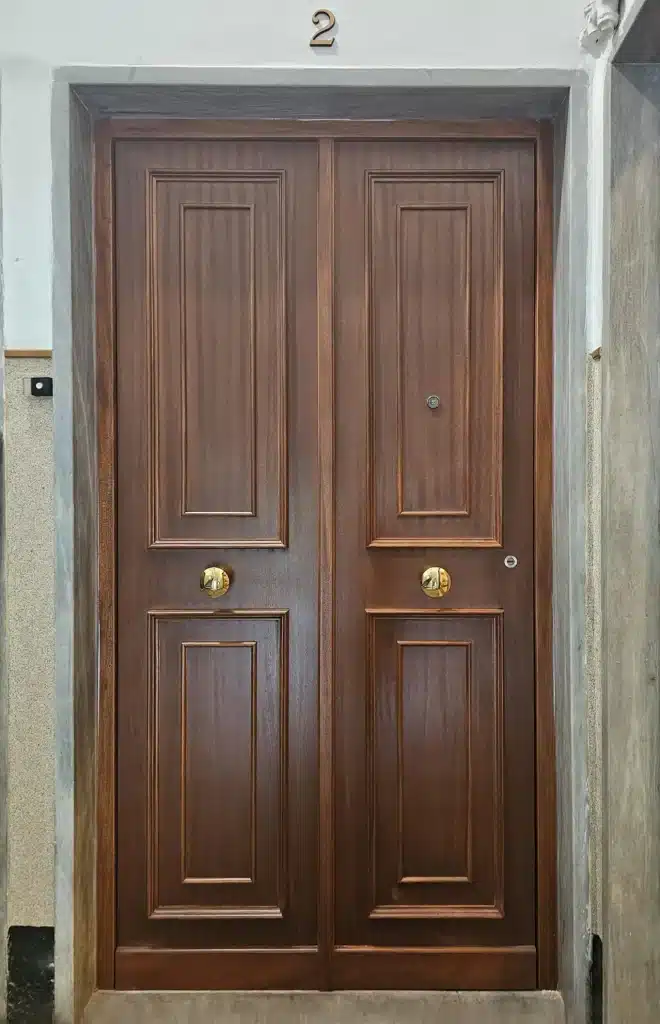
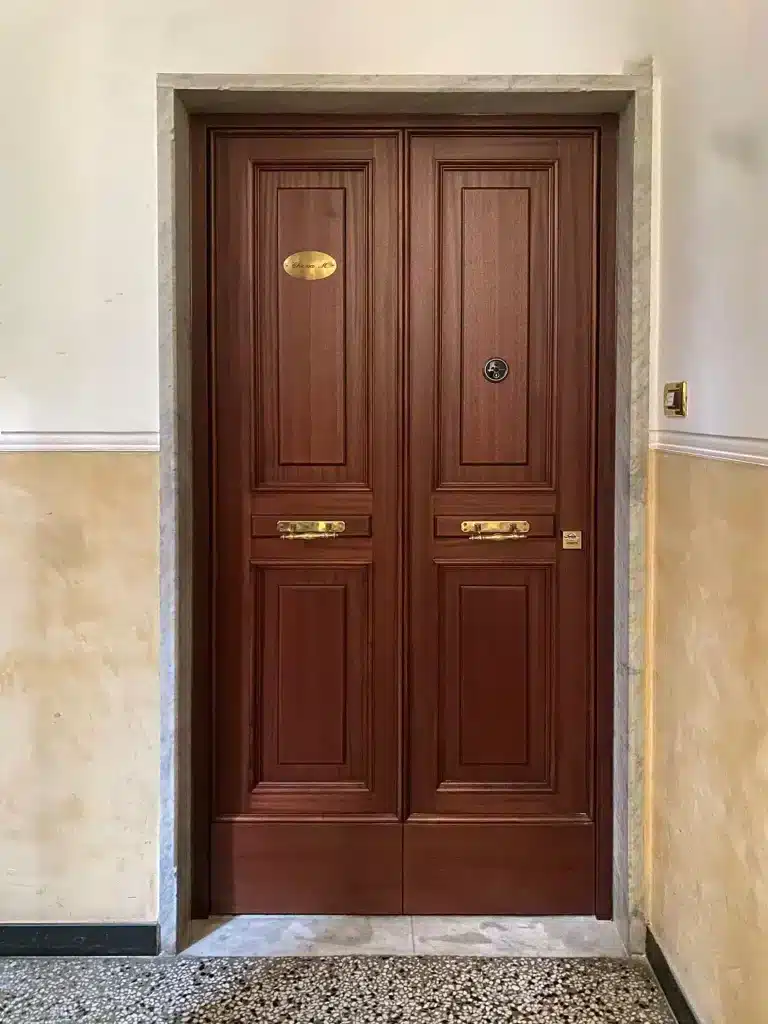
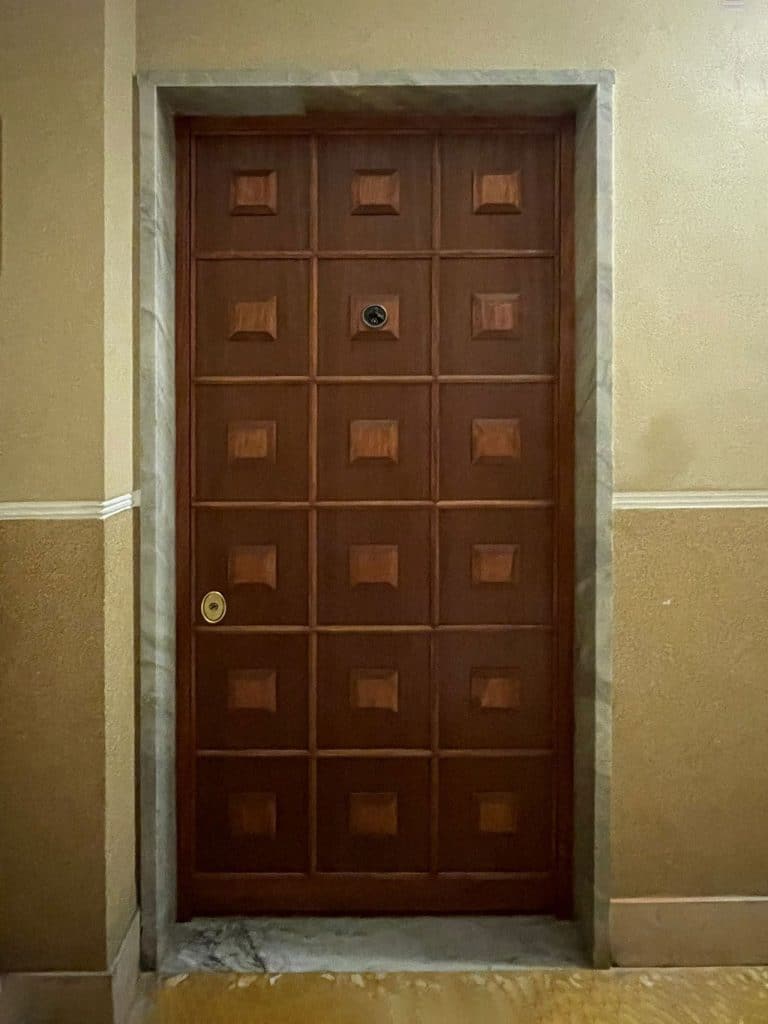
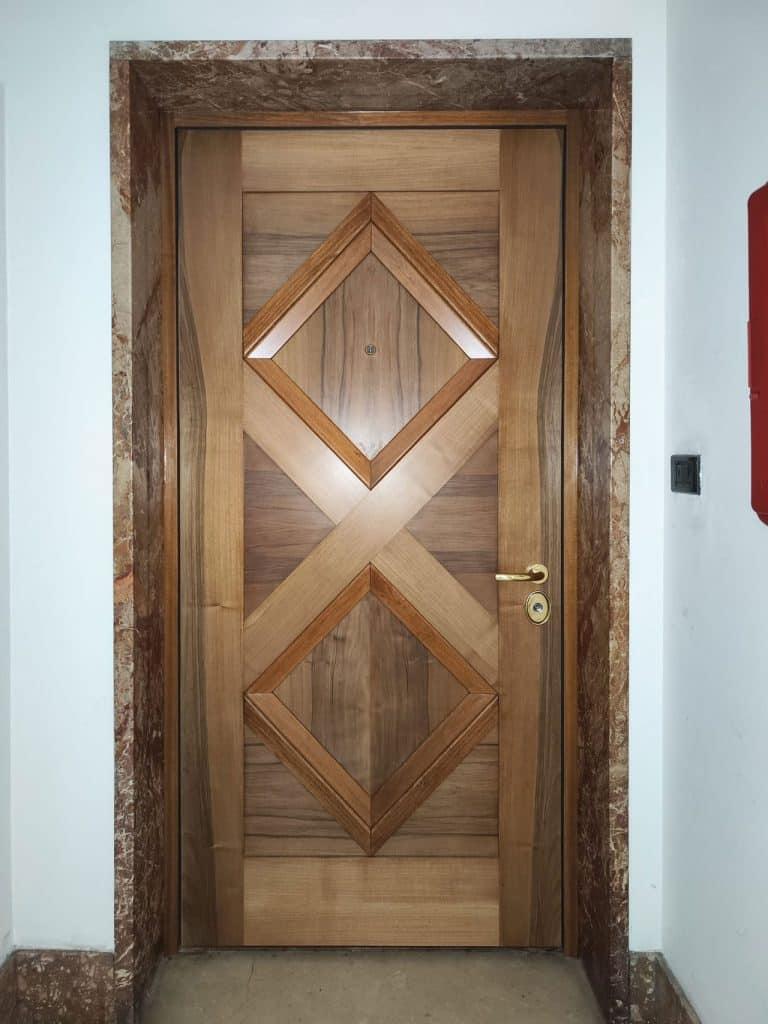
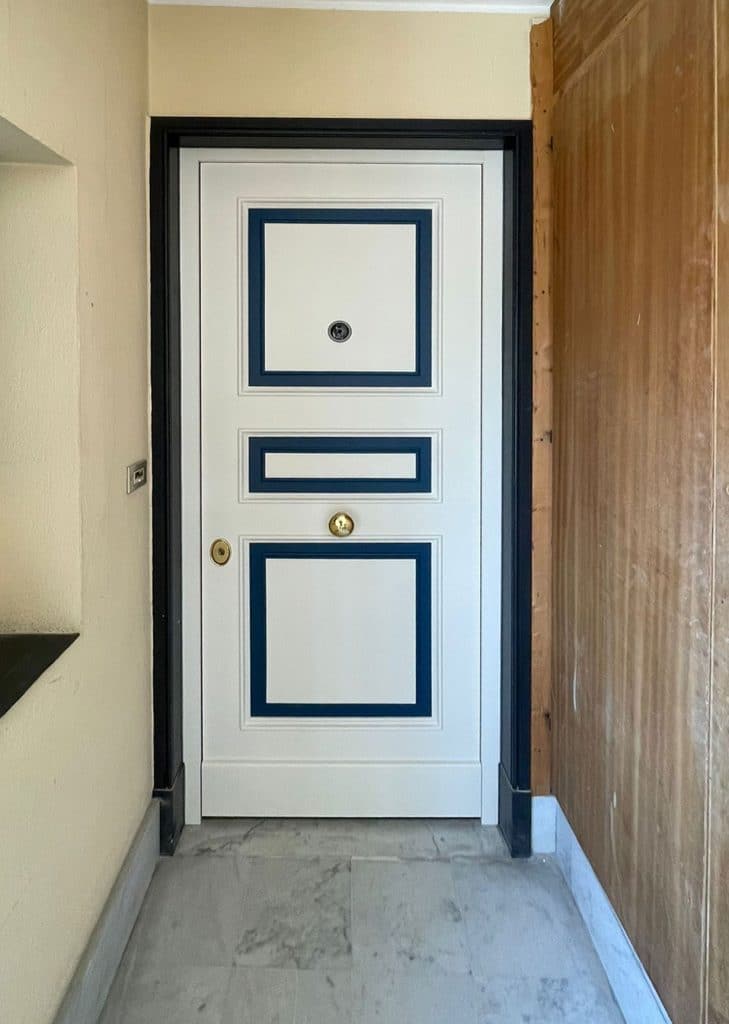
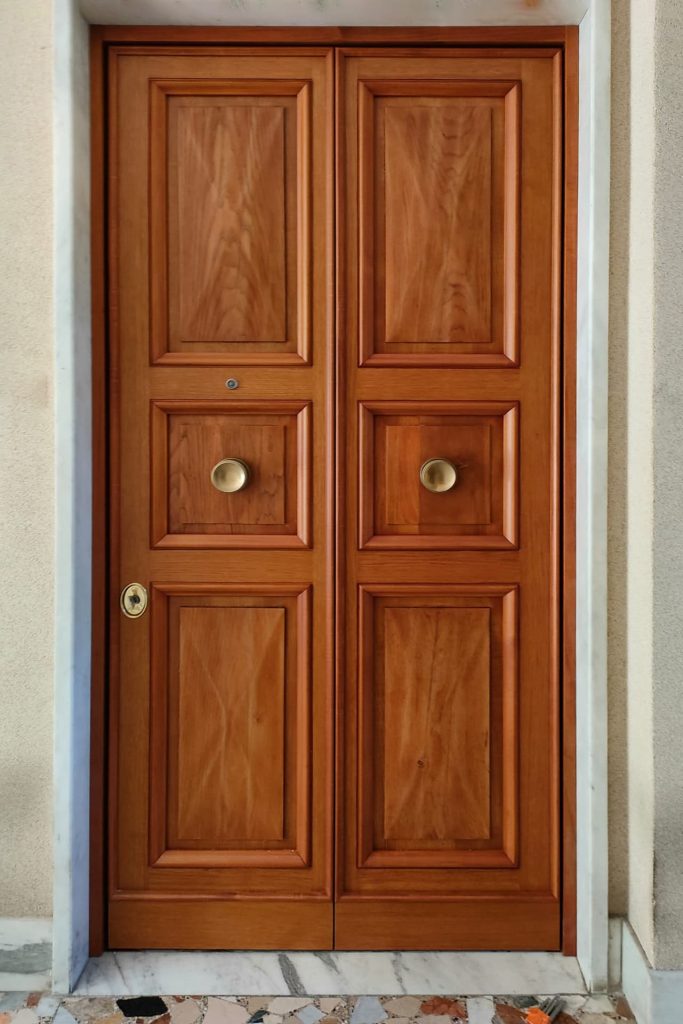
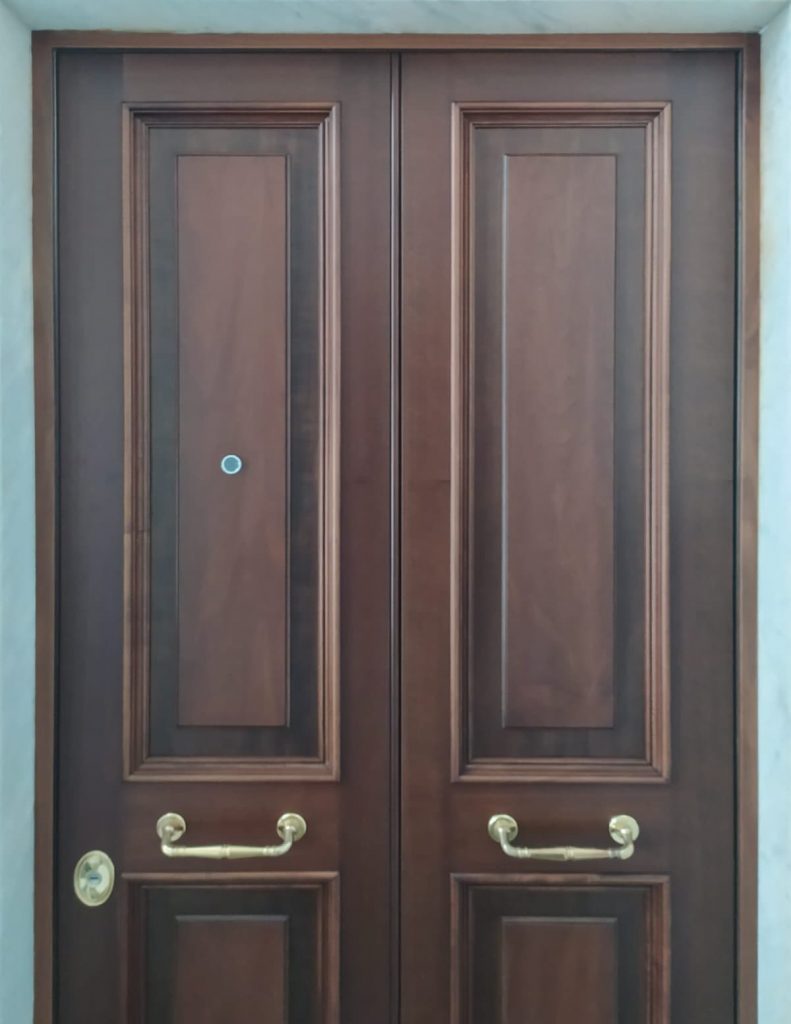
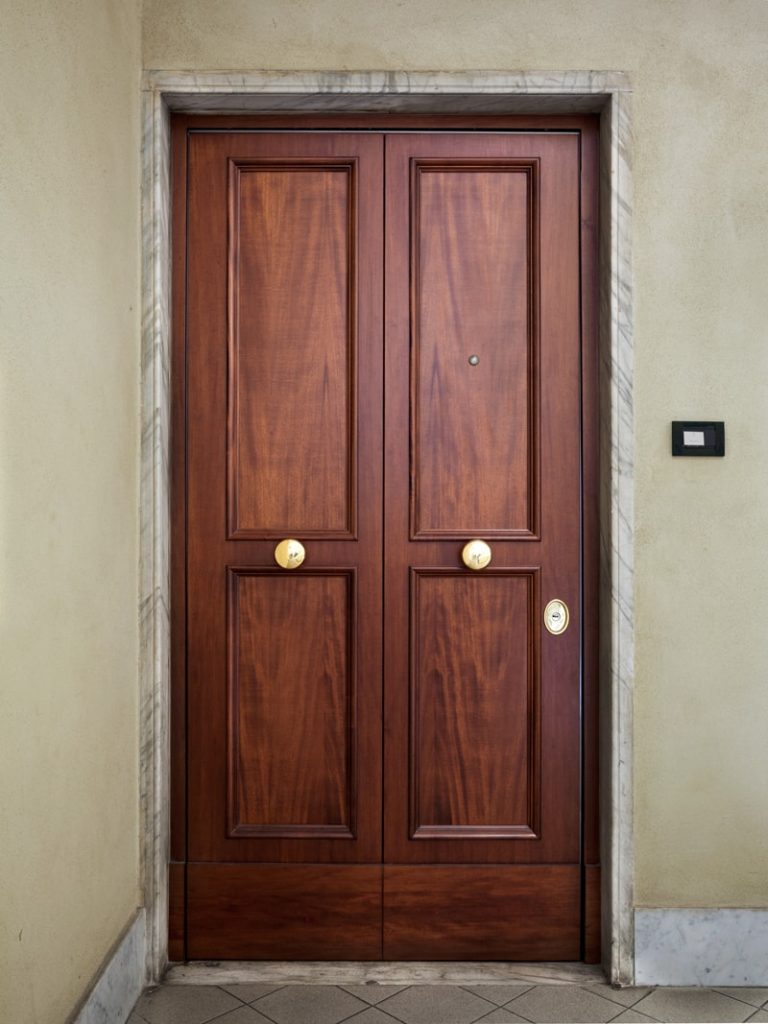
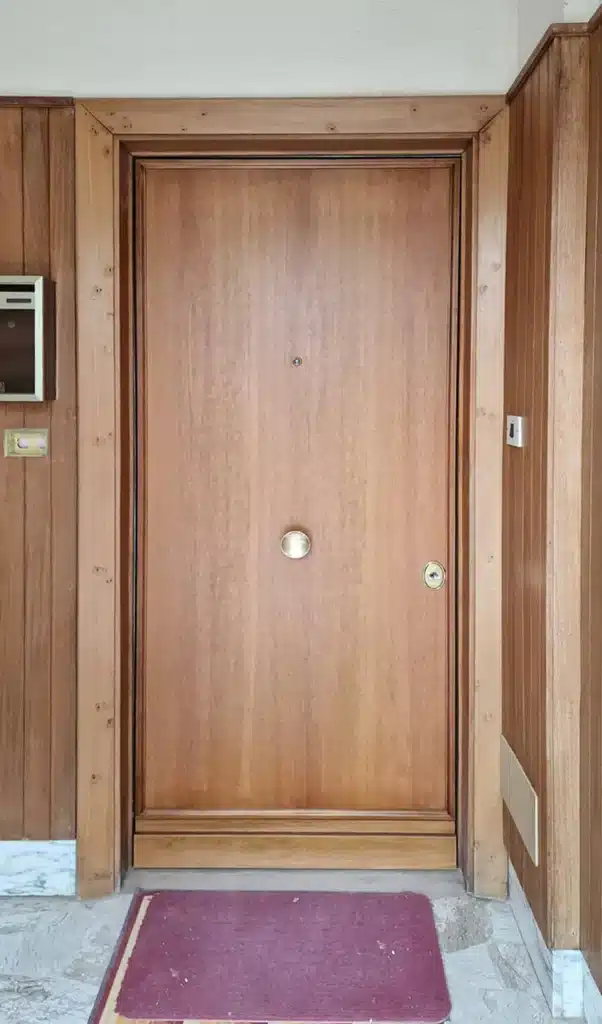
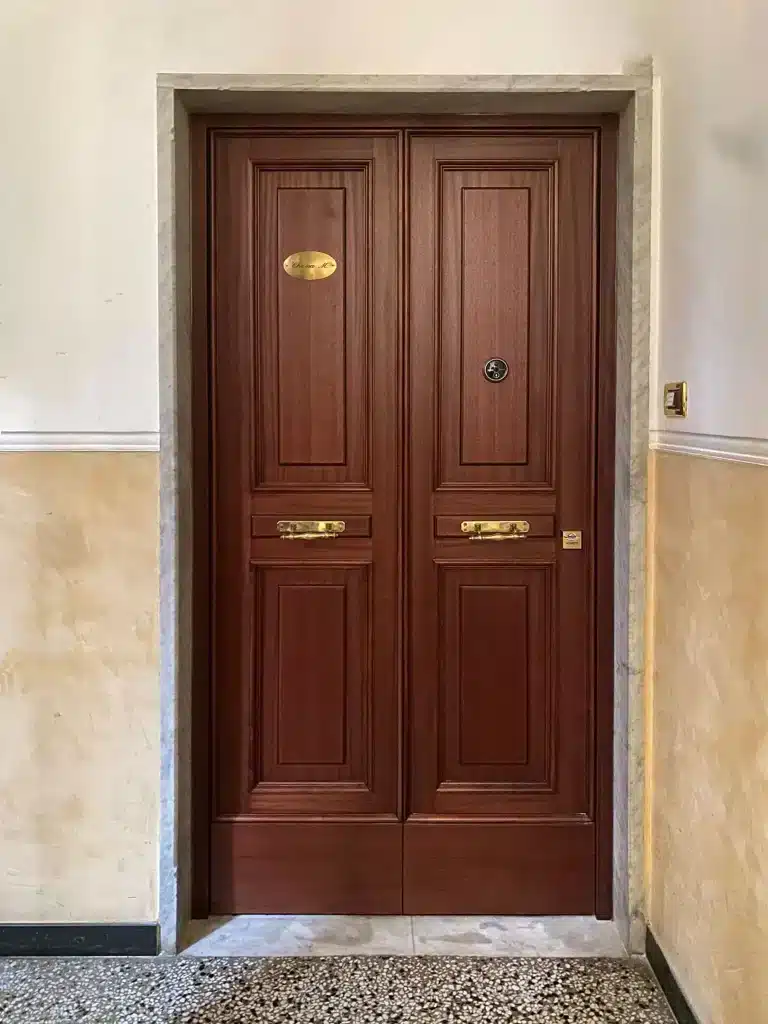
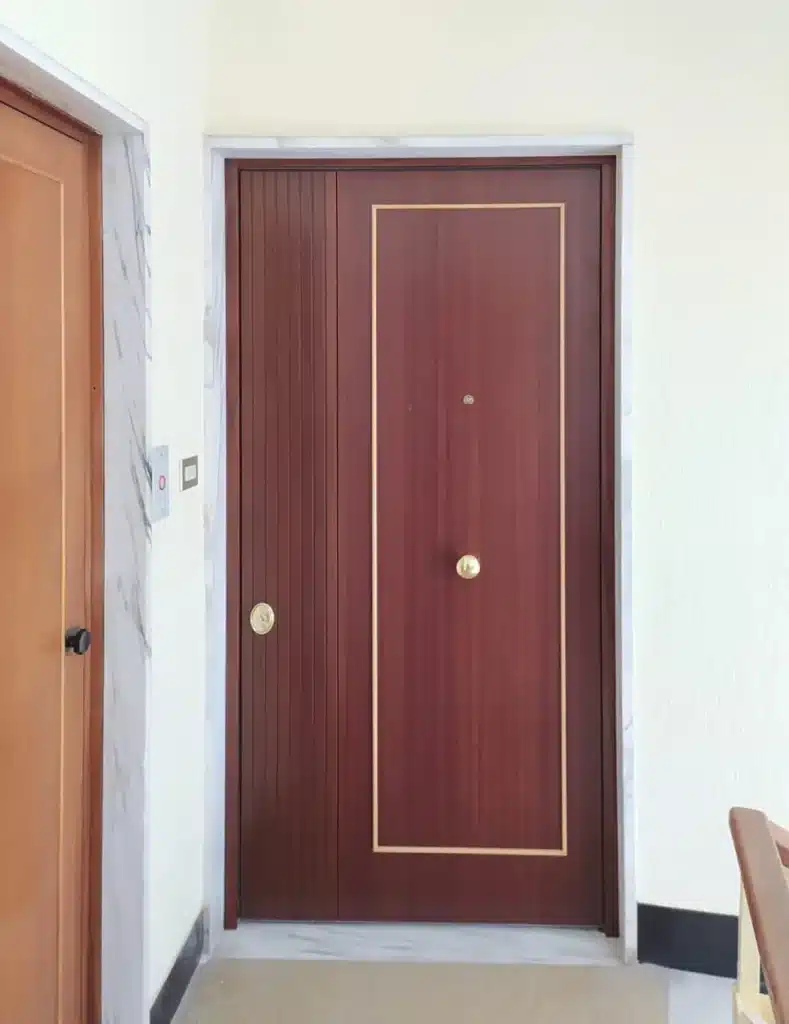
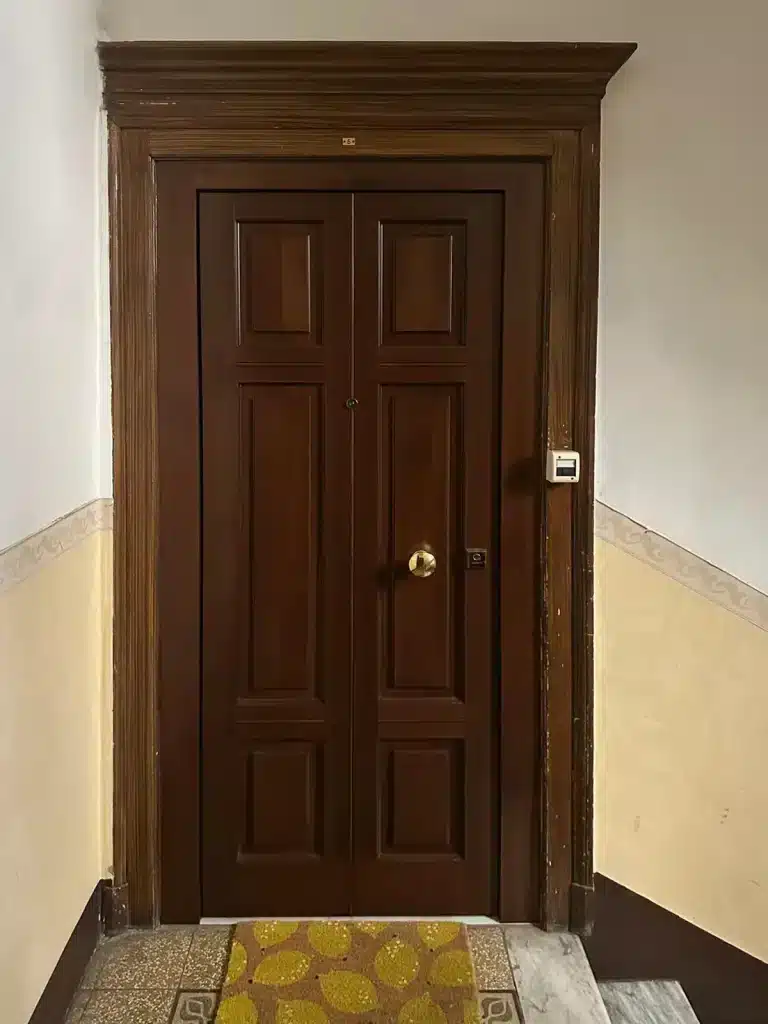
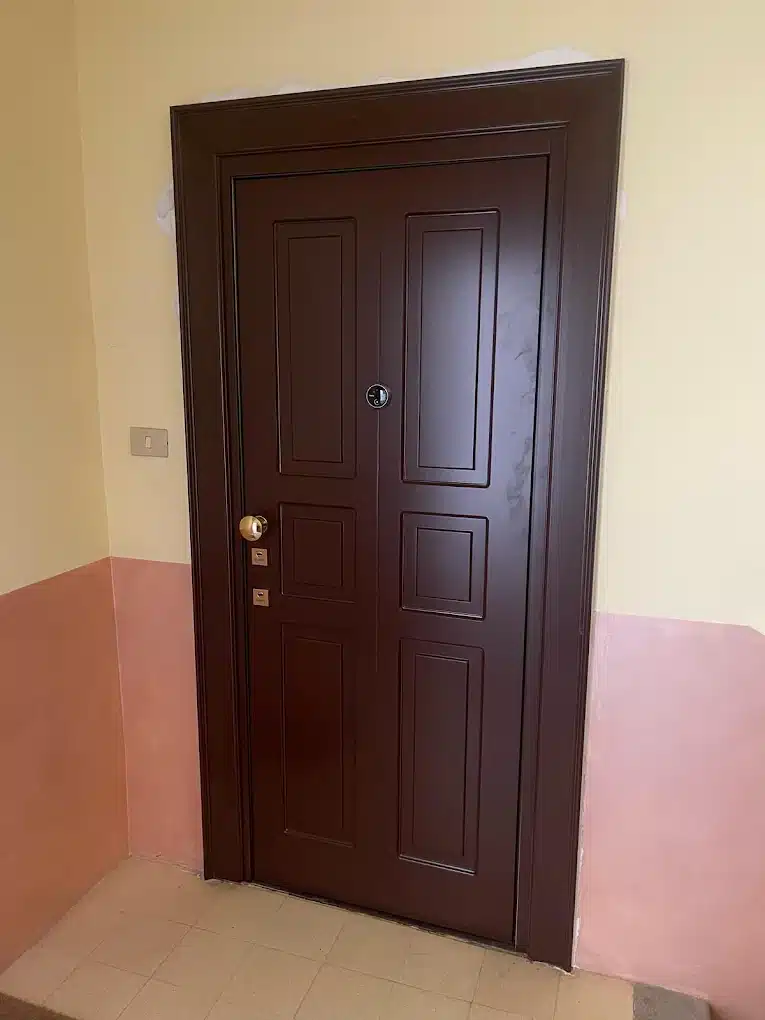
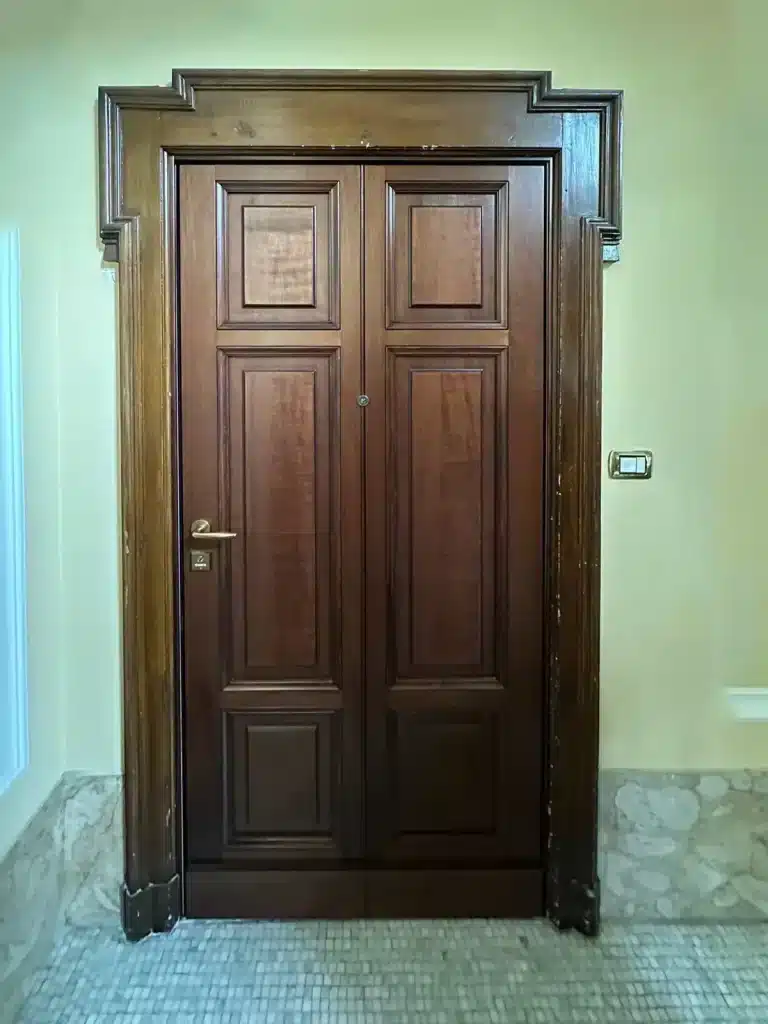
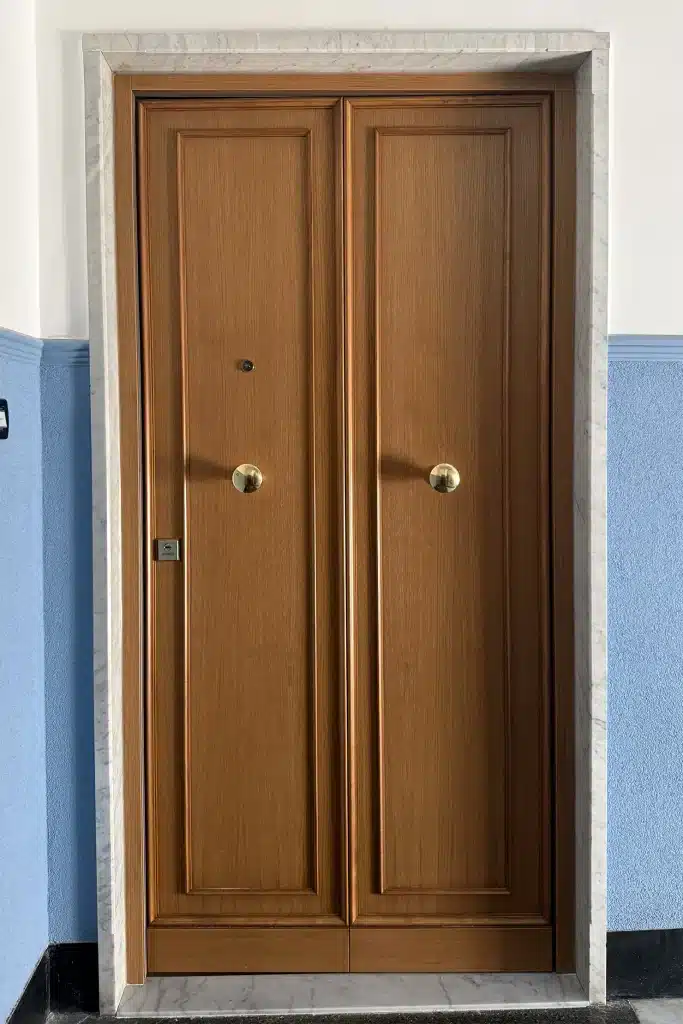
Below are some real examples of Ariete armoured doors fitted in blocks of flats, where the external panel was reproduced faithfully to avoid any dispute.
Special cases when replacing an armoured door in a block of flats
Turning a double-leaf armoured door into a single leaf: can it be done?
Yes, you can replace a double-leaf armoured door with a single-leaf armoured door, even in a block of flats.
From a legal point of view, what matters is not the actual number of leaves, but respect for the building’s architectural character.
To avoid disputes, it is enough to make a single-leaf armoured door with a central routed groove that visually reproduces the join between the two original panels.
This way, from the outside the appearance stays unchanged and consistent with that of the other homes.
If the design, the proportions and the finish are kept faithfully, there is no alteration to the architectural character and, as a result, no grounds for any dispute.
This solution lets you:
- improve thermal and acoustic insulation
- increase security
- simplify the structure of the door
- keep full visual consistency with the rest of the block
It is one of the most common solutions in blocks of flats where the old double-leaf doors no longer provide adequate levels of security.
Here you can see a double-leaf door turned into a single leaf without altering the appearance of the block: from the outside the visual effect stays identical.
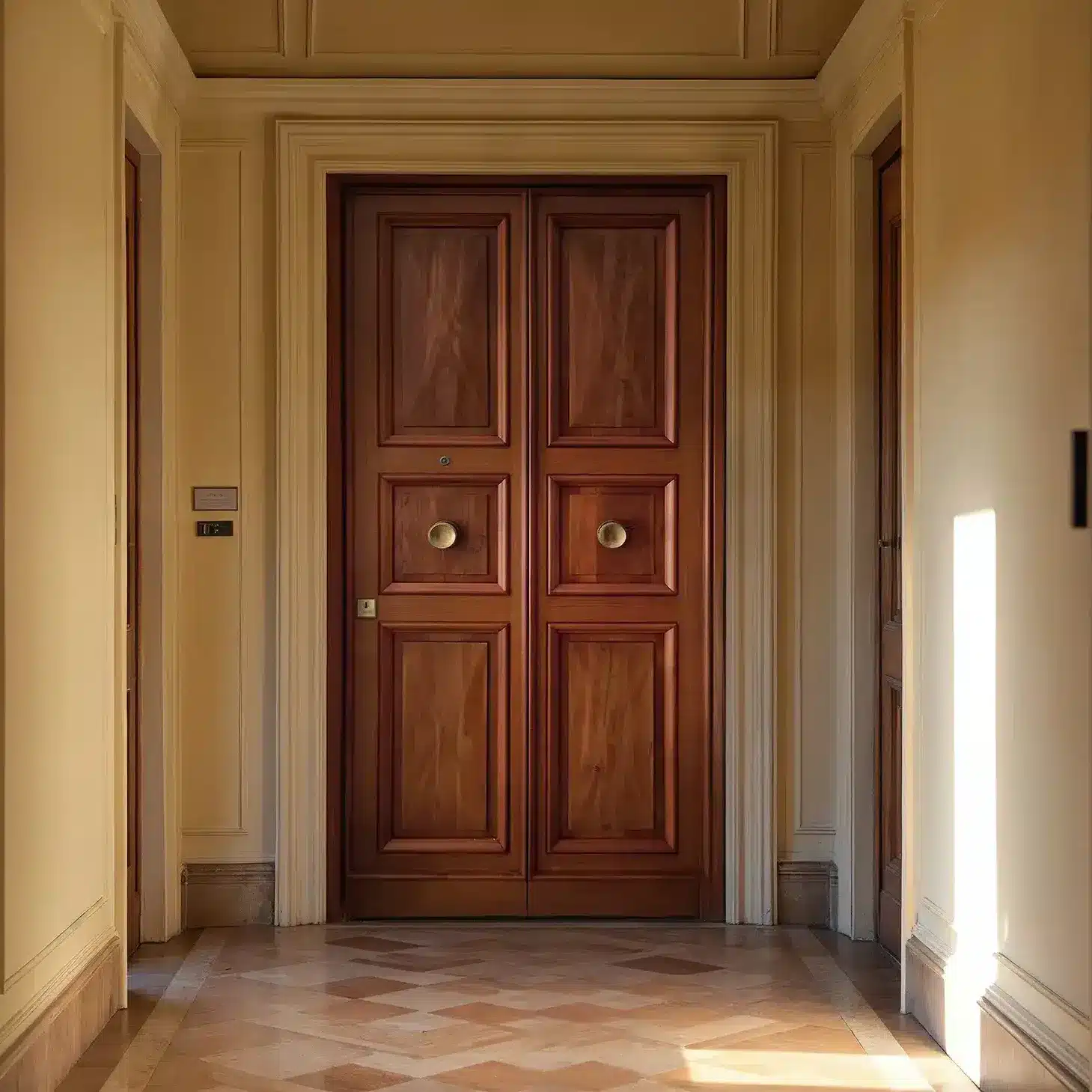
External door furniture on an armoured door: is it compulsory to keep it?
External door furniture is one of the elements that most often raises questions in blocks of flats.
In most cases, owners choose to keep the original door furniture, especially when it comes to knobs, escutcheons or handles that are no longer made and hard to find on the market.
From a legal point of view, what always matters is respect for the architectural character.
If changing the door furniture clearly alters the uniform appearance of the stairwell, it could be open to dispute.
However, there are two solutions:
- keep and adapt the original door furniture to the new door
- replace it with a model that is visually consistent with the existing one
In many cases it is also possible to restore and refurbish the original door furniture, improving its function and security without changing its external look.
When the new handle respects the shape, proportions and finish of the other doors in the block, there is no alteration to the architectural character.
Can I change the colour of an armoured door in a block of flats?
The colour of the external panel is one of the most sensitive elements when replacing an armoured door in a block of flats.
From a legal point of view, there is no absolute ban on changing the colour.
However, the principle of architectural character requires that the external appearance of the door stays consistent with that of the other homes.
If all the doors in the stairwell share the same shade or finish, fitting a door in a completely different colour could be seen as an obvious alteration to the visual harmony of the building and therefore open to dispute.
There is, though, a practical point to bear in mind: a new door can never have exactly the same colour as a door fitted 20 or 30 years earlier.
Over time, wood tends to oxidise and fade, especially when exposed to the natural light of the stairwell.
For this reason, what matters is not a perfect colour match, but visual consistency.
Choosing a very similar shade, with a consistent finish and design, is generally enough to keep the building’s visual harmony.
In these situations, there is normally no breach of the architectural character.
The internal panel, on the other hand, can be customised freely, since it is not visible from the communal areas.
Can I switch the side the lock is on in a block of flats?
In many blocks of flats the doors all have the lock on the same side.
This often leads people to ask: can I fit a door with the lock on the left when everyone in the block has the lock on the right?
From a legal point of view, the orientation of the lock does not in itself affect the architectural character, unless the change brings about a visible and significant alteration to the overall appearance of the stairwell.
In most cases, switching the side of the lock does not cause disputes, especially if the door’s external appearance stays consistent in design, colour and finish.
It is still advisable to inform the managing agent in advance, particularly in blocks with contractual rules that govern the appearance of entrance doors in detail.
| Work | Is it allowed? | Does it need checking? |
|---|---|---|
| Replace with an identical panel | Yes | No |
| Turn 2 leaves into 1 leaf | Yes | Generally no |
| Change the external colour | Only if consistent | Yes |
| Change only the internal panel | Yes | No |
| Replace the door furniture | Yes | Generally no |
| Switch the lock side | Generally yes | Generally no |
Replacing an armoured door in a block of flats: stages of the process
Checking the block management rules
If you intend to change the appearance of the external panel, before going ahead with the replacement it is essential to check whether the block imposes specific restrictions on the design of entrance doors.
If instead you intend to replace an armoured door by fitting one with a panel similar to the original, you do not need to do anything in this respect.
Crafting the panel by hand
After taking the panel measurements and all the details, our in-house joinery can make one very similar, matching colours, finishes and details.
Recovering details and fittings
In some situations, in blocks of flats it is necessary to keep original knobs, escutcheons or other decorative elements.
If new ones cannot be fitted, the existing ones can be restored and the fittings adapted to the new door.
Fitting the new door
Once the panel is ready, the new armoured door is fitted, ensuring maximum security and visual consistency.
Frequently asked questions
Yes, if you live in a block of flats you can fit a more secure door, provided the external panel respects the block’s shared appearance.
If the panel respects the block’s shared appearance, you do not need to do anything. If you wish to make changes, it is advisable to consult the block management rules and inform the managing agent.
Yes, in most cases the colour of the external panel must be consistent with that of the other doors in the block so as not to alter the building’s architectural character.
If the external panel of your armoured door (the side facing the communal landing) does not respect the block’s shared appearance, the managing agent could ask for it to be replaced with a compliant one.
Yes, the internal panel can be customised to your own taste, with no restrictions from the block.
Yes, of course. The important thing is that the external panel is made as a “mock double leaf”, that is, with a central routed groove that reproduces the look of the double leaf.
In most blocks of flats yes, since the side of the lock does not bring about an alteration to the architectural character. That said, before going ahead it would be advisable to consult the managing agent.
The time depends on the work on the panel and the production of the door. From the order, delivery times are around 2 to 3 months.
The fitting itself takes one working day, barring unforeseen issues, from 4 to 8 hours of work depending on the situation. This means that, when replacing an entrance door, you are not left without a door because the job is completed within the day.
Conclusion
Replacing an armoured door in a block of flats is possible and, in most cases, causes no problems at all if the external panel is reproduced correctly.
With a careful site survey and made-to-measure work, you can improve security and insulation without altering the appearance of the building.
Relying on experienced professionals is the best way to get an excellent result without running into legal problems or disputes with the block.
