
In the US, armoured doors are not common because home security relies mainly on active security systems, such as alarms, cameras and neighbourhood watch, rather than physical barriers as happens in Italy.
This leads to a completely different approach to protecting the home, where prevention and immediate response are often preferred to the structural resistance of entry points.
For anyone living in Italy, where the armoured door is a standard feature of the home, this difference can come as a surprise.
So it is only natural to wonder:
Are American homes less safe, or do they simply adopt alternative solutions?
And above all, which system actually delivers more effective protection in practice?
In this article we look in detail at why armoured doors are not used in the United States, what the features of American homes are and how the idea of home security changes compared with the Italian context.
Understanding these differences is essential for choosing the solutions best suited to protecting your home.
The features of American homes
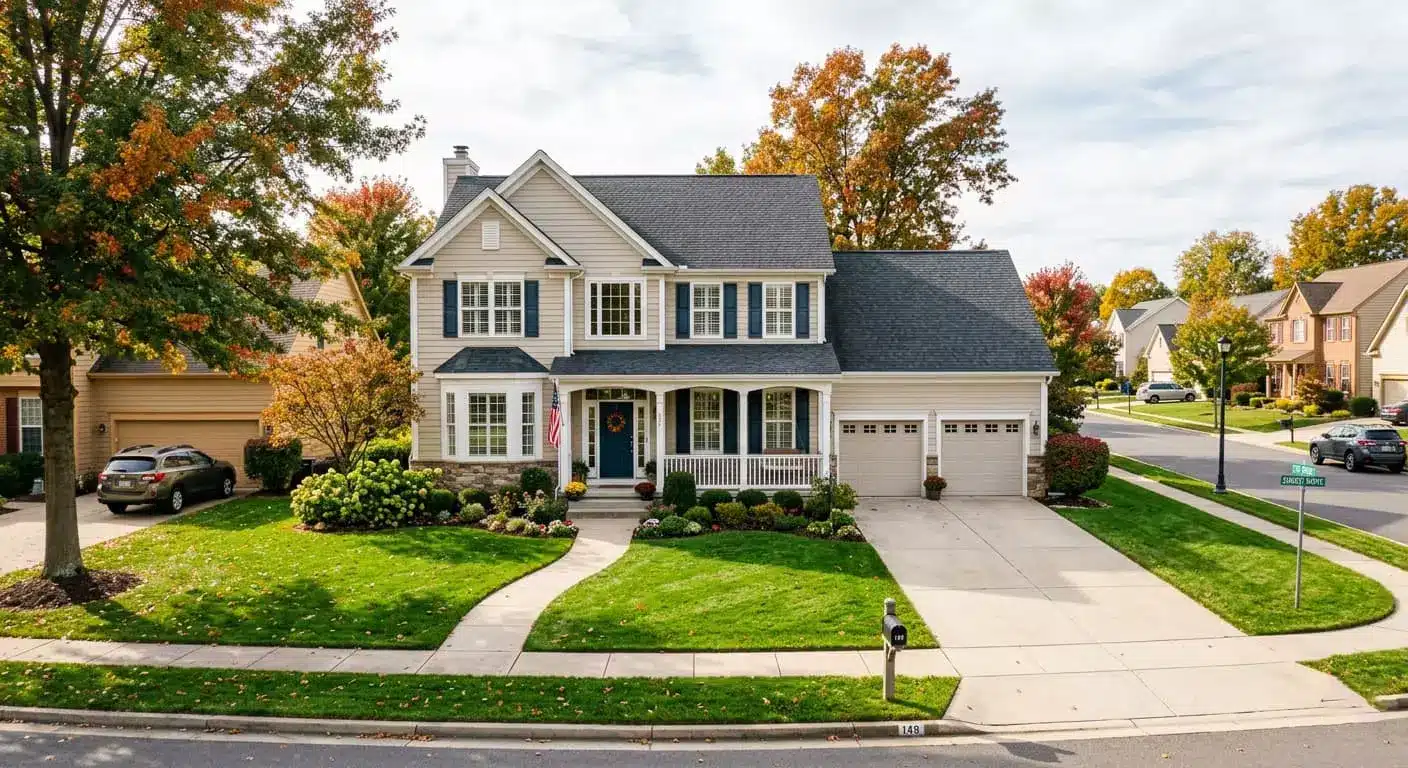
To understand why armoured doors are uncommon in the United States, you have to start from the features of American homes.
Unlike Italian homes, many houses in the US are built with lightweight structures, often in timber or prefabricated materials, designed to be quick to build, flexible and more affordable.
This choice of materials is not random: it comes from a completely different building logic compared with the European one.
Timber, for example, is plentiful and less expensive in the United States and makes it possible to build homes far more quickly than with concrete or traditional masonry.
Another key aspect is structural flexibility: timber houses are more elastic than masonry ones and are better able to absorb stresses, such as those caused by earthquakes.
In many situations this makes them more suitable than rigid structures, which could crack more easily.
It may seem counterintuitive, but even in areas prone to hurricanes, tornadoes or extreme weather events, timber is still used.
The reason lies in a different approach to managing risk: in the United States, speed of repair and rebuilding is favoured over absolute resistance.
A timber house can suffer damage, but it is also quicker and cheaper to repair or rebuild, often thanks to insurance cover too.
What is more, in the most exposed areas, homes are still built with specific construction techniques, such as reinforced anchoring systems, roofs designed to withstand wind and certified materials.
This means that, although lightweight, they are not necessarily “fragile”: they simply meet different standards from European builds.
Why armoured doors are not enough in the United States
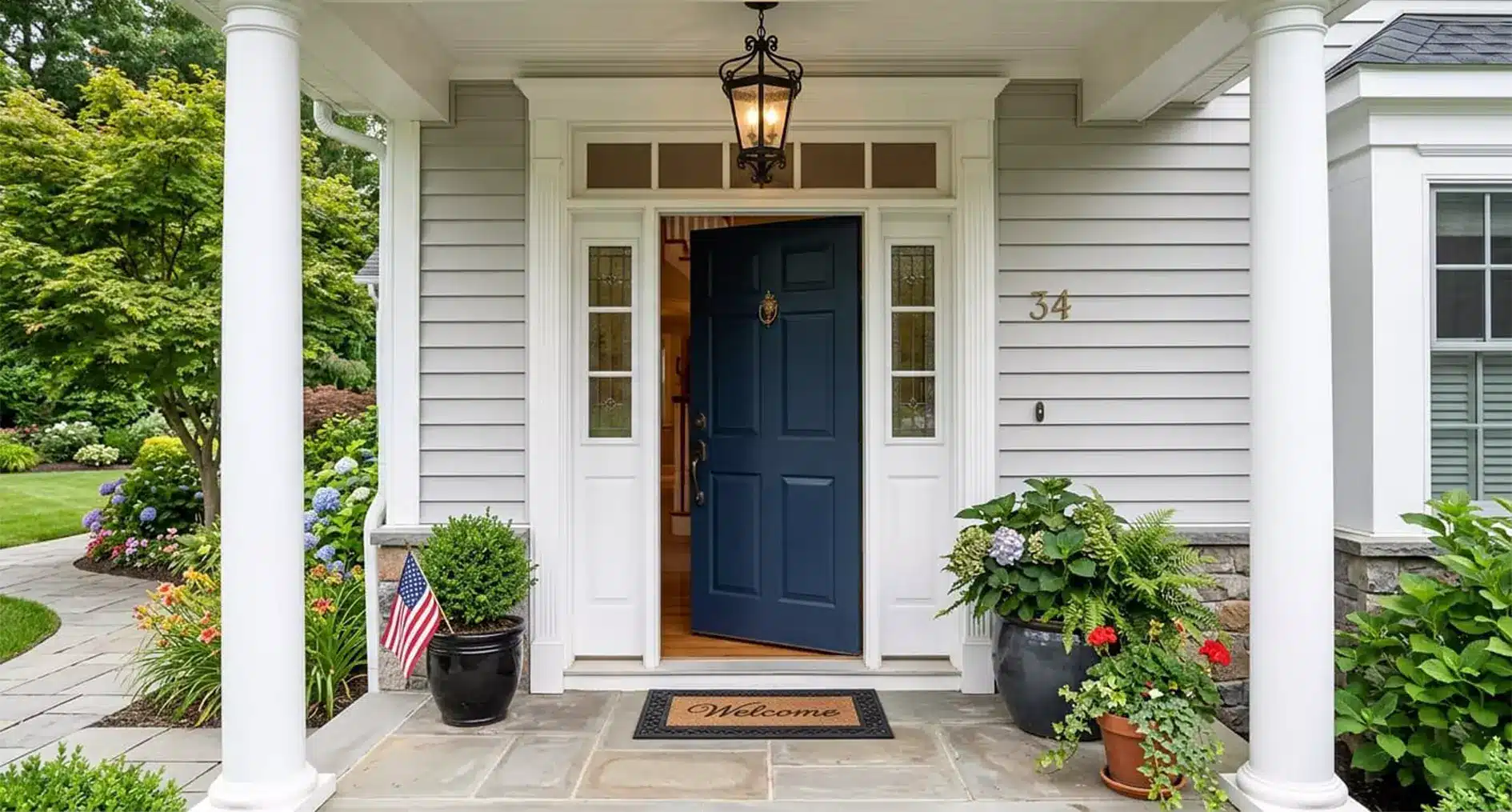
Another decisive aspect is the presence of numerous entry points: large windows, patio doors, secondary entrances and access from the garage.
This means the front door is not the only way in, which makes it less strategic to invest solely in an armoured door.
In American homes, in fact, it is normal to have several entrances used every day, such as the garage door or the back entrance, which are often also less visible from the street.
Added to these are large glazed surfaces, easily reachable from outside, especially in single-storey homes or those with a garden.
This completely changes the logic of security: even by fitting an armoured door at the main entrance, there would still be several vulnerable points through which an intruder could get in.
For this reason, in the United States the tendency is to protect the whole home as a single unit, rather than concentrating the investment on one single point.
In American homes it is also common to find easily accessible windows with no physical protection, such as bars, even on the lower floors.
This is because security is not entrusted mainly to structural barriers, but to alarm systems, surveillance and neighbourhood watch.
The layout of homes also plays a part: in the United States, detached houses are very common, often located in residential or suburban neighbourhoods, where the surroundings are perceived as calmer and more supervised.
In these situations, security relies on a combination of factors, such as the neighbours, alarm systems and widespread surveillance.
For this reason, the idea of the armoured door as the central element of home security is less deeply rooted than in Italy, where homes have completely different building and town-planning features.
Where burglars really get in in the US
The data confirms it precisely. According to the FBI and ADT Security Research, in 2024 the most exploited entry points in American homes were these:
Entry points: US residential burglaries 2024
Sources: FBI Crime in the U.S. 2024 · ADT Security Research · Bureau of Justice Statistics
The front door is the most targeted point, accounting for 34% of cases, but right behind come ground-floor windows (23%) and the back door (22%).
Add the three together and you reach almost 80% of all residential burglaries.
Another telling figure: 37.5% of burglars forced nothing at all.
They simply got in through a door or window left open. There was no break-in, no tool, no sophisticated technique.
This explains why, in the US, an armoured door on the main entrance alone does not solve the problem: with so many scattered entry points, protecting one single spot still leaves too many ways open.
In Italy the situation is structurally different: homes have fewer entrances, and the main entrance is often the only truly vulnerable point.
That is why the armoured door here still makes sense as a priority investment.
Why home security in the States relies on active security
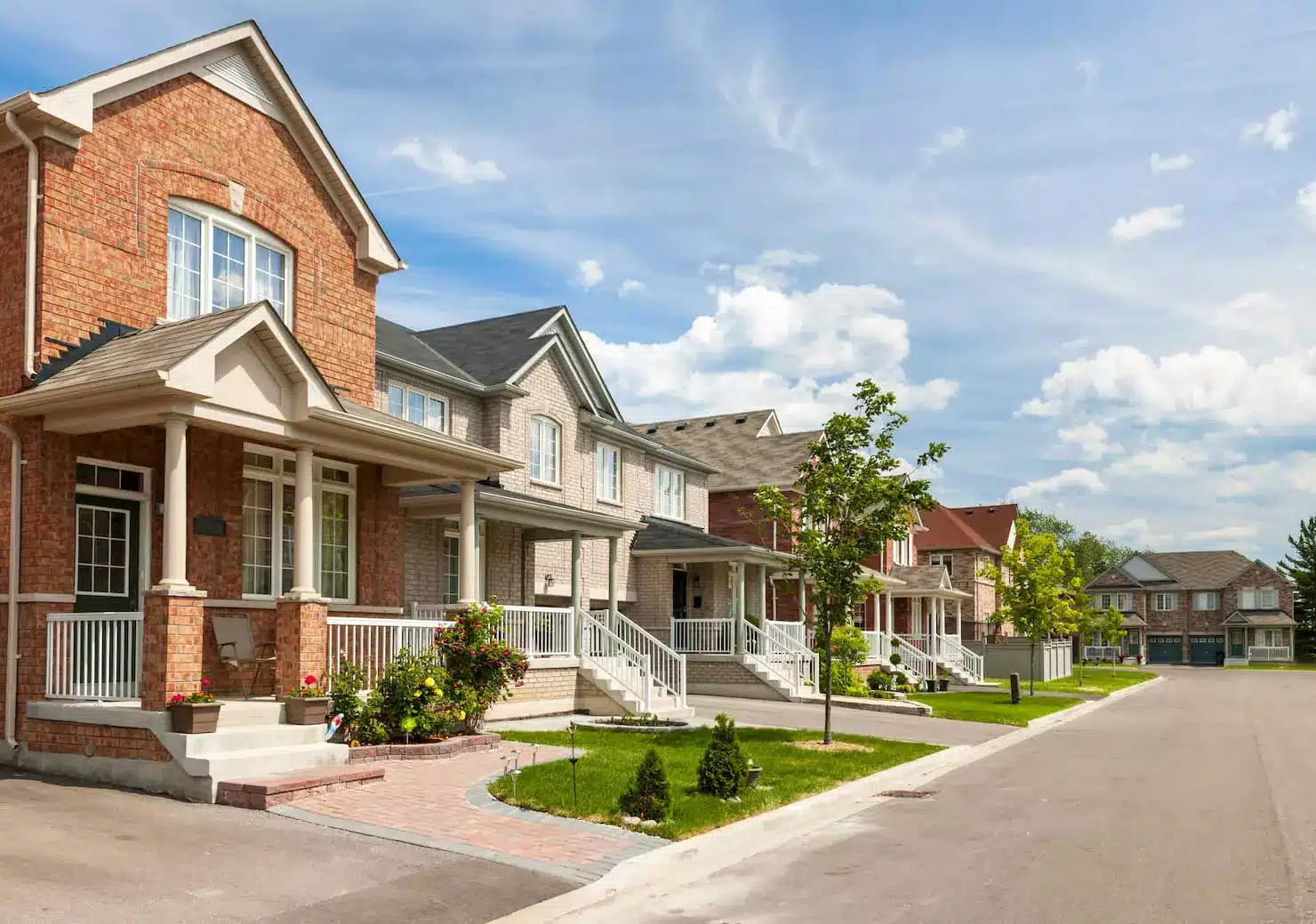
In the United States, home security is approached with a focus more on active security, that is, the ability to detect and handle an intrusion in real time.
One distinctive feature is the absence, in many residential areas, of fences or physical barriers. This favours visibility of the space and makes it harder to move around without being noticed.
Unlike European urban settings, the idea is not to “close off” the home, but to keep it observable and controllable.
In practical terms, security relies on a technological ecosystem: alarms connected to monitoring centres, cameras with remote access, sensors on doors and windows, real-time notifications on your smartphone.
In many cases, these systems are designed to trigger a response automatically, such as sending out a patrol or immediately alerting the authorities.
Another important element is speed of response. In the US, the system is built to keep the time between intrusion and response to a minimum, rather than to physically prevent entry.
This approach is consistent with homes that, as we have seen, have several vulnerable points.
The insurance factor should also be considered: many policies reward the fitting of certified active security systems, making them an economically attractive choice compared with more costly structural work.
Finally, the idea of security is strongly tied to visual deterrence: visible cameras, alarm signs and smart devices clearly signal that the home is protected.
This is often enough to discourage an attempted intrusion.
In short, in the United States security is not designed to make the home inaccessible, but to monitor, alert and react quickly, which is why armoured doors are not a priority as they are in Italy.
Differences between passive security and active security
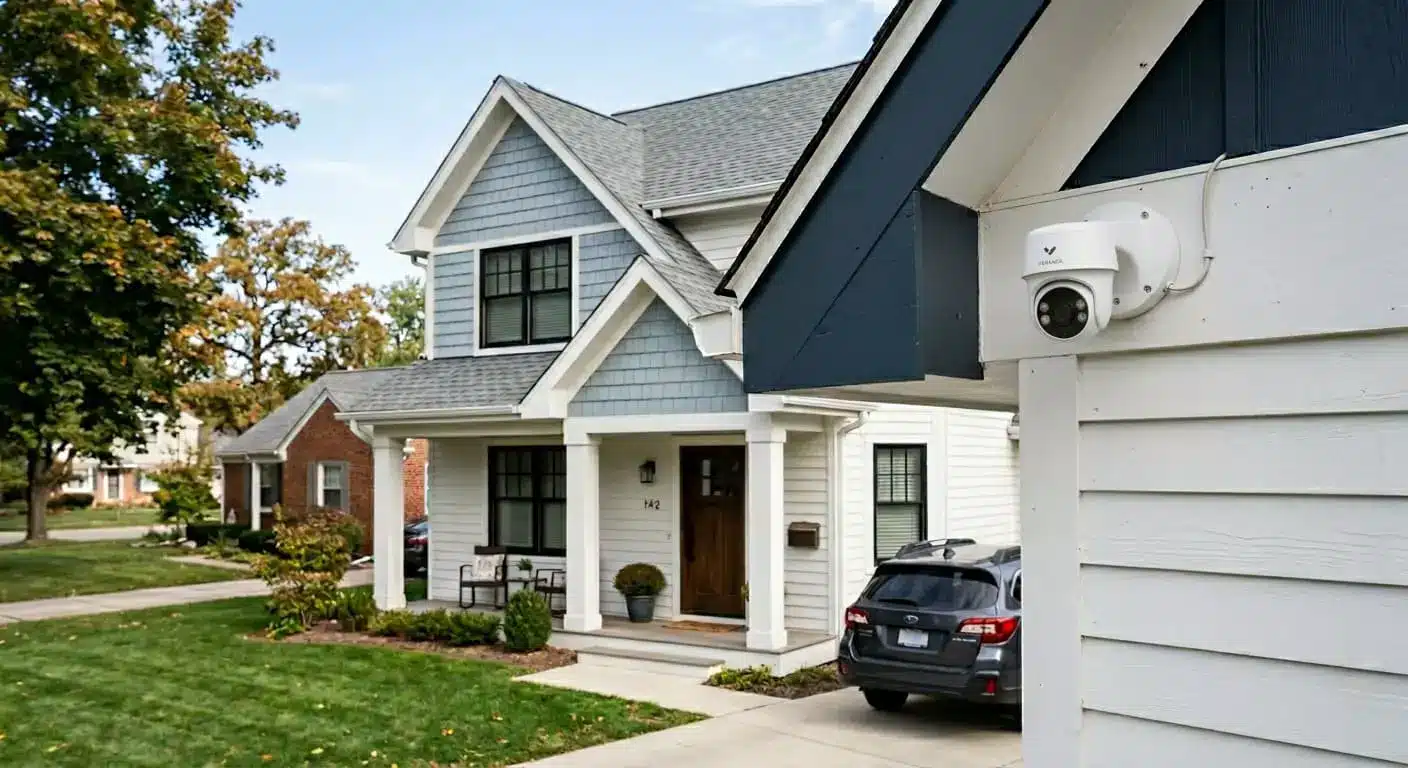
When it comes to home security, the distinction between passive security and active security becomes even clearer if we compare the Italian model with the American one.
Passive security relies on elements that physically protect the entry point, such as armoured doors, locks and reinforced window and door frames.
In Italy this approach is central because homes generally have fewer entry points and a higher urban density: as a result, securing the main entrance is often the most effective way to increase overall protection.
In the United States, by contrast, this model is less widespread. As we have seen, houses have several scattered entrances and more open spaces, which makes it less strategic to concentrate security on a single point.
This is why active security is relied on more heavily.
Active security relies on systems that monitor and signal in real time: alarms, cameras, sensors and smart devices.
In the US this approach is dominant because it makes it possible to monitor the whole home at once, regardless of the number of entrances.
The difference, then, is not only technical but also structural and cultural: in Italy the aim is to prevent entry, and in the US the aim is to detect and handle the intrusion.
This does not mean one system is better than the other, but that each is better suited to its own type of housing.
For anyone living in Italy, though, the most effective solution remains to combine the two approaches: a quality armoured door protects the most vulnerable point, while active security systems extend control to the whole home.
In this way you get more complete protection, combining physical resistance and continuous monitoring.
FAQ
Because homes have many entry points (windows, secondary entrances, garage), so protecting only the front door is not very effective. In the US the preferred approach is based on active security, with alarms and video surveillance that monitor the whole home in real time.
No, they adopt a different model. In the United States, security relies on monitoring and rapid response, while in Italy the focus is on the physical protection of entry points, above all the front door, with different building approaches.
Because they are often detached houses, designed with gardens, garages and multiple entrances. This makes it less effective to concentrate security on a single point and leads to protecting the whole home as a single unit.
They are two complementary solutions. The armoured door protects and slows down entry, while the alarm signals and triggers a response. In Italy, the most effective solution is to combine them to cover both prevention and response.
Yes, especially in Italy where the entrance is the most vulnerable point. An armoured door increases resistance to break-ins, improves comfort and insulation and helps increase the value of the property over time.
To favour visibility and neighbourhood watch. Open spaces make it easier to spot suspicious movements, increase deterrence and work together with the active security systems found across the area.
Conclusion
The differences between Italy and the United States are not so much about the level of security as about the way it is designed.
In the US, homes have more entrances and a more open structure, so protection relies on systems able to monitor, signal and handle the intrusion in real time.
In Italy, on the other hand, homes are generally more compact and have fewer entry points, which makes the physical protection of the main entrance a central element.
So these are two distinct models: in the United States security is spread across the whole home, while in Italy it is concentrated on the entrance.
This difference comes directly from the way homes are designed and from the urban context they are in.
For anyone living in Italy, this means it makes no sense to copy the American model, but rather to adapt it.
An armoured door remains essential because it protects the most vulnerable point, but on its own it is not enough.
At the same time, relying only on technological systems without a physical barrier still leaves you exposed to risk.
The most effective solution is therefore to combine passive security and active security: on one side a quality armoured door that slows down or prevents entry, on the other alarm and monitoring systems that let you keep an eye on the home and respond quickly.
In a context that is increasingly focused on home security, the goal is not to choose between the two solutions, but to build a balanced system.
Only in this way can you achieve protection that is complete, concrete and genuinely effective over time.
If you want to replace your armoured door, get a free quote by filling in the form below.
