
When you order an armoured door, they ask you whether you want it right-hand or left-hand, push or pull, and that is where a lot of people freeze.
It sounds like something only the trade should worry about, but it is actually very simple once you know where to look.
The clearest rule is this: look at the door from the side where you can see the hinges, which is the side the door opens towards when you pull it.
If the hinges are on the right it is right-hand, if they are on the left it is left-hand.
Then there is the opening direction: the front door either opens by pushing, into your home, or by pulling, out onto the landing.
Let me walk you through it calmly, one direction at a time, so that when the fitter asks you the question you already know what to say.
In this guide I will explain:
- how to tell at a glance whether your door is right-hand or left-hand
- the four opening directions, one by one, with a clear table
- when it is better to open by pushing and when by pulling
- whether you can change the opening direction of a door that is already fitted
How to work out your door’s opening direction
Let us start with the one move that settles every doubt.
Stand on the side where you can see the hinges, which is the side the door opens towards when you pull it, and look at where the hinges are.
If the hinges are on the right it is right-hand, if they are on the left it is left-hand. The handle is always on the opposite side to the hinges.
If instead you are on the other side, the side the door opens towards when you push it, work it out the other way round by looking at the handle.
A handle on the right means the hinges are on the left, so push left; a handle on the left means the hinges are on the right, so push right.
This is the opening hand, the technical name for the direction, which you will also see written as opening direction or opening sense.
If you want the precise terms for the parts of the leaf, you will find them in the article on how an armoured door is made and in the door entry on Wikipedia.
The four door opening directions, explained one by one
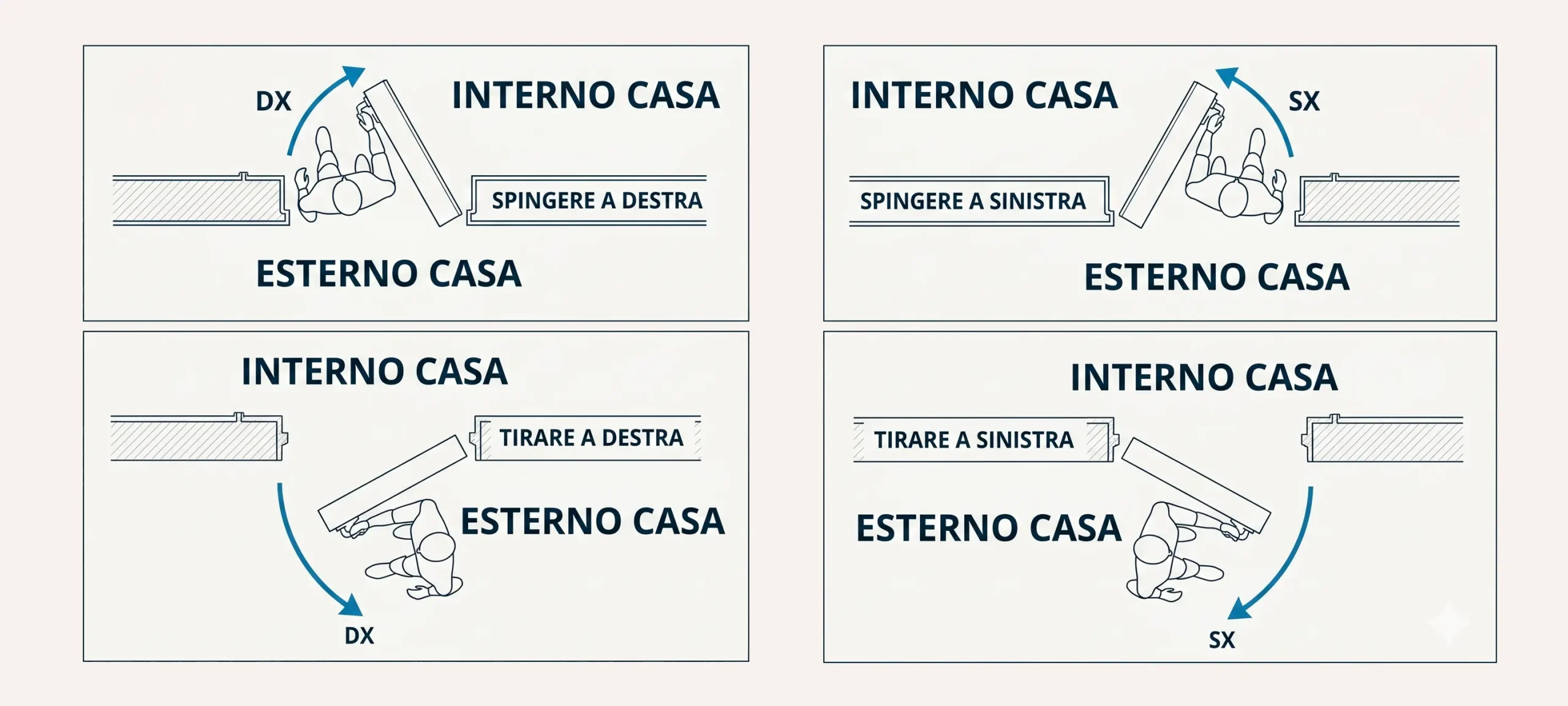
By combining the hand (right or left) with the direction (push or pull) you get four possible directions.
This table sets them all out in a row, with the position of the hinges and handle for each one.
| Opening direction | Hinge side | Handle | Which way it opens |
|---|---|---|---|
| Pull right | On the right | On the left | Outwards, onto the landing |
| Pull left | On the left | On the right | Outwards, onto the landing |
| Push right | On the right | On the left | Inwards, into your home |
| Push left | On the left | On the right | Inwards, into your home |
Below you will find each direction with an image of a person walking in from the right side, so you can recognise it at a glance.
Pull right
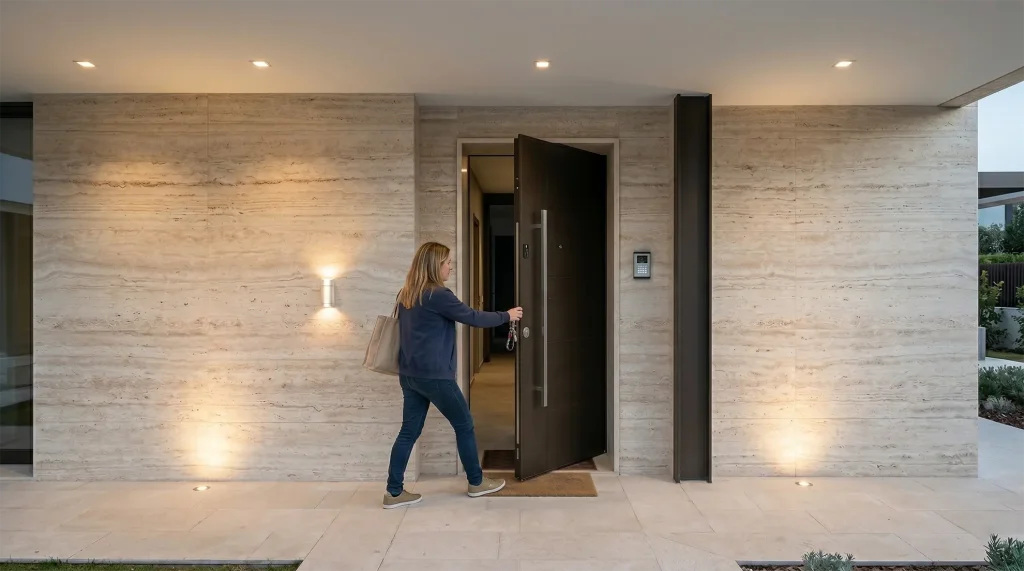
Hinges on the right, handle on the left, and the door opens towards you as you pull it out onto the landing. It is an outward opening with the right hand.
Pull left
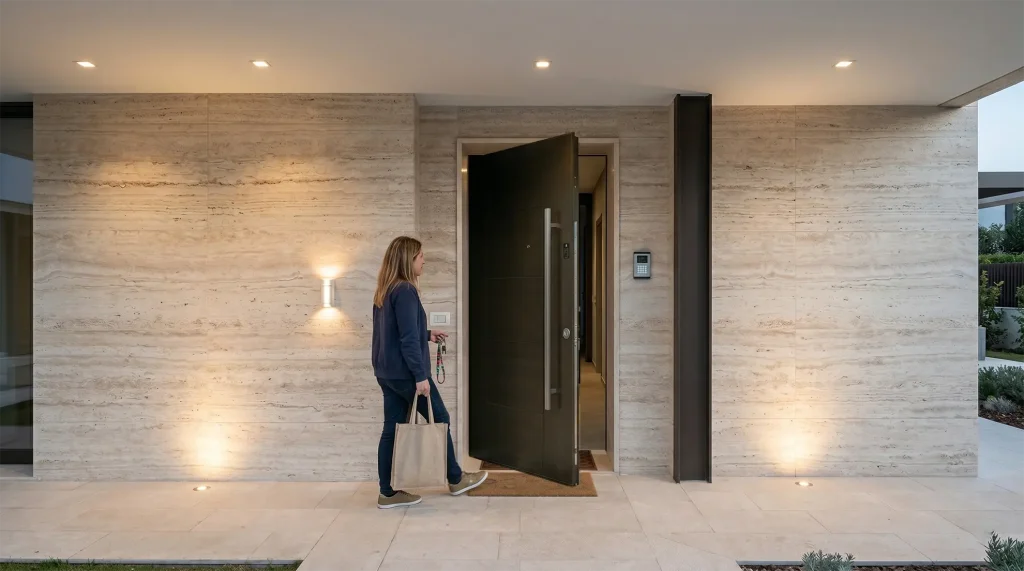
Hinges on the left, handle on the right, and the door opens as you pull it outwards. It is an opening onto the landing with the left hand.
Push right
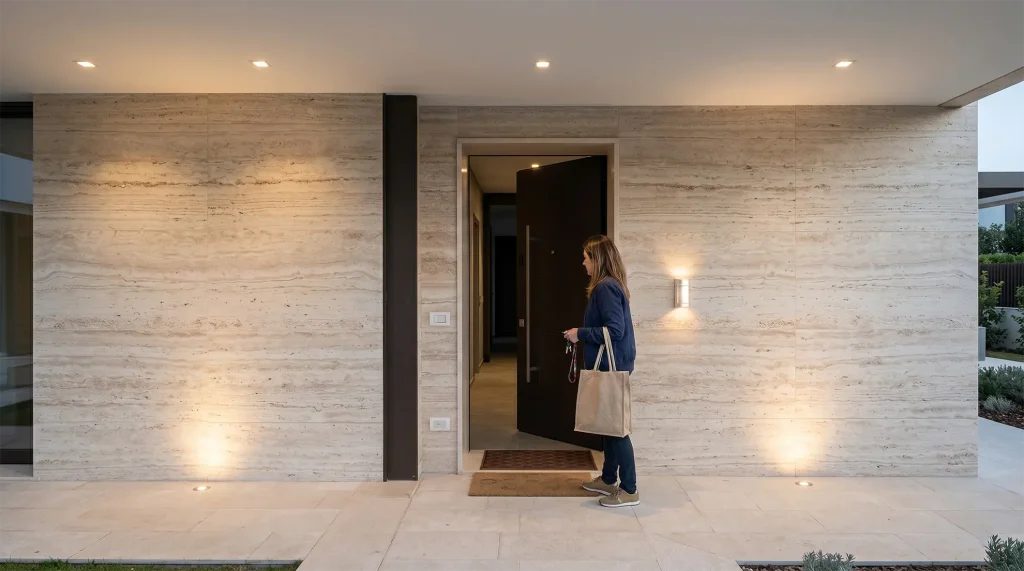
Hinges on the right, handle on the left, and the door opens by pushing inwards. It is one of the two standard directions for front doors in Italy.
Push left
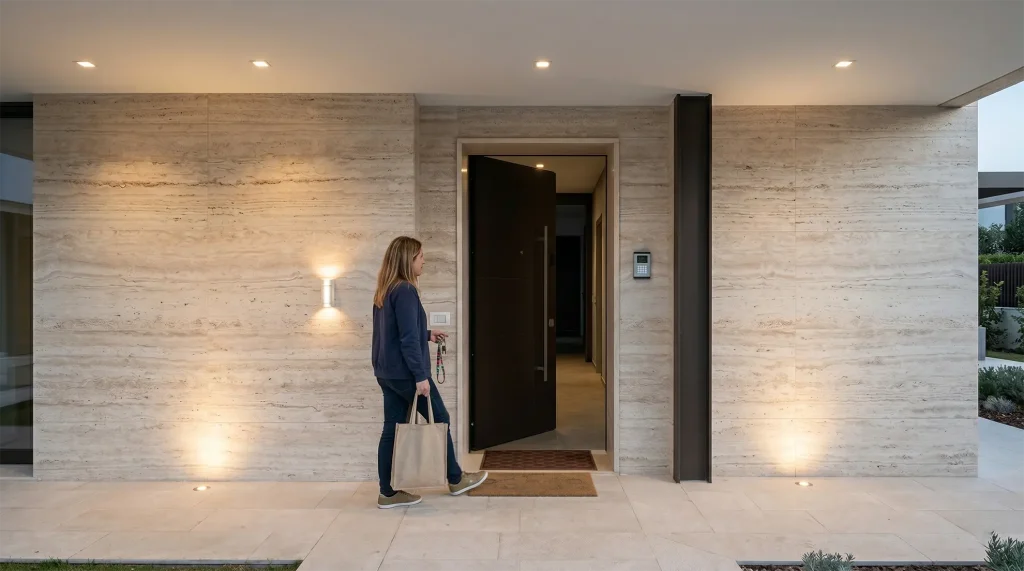
Hinges on the left, handle on the right, and the door opens by pushing it inwards, into your home. It is the other most common direction alongside push right.
How to choose your armoured door’s opening direction
In the vast majority of Italian homes the front door opens by pushing, inwards, and there is a precise security reason for it.
A pull door, meaning one that opens outwards, carries the hinges and the bulk of the leaf out onto the landing.
That is why it calls for more thought at the design stage: on a serious armoured front door you bring in interlocking bolts, protected hinges and anti-prising systems, but it is still a solution to plan carefully.
When space allows, opening by pushing is usually preferred.
The pull opening, also called reverse opening or outward opening, is chosen when there is not enough room inside for the leaf to swing into the home, for example in a narrow entrance hall or with a piece of furniture right up against it.
When you do use it, you need extra precautions, such as the right burglar resistance classes and protected hinges.
In a block of flats, a door that opens out onto the landing needs to be checked carefully.
It can create problems of space, access and safety in the communal areas, and the building regulations may set limits.
Before choosing it, it is worth checking that the leaf does not block the way through and that the regulations allow it.
The opening direction should in any case be chosen together with the measurements of the opening, never at random: the guide on how to measure up an armoured door will help you there.
When the armoured door’s opening direction is decided
This is where the difference lies between going it alone and trusting people who build doors made to measure.
The hand and opening direction are not chosen by eye, they are set together with the measurements, the space inside and the constraints of the shared landing.
At Ariete this is done by one of our in-house technicians, with a site survey at your home, not a generic visit.
They measure the opening, work out which way it is best to open, and record the correct hand and direction, so the door arrives already right and there are no surprises on fitting day.
If you want to understand how to weigh up the various selection criteria, have a read of how to choose an armoured door as well.
Want the right armoured door for your entrance, opening direction included? Tell us what your opening looks like and what you need: a few details are all it takes to get started.
Conclusions
Working out the opening direction really is simple: you look at which side the hinges are on and you know straight away whether the door is right-hand or left-hand.
Then you decide whether to open it by pushing, inwards, which is the most common choice, or by pulling, out onto the landing, only when there is not enough room inside the home.
The important thing is not to improvise the direction at the moment you order, because the door is built around exactly that.
Thinking about changing your front door?
At Ariete we design and fit the complete door, with the hand, direction and measurements tailored to your home by an in-house technician’s site survey.
Frequently asked questions
Look at the door from the side where you can see the hinges: if they are on the right it is right-hand, if they are on the left it is left-hand. From the push side, work it out the other way round using the handle, which is always on the opposite side to the hinges.
At the design stage, yes: the hand and direction can be chosen freely before the door is built. Reversing the opening on an armoured door that is already fitted, on the other hand, is a structural job involving the frame and hinges and must be assessed by a technician case by case; often a new door works out better.
It is not a simple adjustment. Changing the opening direction means re-hanging the door and moving the hinges, with the added issue that on a pull door the hinges end up on the outside. It is done only at the design stage, not on a leaf that is already fitted.
It needs to be handled with care. Opening out onto the landing leaves the hinges on the outside, so you need protected hinges and a suitable burglar resistance class. That is why, when space allows, pushing is always the preferred opening.
