
Choosing an armoured door is a more important decision than it might seem.
It is not only about security: it is about protecting your home, improving comfort and avoiding mistakes you could pay for over many years.
The problem is that many people choose the wrong door.
Some spend too much on features they will never use, while others believe they are safe but have actually fitted a door that is easy to attack.
In this guide to choosing an armoured door I will explain, in simple and concrete terms, how to choose the right door while avoiding the most common mistakes.
By reading the article to the end you will discover:
- which burglar resistance class to choose
- how much an armoured door really costs
- which mistakes to avoid before buying
- which features genuinely make a difference
In just a few minutes you will know exactly how to choose the right armoured door for you.
How to choose an armoured door based on your home
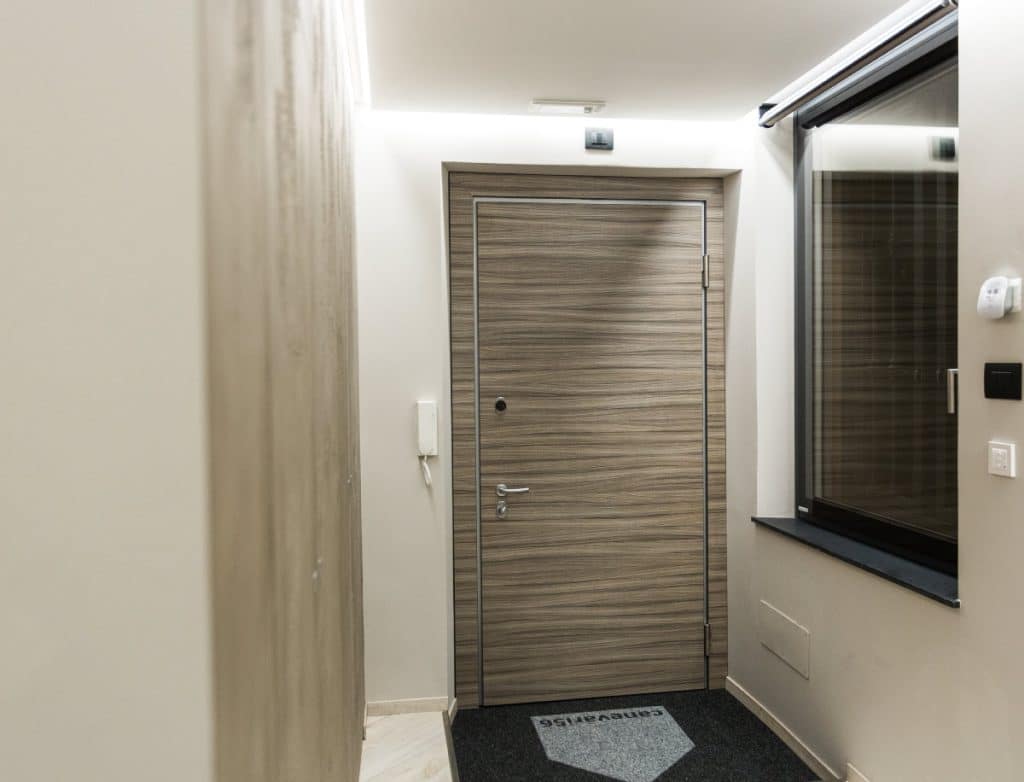
As a general rule, an internal armoured door is suited to flats in a block of flats, while an external armoured door is needed when the entrance is directly exposed to rain, sun and temperature swings.
When it comes to security, an RC3 class can be enough in standard situations, but in most cases RC4 is the most balanced choice.
| Type of home | Recommended door | Burglar resistance class | Key features |
|---|---|---|---|
| Flat in a block of flats | Internal armoured door | RC3 or RC4 | Good acoustic insulation, high security |
| Detached house | External armoured door | RC4 | Weather resistance + thermal insulation |
| House with glass | Armoured door with anti-shatter glass | RC4 | Security + natural light |
| Studio or office | Internal armoured door or door with glass | RC3 or RC4 | Security + design |
| High-risk settings | High-security armoured door | RC4 or higher | Maximum protection |
Step 1: internal or external armoured door
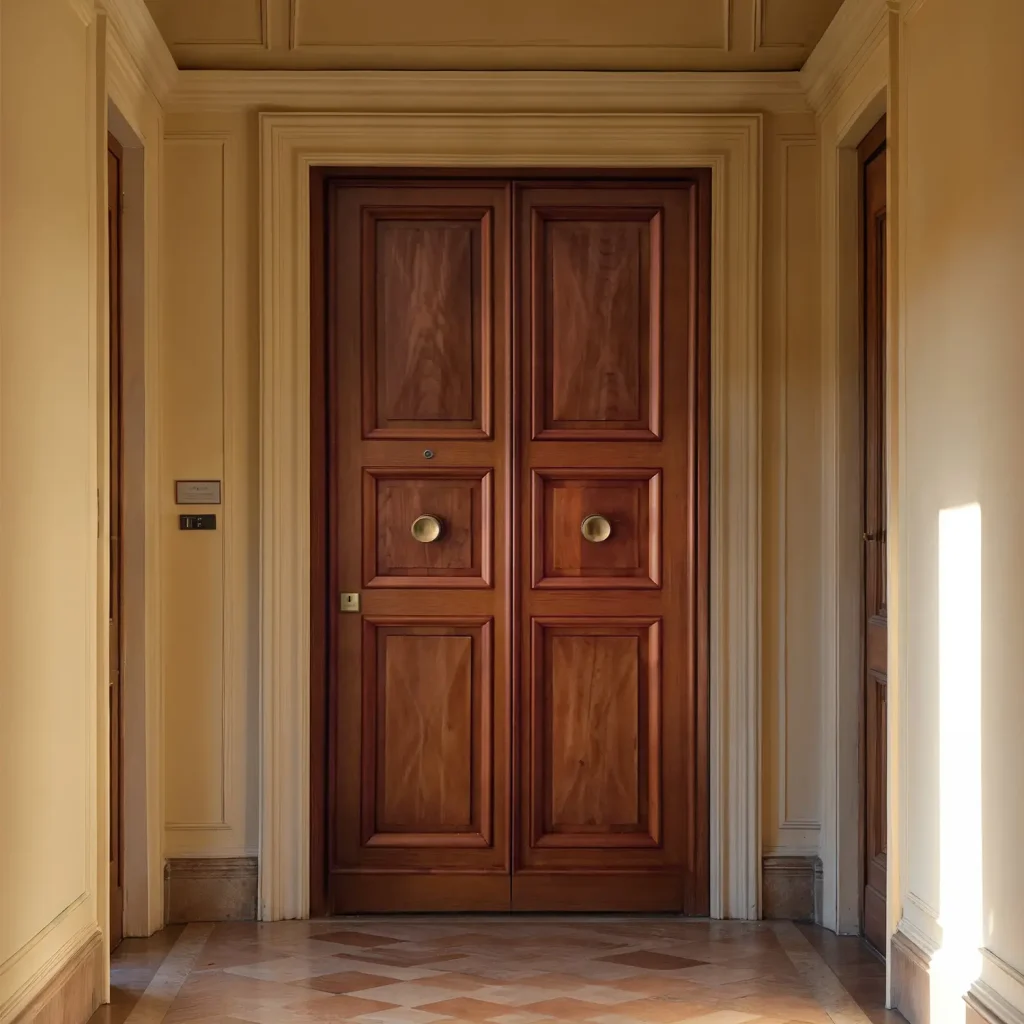
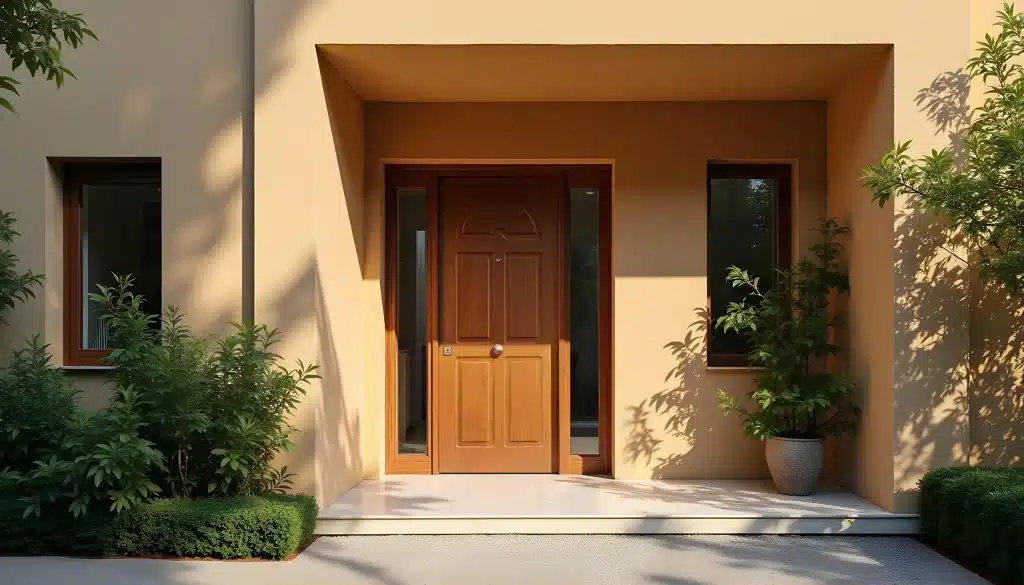
In the photo: Ariete internal armoured door vs external armoured door
The first choice is simple, but fundamental: will the door be directly exposed to the outside or not?
Much of how the door performs over time depends on this answer.
An internal armoured door is designed for flats in a block of flats, where the entrance opens onto a protected landing.
In this setting there is no need to defend against rain or sun, but it becomes essential to guarantee security against intrusions, acoustic insulation from the noise of the stairwell and good resistance to draughts.
If you live in a flat, in most cases this is the right solution.
It is a different matter for detached homes.
An external armoured door has to cope with completely different conditions: it is exposed to rain, damp, sun and constant temperature swings.
For this reason it must be designed not only for security, but also to offer weather resistance and effective thermal insulation, preventing heat loss and condensation problems.
This is where one of the most common mistakes comes in.
Many people choose an internal door even for exposed entrances, thinking they will save money.
In reality, within a few years problems start to appear, such as draughts, deterioration of the materials and inadequate performance, which means having to step in again.
The rule to remember is very simple: if the door opens onto a landing, you need an internal door; if instead it opens directly to the outside, you need an external door.
Step 2: which burglar resistance class to choose
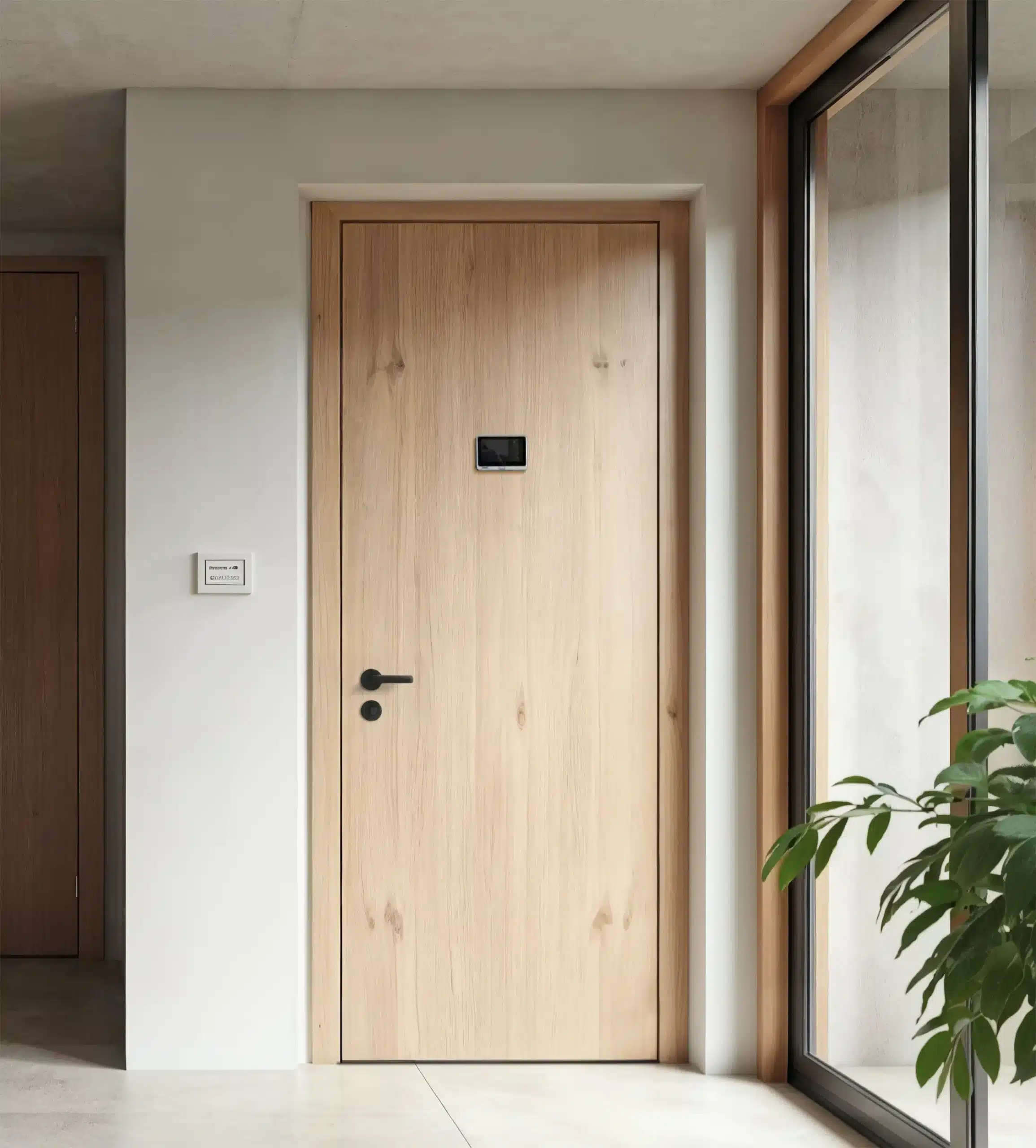
Ariete RC4 armoured door with concealed hinges
When it comes to security, the most important parameter is the burglar resistance class of armoured doors.
This is a certification that shows how well an armoured door resists break-in attempts, based on real tests carried out by specialised institutes.
In practice, a technician tries to open the door by simulating a break-in, using increasingly aggressive tools. A class is then assigned based on how long the door holds out and which tools were used.
The classes run from 1 to 6, but in the residential world mainly RC3 and RC4 are used.
An RC3 door is designed to resist break-in attempts with simple tools such as screwdrivers or levers.
An RC4 burglar resistance class, instead, offers a higher level and also resists more aggressive attempts, with tools such as drills or saws.
| Class | Type of intruder | Tools used | Where it suits |
|---|---|---|---|
| RC1 | Opportunistic | Physical force (kicks, shoulder barges) | Cellars, utility rooms |
| RC2 | Inexperienced | Knives, small pliers | Storerooms, secondary offices |
| RC3 | Fairly experienced | Screwdrivers, levers, crowbars | Flats in a block of flats |
| RC4 | Experienced | Drills, saws, heavy tools | Flats and detached houses |
| RC5 | Professional | Advanced power tools | Banks, jewellers |
So far it all seems clear. But there is a fundamental point that almost nobody explains to you.
Two doors both rated RC3 are not necessarily the same.
The certification is obtained on a sample tested in a laboratory, under specific conditions.
This means that, in real life, there can be very significant differences between products that on paper share the same class.
Armoured doors sold in large retail stores and those made by specialist companies may share the same rating, but they differ in
- build quality;
- structural strength;
- the components used;
- and, above all, the way they are fitted.
And it is precisely these elements that determine real security over time.
In other words, the class is a starting point, not the finishing line.
A door designed as a complete system, with components that work together and correct fitting, offers real, tangible protection.
A cheaper door, even when it carries the same class, can have weak points that emerge in everyday use.
For this reason, when you assess an armoured door, you should not stop at the class number, but also consider how it is built and who fits it.
Security does not depend on a single element, but on the whole package.
If you want a practical guideline, an RC3 can be enough in standard situations, but in most cases the most balanced choice is an RC4, because it offers a higher level of protection for a price difference that is often small.
Step 3: thermal and acoustic insulation
When people think of an armoured door, almost everyone thinks only about security.
In reality, an entrance door affects the quality of life inside your home every single day.
A well-designed door does not only keep burglars out, it also creates an effective barrier against noise, draughts and temperature swings.
The first aspect is acoustic insulation.
In many flats, especially in a block of flats, the main problem is not so much security as noise: footsteps on the landing, voices, the lift, doors slamming.
A door with good sound reduction can significantly cut down these disturbances, making the inside of your home far quieter and more pleasant to live in.
The second aspect is thermal insulation.
A low-quality door lets cold air in during winter and warm air in during summer.
This not only reduces comfort, it also affects the home’s energy consumption.
A well-designed door, on the other hand, limits heat loss and keeps the indoor temperature more stable.
There is then an aspect that is often underestimated: air-tightness.
Draughts, dust and bad smells coming from the stairwell are clear signs of a door that does not close properly or is not designed to insulate effectively.
But there is a fundamental point that makes the difference between theory and reality.
All of these levels of performance depend not only on the door, but on how it is fitted.
Even a door with excellent insulation values can lose much of its effectiveness if the fitting is not carried out correctly.
In other words, comfort and insulation are not an “extra”, but an integral part of the quality of an armoured door.
These are the things you notice every day, far more than the burglar resistance class.
Step 4: lock, cylinder and defender
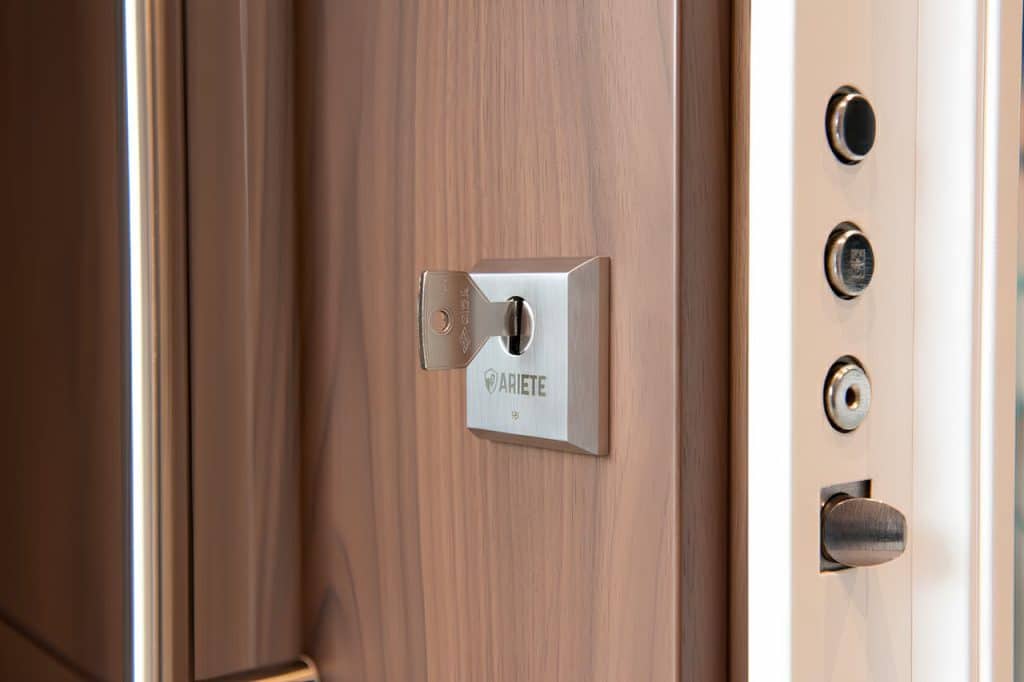
Ariete square defender
The lock is one of the most important elements of an armoured door, but on its own it is not enough to guarantee security.
What really counts is the system made up of lock, cylinder and defender, which work together to protect the most sensitive point of the door.
The cylinder is the heart of the lock.
It is the component operated by the key and, in most break-in attempts, it is also the first point to be attacked.
For this reason it is essential that the euro cylinder is of high quality and fitted with protections against techniques such as drilling or pulling.
The defender has the job of protecting the cylinder.
It is an external steel guard that stops the burglar from reaching the cylinder directly and damaging it.
If the defender is poorly designed or of low quality, the cylinder becomes far more vulnerable.
The lock coordinates all the locking points of the door.
A good system must guarantee solid locking spread along the entire perimeter, preventing the door from being forced with levers or pressure.
But there is a very common mistake that many people make.
Thinking that having lots of locking points is enough to be safe.
In reality, if the cylinder or the defender are weak, the number of points counts for little: once the central system is compromised, the whole door loses its effectiveness.
Real security comes from the balance between these elements, not from a single component.
Step 6: the installation
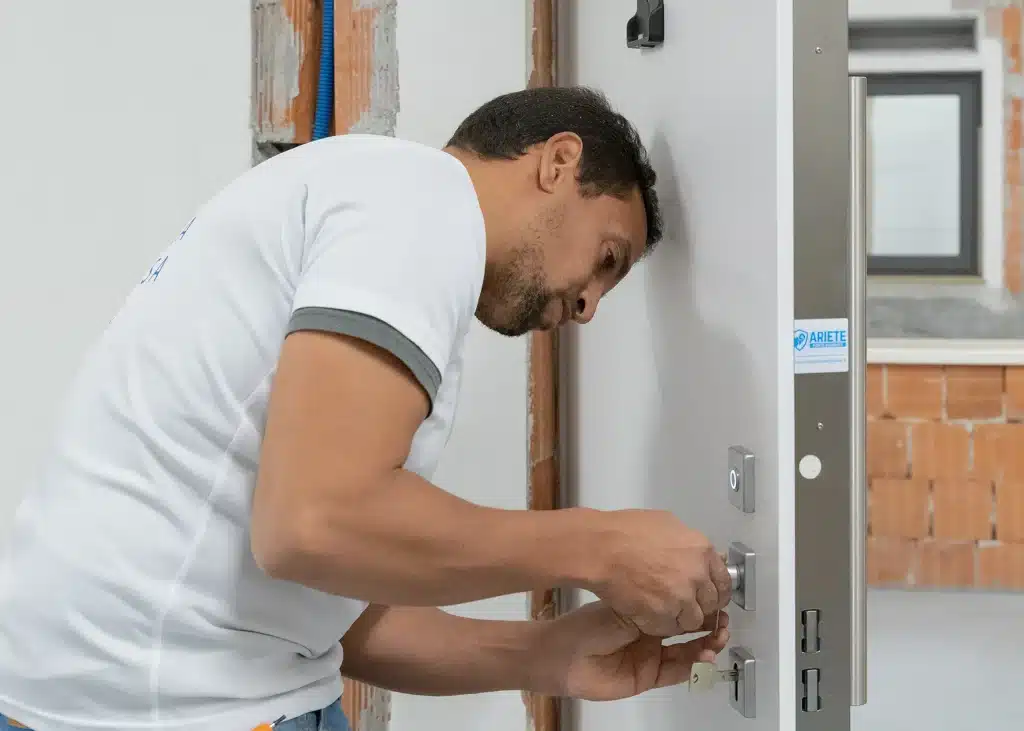
Fitting an Ariete armoured door at the Accademia della Posa in Opera
You can choose the best armoured door on the market, but if it is fitted badly, much of its performance is compromised.
The fitting is the moment when security, insulation and durability over time become real.
Up to that point, they are only features on paper.
A correctly fitted door works as a single system together with the wall.
The subframe, the frame and the leaf must be perfectly aligned and fixed in a stable way, with no play or weak points.
When this does not happen, the problems begin: the door does not close properly, draughts appear, more noise gets through and resistance to break-in attempts is reduced.
And there is an even more important aspect.
A poorly executed fitting can, in practice, cancel out the level of security declared by the door.
In other words, you can buy an RC4 door, but if it is fitted badly, the real performance will be far lower.
For this reason it is essential to rely on specialist staff, trained and used to working on this type of product.
It is not a detail, nor an optional service.
It is an integral part of the door itself.
Step 7: aesthetics and block of flats rules
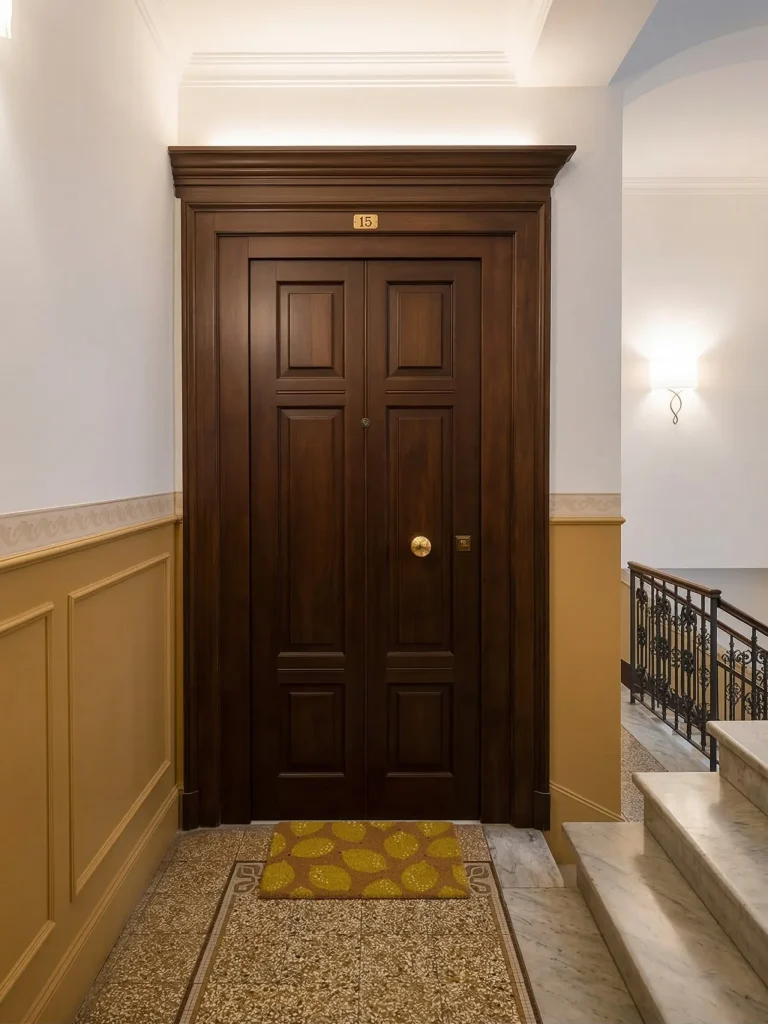
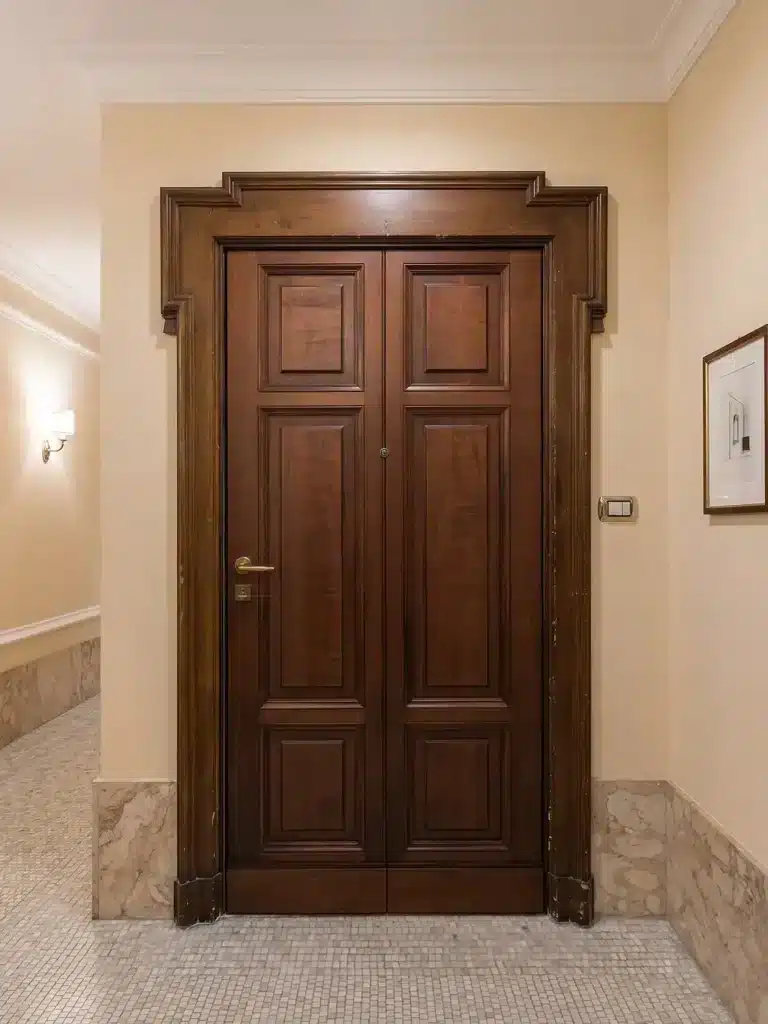
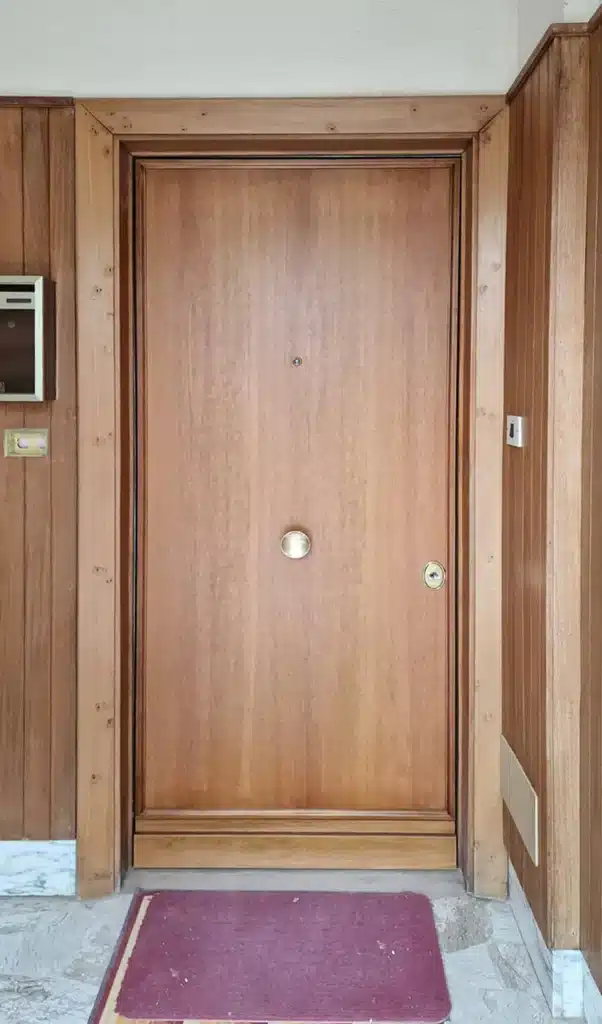
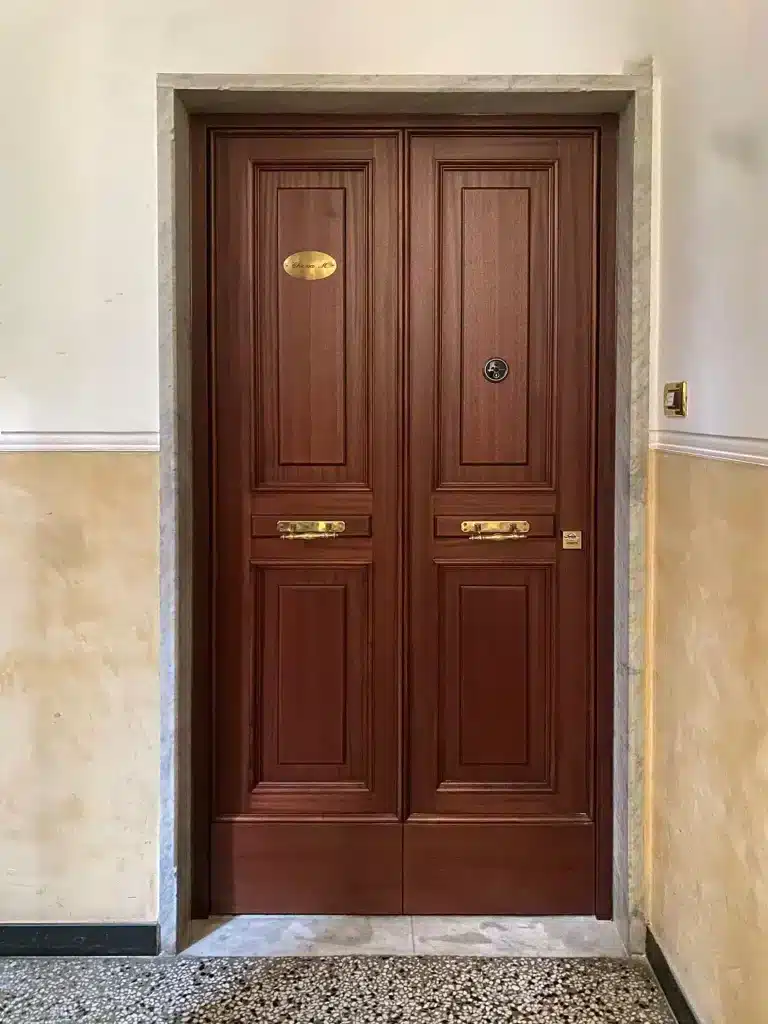
Armoured doors with custom panels for flats in a block of flats
An armoured door is not only a security element, it is also a visible part of the home. For this reason, the way it looks matters.
If you live in a block of flats, however, the choice is not completely free.
The external panel has to respect the look of the building.
Colour, finish and design should be as similar as possible to those of the other doors on the landing.
This is to avoid problems with the block of flats rules or disputes over the appearance of the building.
Inside, on the other hand, you have far more freedom.
The internal panel can be fully customised, to suit the style of your home: modern, classic, minimal or more decorative.
This means you can have:
- an external side perfectly in keeping with the block of flats
- an internal side consistent with your interior decor
In detached homes, on the other hand, there are no particular constraints, and you can freely choose materials, colours and finishes for the outside as well.
In short, a good armoured door must be able to blend into its setting, without giving up the chance to personalise it.
Step 8: how much an armoured door costs
The price of an armoured door can vary a great deal, because it depends on several factors and there is no single price that applies to everyone.
The main variables that affect the price are:
- the level of security (burglar resistance class)
- the size (standard or custom size)
- the finishes and panels chosen
- the type (internal or external)
- the quality of the fitting
As a general rule, for a good-quality armoured door, prices start from around €2,500 to €3,000 + VAT and can reach €5,000 to €6,000 + VAT or more for more advanced or made-to-measure solutions.
What is important to understand is another aspect.
An armoured door is not a standard product, but a configurable system.
Every choice affects the final result, both in terms of performance and cost.
For this reason, comparing only the price without considering what is included can lead to mistaken judgements.
A very low price often hides compromises, which can involve:
- lower-performing materials
- lower-grade security components
- inadequate fitting
On the contrary, a door that is well designed and correctly fitted is an investment over time, both in terms of security and comfort.
| Class | Type | Indicative price |
|---|---|---|
| RC3 | Internal | €2,500 – €3,500 |
| RC3 | External | €3,000 – €4,000 |
| RC4 | Internal | €3,500 – €5,000 |
| RC4 | External | €4,000 – €6,000 |
The prices are indicative, they exclude VAT and may vary depending on configuration and installation.
Want to understand which armoured door is really right for your home?
Every home is different, and choosing the right door does not mean just looking at price or security class.
You need to assess the setting, understand the real risks and find a solution that truly works over time.
That is why you can request a free quote.
We will look at your specific case and recommend the most suitable solution, helping you avoid mistakes and unnecessary spending.
Step 9: Italian tax bonuses and deductions
This year, fitting or replacing an armoured door can fall under the Italian Renovation Bonus, allowing you to recover part of the money you spend.
It is not an immediate discount, but an Italian tax deduction.
In practice, you pay for the door today and the Italian State gives you back a share of the cost in the following years, in the form of lower taxes.
You can recover 50% of the cost if it is your main home, or 36% in other cases, such as second homes.
The deduction is spread over 10 years, so each year you recover a part of the amount.
Let us take a simple example.
If you spend €4,000 on an armoured door including installation and you are entitled to 50%, you recover €2,000 in total, around €200 a year for 10 years.
If instead you fall under the 36% rate, you recover €1,440 in total.
This means that the real cost of the work is lower than it first appears.
A very important aspect is that you are not deducting only the door.
The whole job falls under the bonus, so:
- the armoured door
- the fitting
- any related works, such as adjustments or minor building work
To be entitled to the deduction, however, certain conditions must be met.
The work must serve to improve the security of the home, it must be carried out on an existing property (not a new build) and it must be documented with an invoice.
There is no need for a full renovation.
Even simply replacing the armoured door is enough, if the aim is to increase security.
There is then a fundamental step to be very careful about.
Payment must be made by traceable bank transfer (the Italian “bonifico parlante”).
The transfer must state:
- the reason for the payment, with reference to the relevant legislation
- the tax code of the person claiming the deduction
- the VAT number or tax code of the company
If the payment is not made correctly, you risk losing your right to the bonus.
The maximum spending limit is €96,000 per property unit, a very high figure that in most cases is not a real constraint for this type of work.
The bonus is valid for second homes too (with a 36% deduction) and the ENEA submission (to Italy’s energy agency) is only required in certain specific cases linked to energy savings.
In short, the bonus does not exist because you are changing a door, but because you are improving the security of your home.
And it is exactly this that makes the work more affordable than it seems at first sight.
Frequently asked questions
A good armoured door should have at least these concrete features:
– burglar resistance class RC3 or RC4 certified to UNI EN 1627
– a rigid steel structure with internal reinforcements (not just thin sheet metal)
– a lock with a high-security euro cylinder
– a drill-resistant, pull-resistant defender protecting the cylinder
– multiple locking points spread around the perimeter
– seals and insulating panels to reduce noise and draughts
– installation carried out by certified professionals, because a badly fitted door cannot guarantee security, thermal insulation or acoustic insulation.
If even one of these elements is poor, the real security of the door drops.
The difference lies in the type of attack the door is able to resist in certified tests.
– RC3: resists attempts with hand tools (screwdrivers, crowbars). It suits flats in a block of flats with a medium risk.
– RC4: also resists heavier tools and more aggressive attempts (drills, hammers, large levers). It is recommended for more exposed settings or for those who want a higher level of security.
In practice, RC4 offers a more rigid structure and significantly greater resistance.
The price difference is often small compared with the jump in security.
A good-quality armoured door generally costs between €2,500 and €6,000, depending on the security class, the type and the finishes.
An internal RC3 door usually sits between €2,500 and €3,500, while an RC4 can reach between €3,500 and €5,000 for internal use and up to €6,000 for external use.
These prices normally include supply and installation.
Much lower prices often point to compromises on materials, components or fitting.
There is no single most secure armoured door that is valid for every situation.
In a residential setting, a certified RC4 door, fitted with a high-quality cylinder and defender and installed correctly, is one of the most secure solutions.
Real security does not depend only on the class, but on the combination of all the components and the quality of the fitting.
It depends on the condition of the existing door.
If the structure is recent and of good quality, it may be enough to replace the cylinder and defender.
If instead the door is old or not very strong, changing only the lock does not solve the problem, because the weakness remains in the structure.
In these cases it is more effective to replace the whole system.
Yes, decisively.
A poorly executed fitting can compromise both security and insulation.
Problems such as play between the frame and the wall, inadequate fixings or misalignment can reduce resistance to break-ins and cause draughts and noise to get through.
A high-quality door fitted badly can perform worse than a simpler one fitted correctly.
Yes, if they are designed and fitted correctly.
A good-quality armoured door can reach sound reduction values of around 35 to 45dB, significantly cutting down the noise coming from the landing or from outside.
The result also depends on the quality of the seals and the installation.
Yes, but you need to respect the look of the block of flats.
The external panel must be consistent with the colour, finish and design of the other doors on the landing.
Inside, on the other hand, you can personalise it freely to suit your taste.
For more information, read the article on the rules and permissions for fitting an armoured door in a block of flats.
Yes, in most cases it falls under the Italian Renovation Bonus because it is considered a measure to improve the security of the home.
You can recover 50% of the cost for your main home or 36% in other cases, including the door, the installation and any related works, with payment made by traceable bank transfer.
It is not always compulsory, but it is often the most balanced choice.
An RC3 is enough in many block of flats situations, while RC4 offers higher protection against more aggressive break-in attempts.
Given that the price difference is not always large, RC4 is often a safer investment over time.
Yes, the front door is the entry point burglars prefer, used in roughly 50-80% of cases.
They often force armoured doors or unlocked doors and windows with techniques such as the crowbar or pulling out the cylinder, but they also target windows, balconies (especially on the ground floor) and garages.
Yes, because the door remains the main way in (you can find more information in this report from the Italian State Police), but it is important to understand how.
An armoured door does not make a break-in attempt impossible, but it makes it far harder, slower and riskier for anyone trying to get in.
In most cases, burglars look for quick, quiet ways in.
An RC3 or RC4 door, well designed and fitted, greatly increases the time needed to force it and often leads the intruder to give up.
Conclusion: how to genuinely choose the right armoured door
Choosing an armoured door does not simply mean comparing prices or security classes.
As you have seen, several factors come into play: the setting where it will be fitted, the real quality of the product, the level of insulation, the lock, the fitting and even any Italian tax deductions.
The difference between a right choice and a wrong one lies exactly here: looking at the whole package, not the single detail.
An effective armoured door is a complete system, in which every element contributes to the final result.
If one of these aspects is neglected, the risk is ending up with a door that, on paper, looks sound, but that in practice does not really live up to expectations.
For this reason, the most important piece of advice is just one: do not choose based on price or a single feature, but always assess the overall quality of the solution.
If you have doubts or want to understand which door is most suitable for your home, the best thing is to talk to a professional and look at your specific case.
Take the time to choose well.
It is a purchase you will make only once, but one that affects your security every single day.
