
Are you trying to understand what the thermal transmittance of an armoured door is, and why it matters so much when you are choosing one?
Then you are in the right place.
The thermal transmittance of an armoured door is the value that indicates how much heat passes through the door between inside and outside: the lower it is, the better the insulation.
And that is exactly the point.
When people talk about armoured door thermal transmittance, many assume it is just a technical figure to read off the product sheet.
In reality, it is one of the most important things for understanding how well a door actually insulates your home from cold, heat and wasted energy.
A door with a transmittance that is too high lets heat escape in winter and allows it to enter in summer, pushing up your bills and lowering the comfort of your home.
By contrast, a door with low thermal transmittance helps keep the indoor temperature more stable and saves you money on your bills.
There is more to it.
The transmittance value is today also essential for claiming the Italian tax relief for armoured doors, which sets precise limits you have to meet.
In this guide I will explain, simply and practically:
- what front door thermal transmittance really means
- which thermal transmittance values for armoured doors are worth looking at
- how to read the technical data sheet of an armoured door properly
If you are weighing up buying or replacing your front door, understanding these ideas lets you make a more informed choice and avoid trouble down the line.
Read on: let us start with the basics.
What the thermal transmittance of an armoured door is
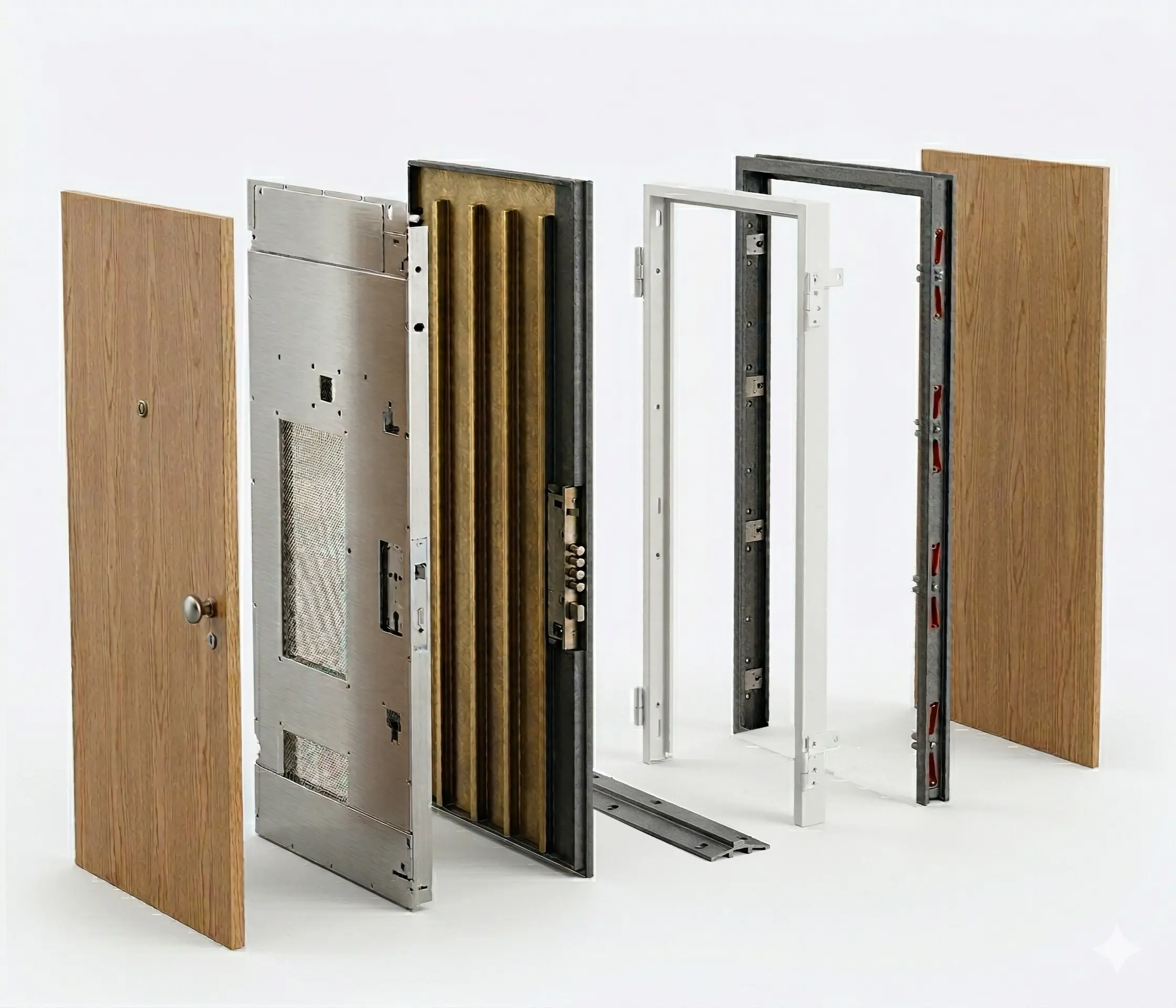
The thermal transmittance of an armoured door is the value that indicates how much heat passes through the door between inside and outside.
Put another way, it measures how well the door actually insulates your home.
This value is expressed in W/m²K (watts per square metre kelvin) and is always shown on the armoured door’s technical data sheet.
You do not need to get into the technical detail to grasp it: one very simple rule is enough.
The lower the value, the better the door insulates. The higher it is, the more heat gets through.
The reason comes down to a natural principle: heat always tends to move from where it is warmer to where it is cooler.
In winter, then, the warmth inside your home tries to escape outdoors; in summer the opposite happens, with the heat working its way in.
The front door is one of the most sensitive points because it sits directly between these two environments.
That is why the thermal transmittance of an armoured front door is such an important parameter: it tells you how much energy slips away every day, often without you noticing.
A door with high transmittance can leave the entrance feeling colder, create temperature swings and drive up your heating or cooling costs.
By contrast, a door with low thermal transmittance helps keep the indoor temperature more stable, improves comfort and helps cut wasted energy.
Here is a practical example: between a door rated at 1.8 W/m²K and one rated at 1.1 W/m²K there is a real difference. The second lets through far less heat, and over time that gap turns into more comfort and lower spending.
So when you are weighing up an armoured door, do not look at appearance or security alone.
The transmittance value of armoured doors (which is different from conductivity, the property of individual materials rather than the performance of the whole door) is one of the most important signs of whether or not you are choosing a genuinely efficient product.
What thermal transmittance is for in armoured doors
So far we have seen what the transmittance of an armoured door is.
Now let us look at why it should really matter to you.
In practice, the thermal transmittance of an armoured door shapes how your home behaves every single day, even when you do not notice it.
It is not something you “see”, yet you feel it clearly: in the temperature of your rooms, in the way the air feels near the entrance and, above all, in your energy use.
A poorly insulating door, for instance, can create a colder patch right by the entrance.
It might not show across the whole house, but step up to the door and you will feel it. That happens because the heat is not being held in effectively.
Another concrete effect has to do with energy use.
When the indoor temperature will not hold steady, your heating or cooling system has to work harder to make up for it.
And over time, that lands straight on your bills.
Then there is something that is often overlooked: moisture.
When a surface is colder than the indoor air, condensation can form on it.
With front doors, this tends to show up on the frame or in the more exposed spots, and in the long run it can lead to staining or mould.
Lastly, transmittance also plays a part in tax relief.
In many cases, to qualify for energy-saving incentives, you need to meet certain thermal transmittance values for armoured doors.
If the door falls outside the required limits, you simply cannot claim the benefit.
What counts as good transmittance for an armoured door?
Now we reach one of the most important questions: how low does the transmittance of an armoured door need to be to be genuinely good?
The answer is straightforward: the lower the value, the better.
But take care, because there is no single “perfect” number that suits everyone.
On today’s market, the thermal transmittance values of armoured doors generally sit within this range:
- above 1.8 W/m²K: low performance
- between 1.4 and 1.8 W/m²K: average performance
- between 1.0 and 1.3 W/m²K: good performance
- below 1.0 W/m²K: very high performance (more advanced solutions)
For example, a door rated 1.1 W/m²K clearly outperforms one rated 1.7 W/m²K, even if at first glance they look much the same.
That said, there is another key factor to weigh: where the door is installed.
A door fitted in a flat (opening onto the stairwell) and one that opens straight outdoors (on detached houses and villas) work in completely different conditions.
In the second case, where the door separates inside and outside directly, choosing low values matters even more.
On top of that, if you are looking at work that qualifies for incentives, you should know there are transmittance limits for armoured doors to respect.
In many cases, to fall within the relief, you need values around 1.3 or 1.6 W/m²K, varying with the climate zone.
In short, good transmittance for an armoured door today generally sits between 1.0 and 1.3 W/m²K.
That is the range that gives you a sound balance of performance, comfort and access to the regulations.
Want to know which armoured door is right for your home?
Every home has different needs, all the more so when it comes to thermal insulation.
The right transmittance value depends on several things: the climate zone, where the door sits and how the building is built.
Get a quote. We will help you choose a solution that genuinely suits your property, so you avoid the kind of mistakes that cost you later.
How to read an armoured door’s transmittance on the spec sheet
When you are weighing up an armoured door, the spec sheet is the most important document to look at.
That is exactly where you will find the door’s real thermal transmittance, but you need to know what to look for so you are not misled.
The right figure to look for is always Ud, that is, the transmittance of the whole door.
This is the value that genuinely shows how well the door insulates once it has been fitted.
Below is an example of an Ariete spec sheet, where you can clearly see the door’s Ud transmittance value.
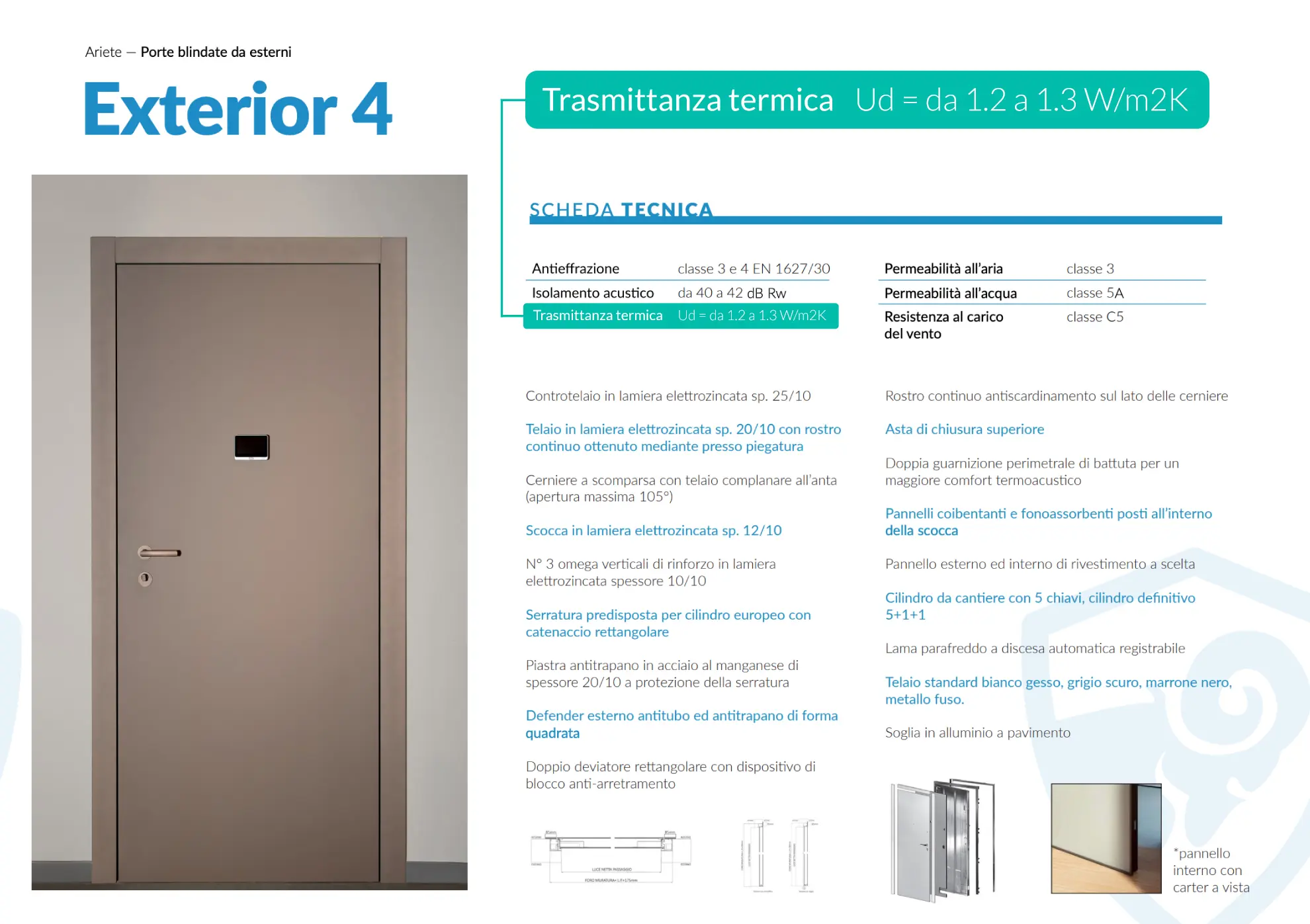
So if you are after the armoured door’s thermal transmittance on the spec sheet, make sure it is given as Ud and not as a partial value.
Plenty of spec sheets, in fact, quote numbers that can look good but are not the full picture.
In some cases only the transmittance of the panel or the leaf is shown, leaving out the frame and the joints.
The trouble is that these figures do not reflect how the door really behaves.
An armoured door works as a single system: leaf, frame and contact points all work together, and it is often those contact points that cause the biggest heat loss.
That is why a value covering just one part can be misleading.
There is one more thing worth keeping in mind.
The transmittance printed on the spec sheet is measured under ideal conditions, namely in a laboratory.
In the real world, the final result also depends a great deal on how the door is fitted.
Now that you know where to read the transmittance on the spec sheet, let us look at the cases in which this value also has to be provided for the Italian ENEA submission.
Armoured door transmittance and the ENEA submission: when you need to declare it
When you replace an armoured door, the Italian ENEA submission is not always compulsory.
It depends on how the work is claimed for tax relief.
If the armoured door is claimed as a security measure through the Italian Renovation Bonus, the ENEA notification is usually not required, because the main aim is to increase the protection of the home.
If, instead, the replacement is claimed as an energy-saving measure, then you may need to file the ENEA submission and declare the transmittance values of both the door that was removed and the new door fitted.
In this case, the important figure is the Ud value, that is, the transmittance of the whole door.
The new door must also meet the limit set for the climate zone of the municipality where it is installed.
In short:
- armoured door claimed for security: ENEA submission usually not required
- armoured door claimed for energy saving: ENEA submission required and transmittance limits to respect
To avoid mistakes, always check your specific case with your technician, accountant or Italian tax assistance centre (CAF).
Italy’s climate zones: which transmittance value you have to meet
When it comes to armoured door thermal transmittance, knowing what a good value is in general is not enough.
You need to understand which transmittance limit for front doors applies in your climate zone.
Italy’s Presidential Decree no. 412 of 26 August 1993 introduced, based on the heating degree-days calculation, six climate zones across the country:
- Zone A: municipalities with fewer than 600 degree-days;
- Zone B: municipalities with degree-days between 600 and 900;
- Zone C: municipalities with degree-days between 901 and 1,400;
- Zone D: municipalities with degree-days between 1,401 and 2,100;
- Zone E: municipalities with degree-days between 2,101 and 3,000;
- Zone F: municipalities with more than 3,000 degree-days.
To work out your climate zone, it is not enough to look at the region or the province.
The classification is set municipality by municipality, because even neighbouring areas can have different climate conditions.
That is why we have put together a handy tool: enter the name of your municipality and instantly check the climate zone, degree-days and Ud transmittance limit you have to meet.
Find the required transmittance in your municipality
Enter the municipality where the home is located and instantly check the climate zone, degree-days and Ud limit value for the armoured door.
The further you move towards the colder zones, the more important it becomes to choose a door with low thermal transmittance, because heat loss is greater.
Italian law sets thermal transmittance limits for armoured doors that have to be respected, especially when replacing the door or when you want to obtain tax incentives.
These limits change according to the climate zone and represent the minimum level required to be compliant.
The reference values are these:
| Climate zone | Ud transmittance limit (W/m²K) | Example city |
|---|---|---|
| Zone A / B | ≤ 2.60 | Lampedusa, Palermo |
| Zone C | ≤ 1.75 | Naples, Bari |
| Zone D | ≤ 1.67 | Genoa, Florence |
| Zone E | ≤ 1.30 | Milan, Turin |
| Zone F | ≤ 1.00 | Belluno, Cortina |
Old armoured door transmittance: which value to enter in the ENEA submission
When you fill in the Italian ENEA submission for tax relief, you are also asked for the thermal transmittance value of the existing door, that is, the one that was replaced.
This is often where a doubt arises.
With an old armoured door or a dated front door (from the 1970s, 1980s or 1990s), in most cases there is no spec sheet from which to recover the real value.
In these situations an estimated value is used, based on the typical features of doors from that period.
The thermal transmittance of an old armoured door generally sits between 2.0 and 3.0 W/m²K.
Older doors, in fact, had no internal insulation, no thermal-break frame and were not designed for energy saving.
That is why it is normal for them to have much higher values than today’s standards.
In the absence of technical data, many technicians use estimated values consistent with the age and type of door.
For an old, uninsulated door, a value of around 2.4 W/m²K can be a plausible estimate, but it must always be assessed by whoever handles the submission.
The same goes for an old wooden door, which can have similar performance if it has no insulation or effective sealing systems.
One point needs to be made clear, though.
The value of the existing door only serves to complete the ENEA submission and to demonstrate the energy improvement of the work.
What really counts, for the purposes of the relief, is that the new door meets the transmittance limits set for the climate zone.
In any case, the value of the old door must be consistent and justifiable, especially in the event of checks.
What the transmittance of an armoured door depends on
The thermal transmittance of a front door depends directly on how it is built and on the materials used.
It is not a “magic” number, but the concrete result of the door’s construction.
Let us start with the materials.
Steel, which is the main material in an armoured door, is very strong but has one problem: it conducts heat easily.
For this reason, a steel door with no internal insulation would have very poor thermal performance.
To improve matters, insulating materials are placed inside the door, such as: polyurethane, rock wool or polystyrene.
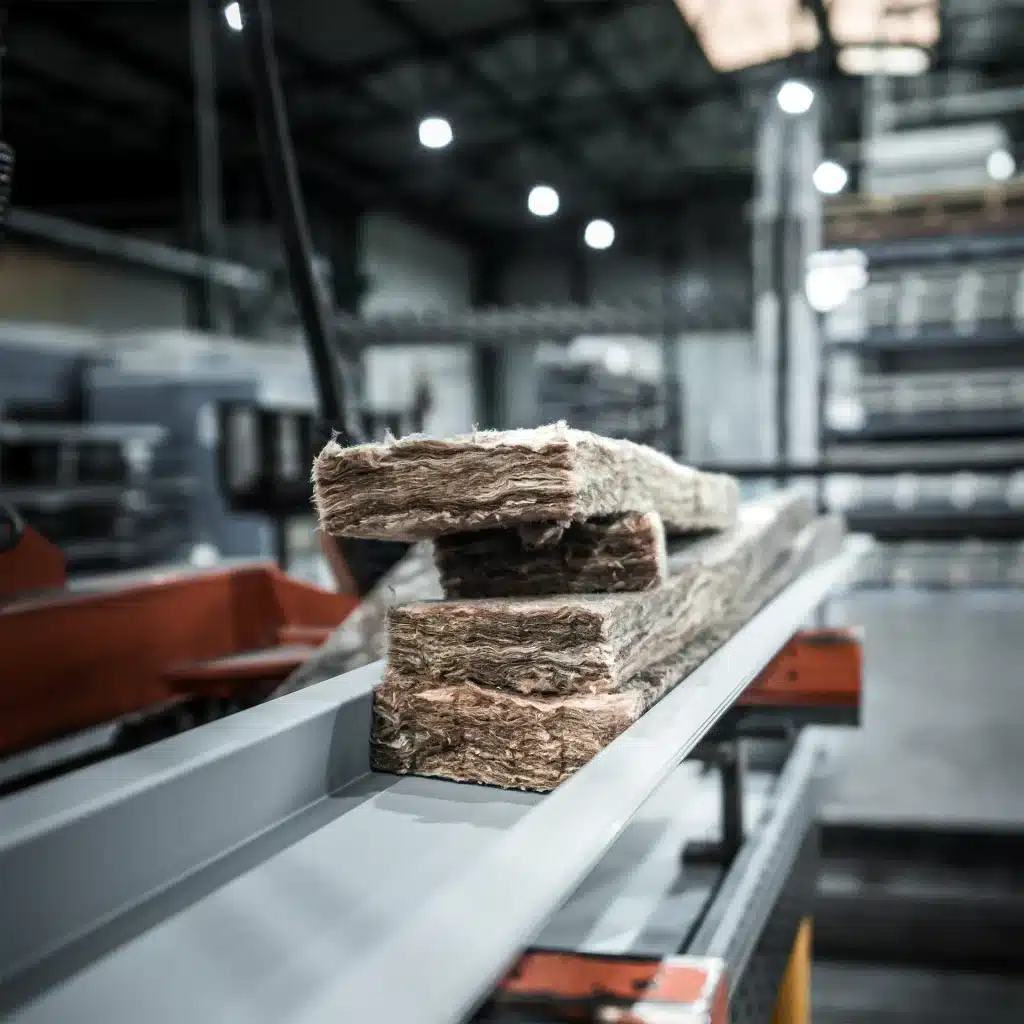
These materials serve to reduce heat loss and make the door more efficient.
The quality and thickness of this insulation make a concrete difference to the armoured door transmittance value.
The cladding panels also play an important role.
Wood, for instance, is naturally insulating and can improve overall performance.
By contrast, metal or poorly insulating materials tend to worsen it, if they are not properly designed.
Another critical element is the frame.
Many people focus only on the leaf, but the frame can become a real weak point.
If it is not designed with thermal-break systems or insulating features, it can lose even more heat than the leaf itself.
Then there are the seals, which do a less visible but essential job.

They serve to close off the gap between leaf and frame perfectly, preventing air from passing through.
The most widely used are:
- rubber or EPDM seals, strong and flexible
- magnetic seals, which improve the airtight closure
- brush or silicone seals, often along the bottom
If these components do not work well, even a door made with excellent materials can lose its effectiveness.
Finally, how all these elements work together matters a great deal too.
A door with a good declared value but built with cheap materials or a poorly executed structure may fail to deliver the expected result.
How to calculate the transmittance of an armoured door
To calculate the thermal transmittance of an armoured door, you have to consider the whole structure of the door, not just a single part.
The correct value is Ud, that is, the overall transmittance of the door, calculated according to the UNI EN ISO 10077-1 and 10077-2 standards.
The formula used is a weighted average of the different elements that make up the door:
Ud = (Up × Ap + Uf × Af + Ψp × Ip) / (Ap + Af)
Where:
- Up is the transmittance of the leaf
- Uf is the transmittance of the frame
- Ψp is the linear transmittance along the perimeter
- Ap is the area of the leaf
- Af is the area of the frame
- Ip is the perimeter of the leaf
This formula takes into account both the main surfaces (leaf and frame) and the heat losses at the most critical points, that is, along the edges.
The result is a value that represents how the door as a whole really behaves.
To understand the principle better, you can draw a parallel with windows, where a similar formula (Uw) is used to combine glass, frame and joints.
The logic is identical: what counts is not just the best part, but how all the components work together.
That is why, when it comes to armoured door transmittance, the value to consider is always the one calculated for the whole system.
If a figure refers only to one part, such as the panel, it does not represent the real performance of the door.
Thermal bridges and draughts: the role of fitting
Up to now we have talked about materials and declared values.
But there is an even more concrete aspect that often makes the real difference: the fitting of the armoured door.
You can have a door with excellent thermal transmittance, but if it is fitted badly, the real performance can drop significantly.
The main problem is thermal bridges.
These are points where heat passes through more easily, usually in the contact areas between frame and wall.
If this part is not handled carefully during fitting, invisible micro-cracks form that let heat out and air in.
This is exactly where many of the problems people blame on the door come from, when in reality they depend on the fitting.
In the video below you can see the correct installation of an armoured door, carried out by specialist technicians trained at the Accademia della Posa in Opera in Genoa (the leading Italian installation academy).
Another critical element is draughts.
Even with good seals, a door fitted imprecisely may not sit perfectly against the opening.
This compromises the airtightness and reduces the overall effectiveness of the system.
To avoid these problems, specific materials are used during installation, such as:
- insulating foams
- self-expanding tapes
- perimeter sealing
These elements serve to create a continuous barrier between door and masonry, keeping heat loss to a minimum.
There is then one last key point.
The transmittance declared on the spec sheet refers to a door fitted under ideal conditions.
In reality, it is the fitting that determines whether or not that performance is maintained.
In other words:
An excellent door fitted badly can perform worse than an average door fitted well.
That is why, when it comes to armoured door thermal transmittance, you should not consider only the product, but also how it is fitted.
How to improve transmittance without replacing the door (thermal kits)
It is not always possible to replace the armoured door, especially if it is still in good condition.
For this reason, there are some solutions that claim to improve the thermal transmittance of the existing door.
The most common are thermal kits.
These are systems that add a layer of insulation to the door, usually behind the panel or on the surface.
The aim is to reduce heat loss without touching the main structure.
In some cases the improvement is real, even in the numbers.
For example, a door with a transmittance of 1.7 W/m²K can drop to around 1.3 W/m²K after the kit is applied.
On paper it looks like a significant result, but in practice you need to understand where the kit really works.
These systems almost always act only on the leaf.
They do not change fundamental elements such as the frame, joints and wall-to-door connection.
And it is precisely in these areas that the most critical heat losses occur.
If there are draughts, problems with the jamb or thermal bridges linked to the fitting, the kit does not solve them.
It can improve the situation, but it does not change the overall behaviour of the door.
In many cases, moreover, installation is not as simple as it seems.
It can require invasive work, even up to removing the door or the frame.
So it is not a one-size-fits-all solution.
It is often compatible only with specific models from the same manufacturer.
The cost-benefit balance also needs careful thought.
Between materials and installation you can spend considerable sums, without achieving performance comparable to a door designed to insulate from the outset.
In short, thermal kits can offer an improvement. But they work on a system that starts out with limitations.
If the goal is genuinely low thermal transmittance and high performance over time, the result is still inferior to a door designed for that very purpose.
Frequently asked questions
The thermal transmittance of a front door varies according to the quality and structure of the product.
Older or cheaper doors can have values above 2.0 W/m²K, while modern doors generally sit between 1.0 and 1.8 W/m²K.
The best-performing solutions can drop even below 1.0 W/m²K, especially in models designed for thermal insulation.
The answer depends on the climate zone where the home is located.
Under Italian law there are maximum limits to respect, ranging from 3.7 W/m²K (zone A) up to 1.6 W/m²K (zone F).
From a practical point of view, a good door today should have a transmittance of around 1.0 – 1.3 W/m²K, to ensure a good level of insulation.
Yes, an armoured door with a transmittance of 1.3 W/m²K is considered a good solution.
It falls within the mid-to-high values on the market and in most cases is enough to meet the regulatory limits set in Italy.
It ensures good thermal insulation, especially in a flat or in settings not directly exposed to the outside.
1.0 W/m²K is better.
It is a lower value, so it indicates a greater insulating capacity.
The difference between 1.0 and 1.4 may seem small, but in reality it translates into less heat loss and better performance over time.
Thermal capacity is a different parameter from transmittance.
It indicates a material’s ability to store heat, not to block it.
With armoured doors, it is a less relevant value than transmittance, because what really counts is the door’s ability to limit the passage of heat between inside and outside.
Conclusions
By this point, the key idea is very simple: the thermal transmittance of an armoured door is one of the most important parameters to assess, not a secondary technical detail.
It is the value that lets you understand how well a door really insulates, beyond appearance and security.
We have seen that looking at a single number is not enough.
You need to check that it is given as Ud, that it is consistent with your climate zone and that it is low enough to ensure real performance.
We have also made clear that transmittance depends on several factors.
Materials, structure, frame and fitting work together and determine the final result.
Likewise, solutions such as thermal kits can improve the situation, but they do not solve the door’s basic limitations.
To obtain high performance, you need a product designed with this goal from the very start.
If you are weighing up a new door, the advice is very concrete.
Do not stop at “it is compliant”.
Always ask yourself: how far is it from the limit?
That is exactly where the difference lies between a door that “does the job” and a door that genuinely improves the comfort of your home over time.
For more information on the prices of a new armoured door with high thermal insulation, get a free quote.
