
The deadbolt is a security system used in armoured doors to completely prevent the door from being opened from the outside, providing an extra layer of protection against intrusions and break-in attempts.
It is also known as a night bolt and is generally used when you are inside the home and want to lock the door completely, making it impossible to open from the outside even with the key.
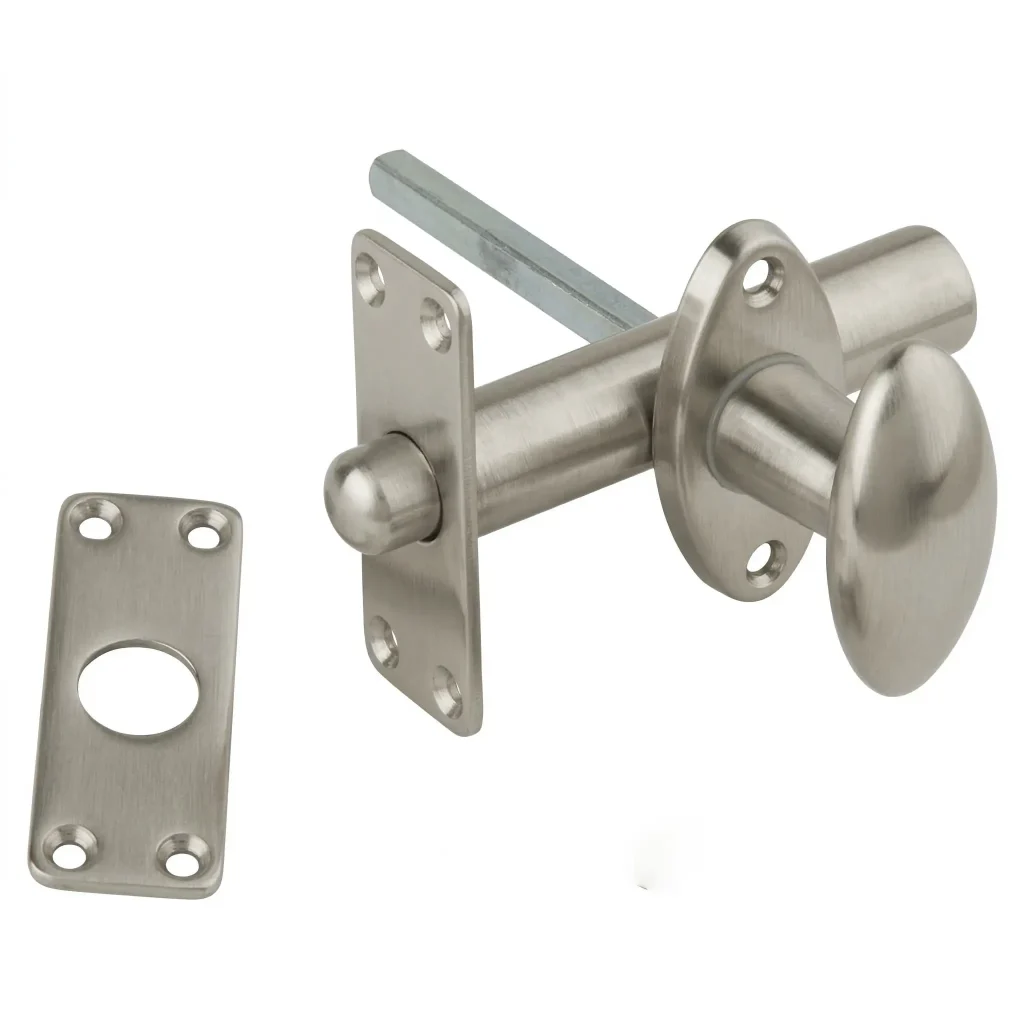
The deadbolt can be built into the structure of the armoured door or fitted as an additional accessory between the leaf and the frame. In both cases it is a purely mechanical system that is operated manually from the inside.
How the deadbolt for armoured doors works
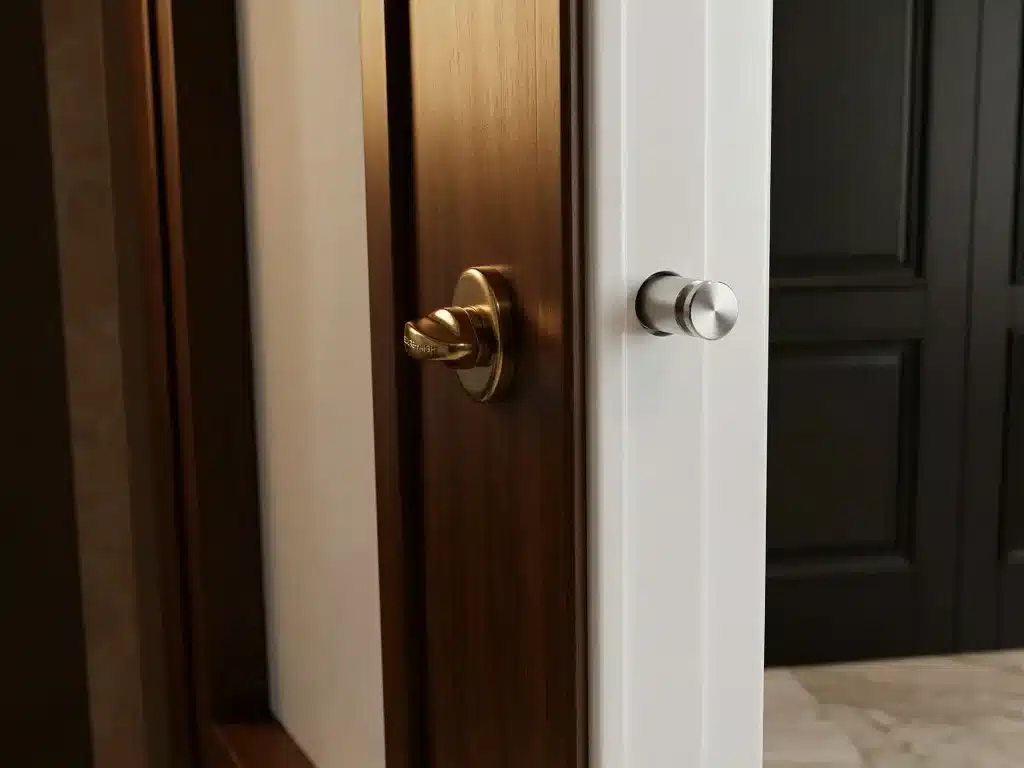
The deadbolt consists of a metal bar or a sturdy locking pin that slides into a dedicated housing in the door frame.
When the device is engaged in its seat, the door stays completely locked and cannot be opened from the outside in any way, not even using the key of the main lock.
This system is used above all at night or when you are at home, because it adds a further layer of security beyond the normal locking of the armoured door.
Unlike the main lock, the deadbolt is not connected to the key or to the European cylinder, but is activated manually from the inside by means of a lever or a sliding pin.
Difference between a deadbolt and a door restrictor
The deadbolt is often confused with other security devices for armoured doors, in particular with the door restrictor.
The main difference concerns the way in which the door can be opened.
The deadbolt completely locks the leaf, preventing the door from opening at all until the system is released from the inside.
The door restrictor, on the other hand, allows the door to be opened only partially. This lets you check who is outside while still keeping a certain level of security.
For this very reason the door restrictor is today a more widespread solution in modern homes, while the deadbolt is used above all when a complete locking of the door is wanted.
Pros and cons of the deadbolt
Pros
Adopting the deadbolt as a security system offers several advantages.
The first is without doubt the high level of protection. Once engaged, the deadbolt completely prevents the door from being opened from the outside, making any intrusion attempt far more difficult.
Another advantage is the simplicity of the mechanism. Being a purely mechanical system, the deadbolt needs no electrical power and has no electronic components that can fail.
It is also a very robust and reliable device, designed to withstand heavy stress and break-in attempts.
Cons
Despite its advantages, the deadbolt also has some limitations that are worth considering.
The main one concerns managing access from the outside. If the deadbolt is engaged while someone is away from home, the door cannot be opened even with the key.
In these situations the help of a technician or a locksmith may be needed to unlock the door, a condition that can become particularly problematic in an emergency.
It is precisely for this reason that modern homes often tend to prefer systems that allow greater flexibility of use.
From the deadbolt to the door restrictor
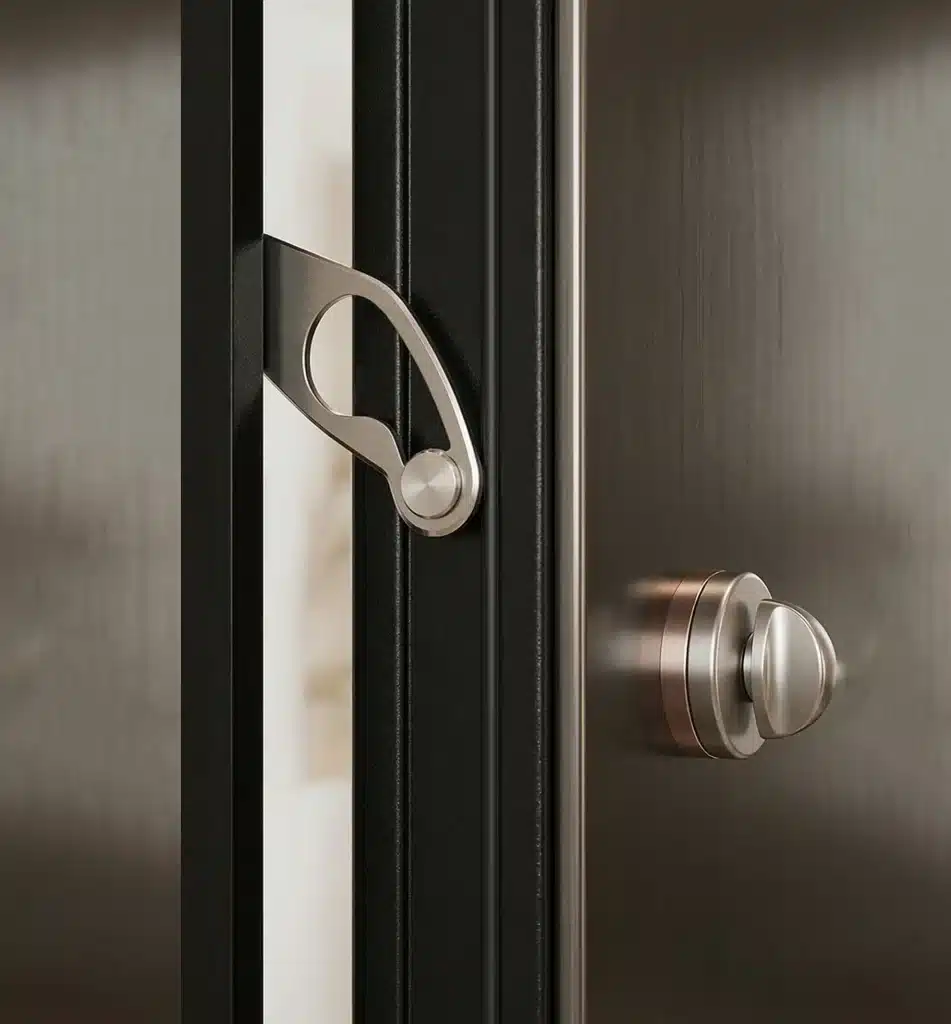
Door restrictor on an armoured door
In recent years the deadbolt has gradually been joined, and in many cases replaced, by more practical devices such as the door restrictor.
This solution lets you keep a good level of security while at the same time allowing the door to be opened only partially. This way you can check who is outside without fully unlocking the door.
The door restrictor can be built directly into the structure of the armoured door or fitted as an accessory between the frame and the leaf.
Despite this evolution, the deadbolt remains an effective security system to this day and is used in situations where you want to completely lock the door from the inside, preventing any unwanted opening.