
The term door reveal lining, in Italian known as imbotte (also called intradosso or passata), refers to the inner or outer perimeter surface of a door or window opening. This part has a varying depth depending on the thickness of the wall that houses the opening.
To put it simply, the reveal lining is the section of wall that frames a door or a window, forming a visible surface that can have a different finish from the rest of the wall.
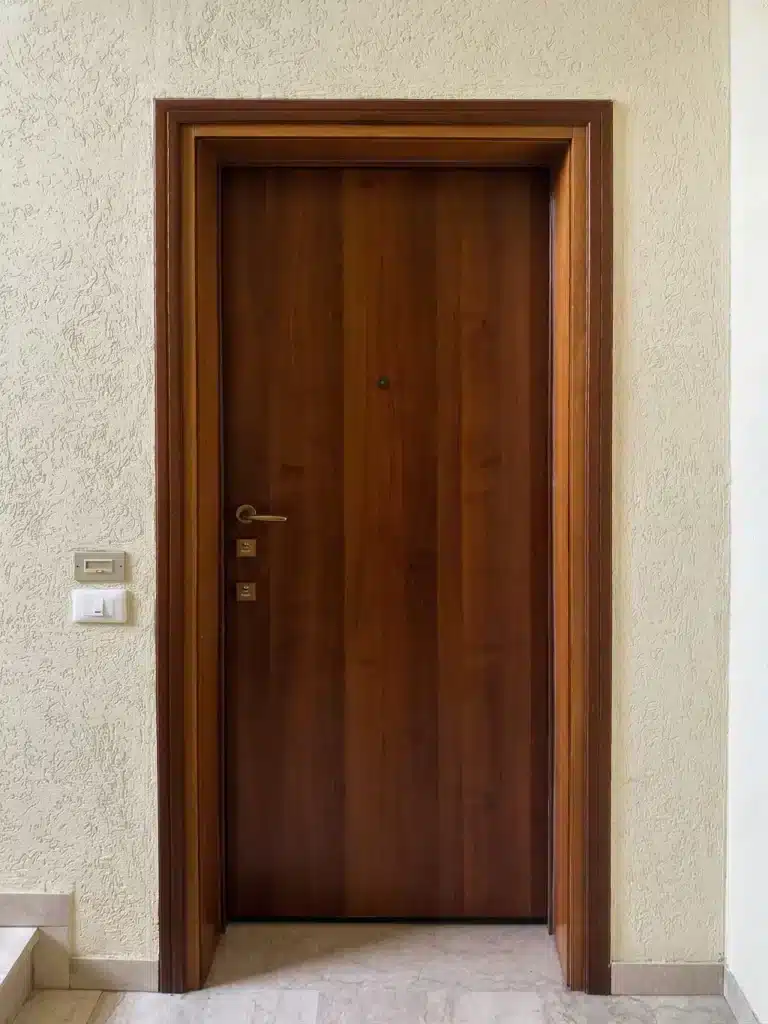
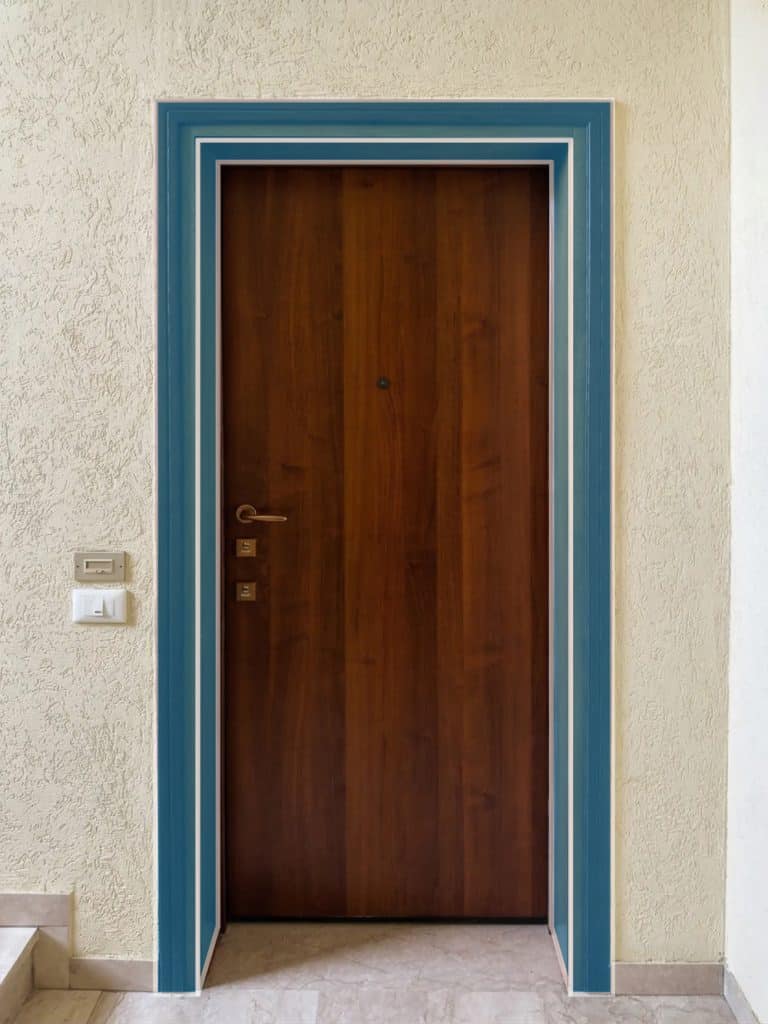
Armoured door reveal lining (highlighted in light blue)
It is particularly noticeable in buildings with thick walls, such as historic buildings or houses built with load-bearing masonry.
The reveal lining in armoured doors
In armoured doors, the reveal lining plays both an aesthetic and a functional role.
On the one hand, it helps define how the door blends into its architectural setting; on the other, it affects the way the frame is installed and the final look of the door.
Depending on how the opening is shaped, the reveal lining can be flush with the wall, picked out with decorative mouldings, or splayed, as happens in older buildings.
When the wall is very thick, the depth of the reveal lining can create a striking visual effect, whereas in modern settings a minimal solution is preferred, one that keeps protrusions and superfluous details to a minimum.
An important point to bear in mind is that, in many cases, when you decide to replace an armoured door, the reveal lining can be kept if it is in good condition.
This makes it possible to cut costs and speed up the installation of the new door, avoiding invasive masonry work.
If the reveal lining is well preserved and compatible with the new frame, it can simply be adapted to the new door without the need for demolition or rebuilding.
Examples of armoured doors with an existing reveal lining
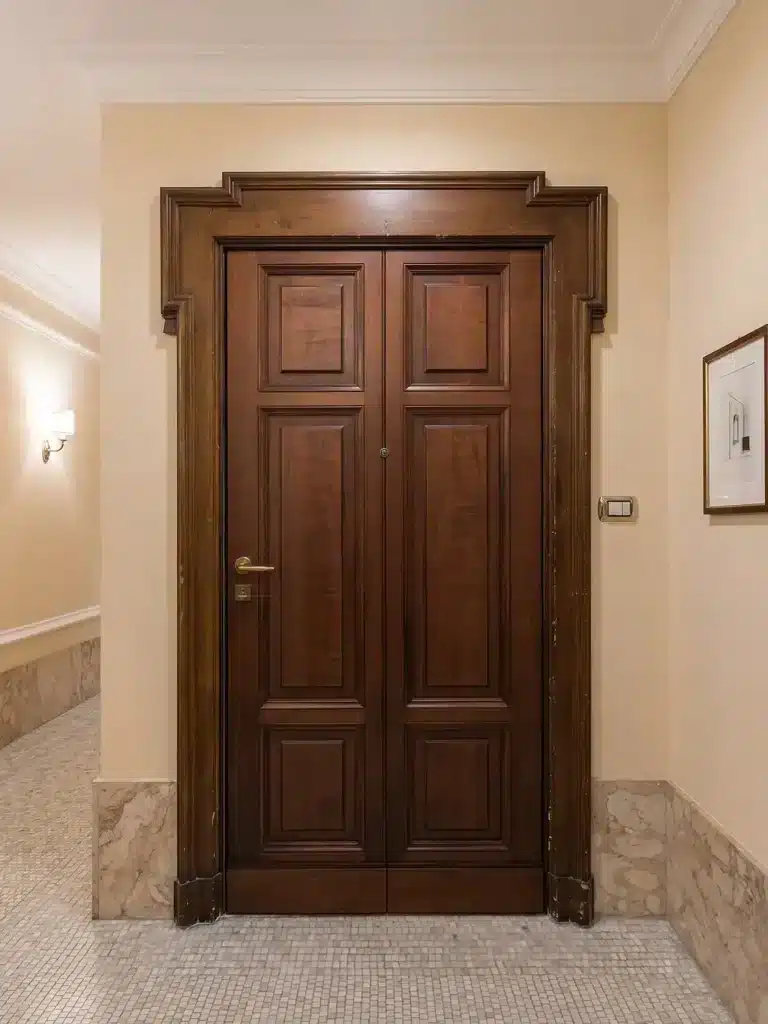
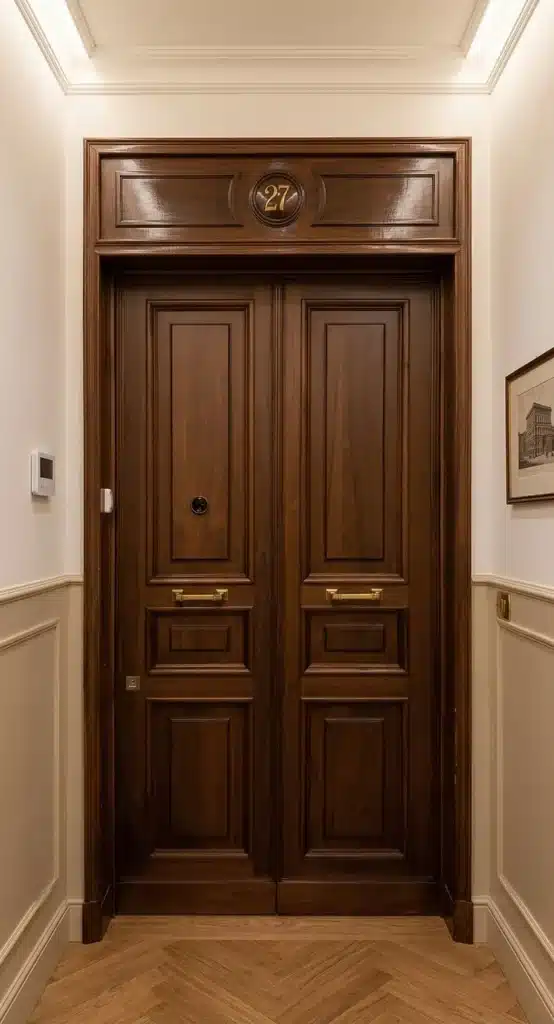
This photo gallery brings together a few examples of installations where the old door was replaced with an Ariete armoured door while keeping the existing reveal lining, because it was still in good condition.
In the first three cases the reveal lining is made of wood, while the fourth example shows a marble reveal lining.
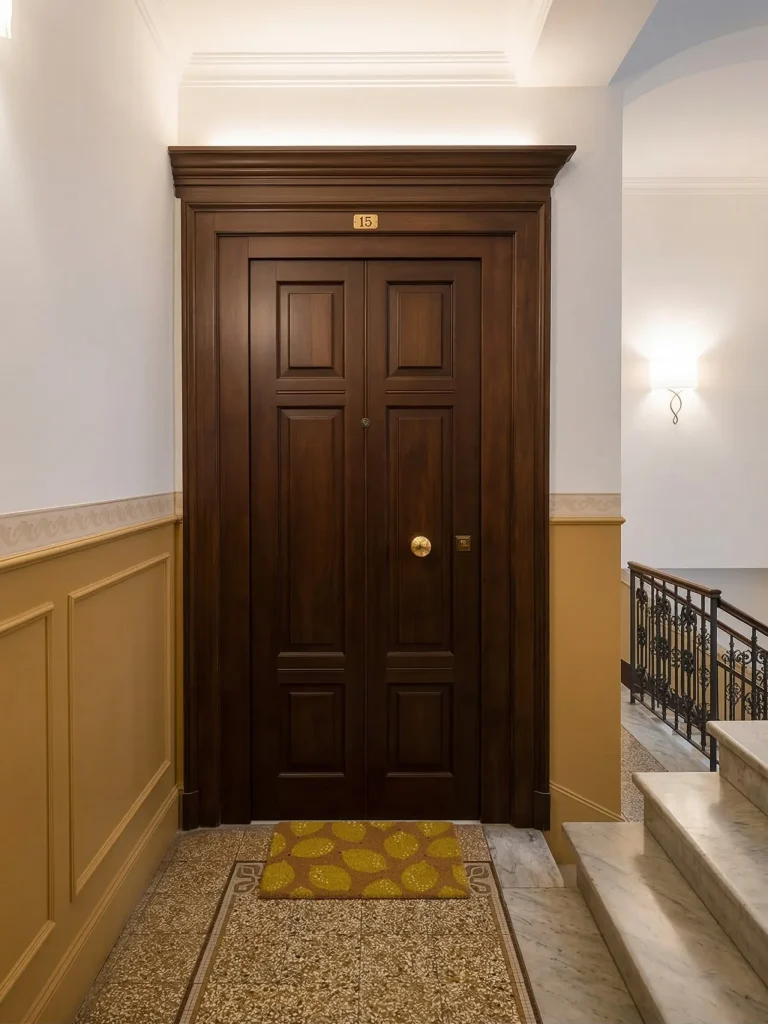
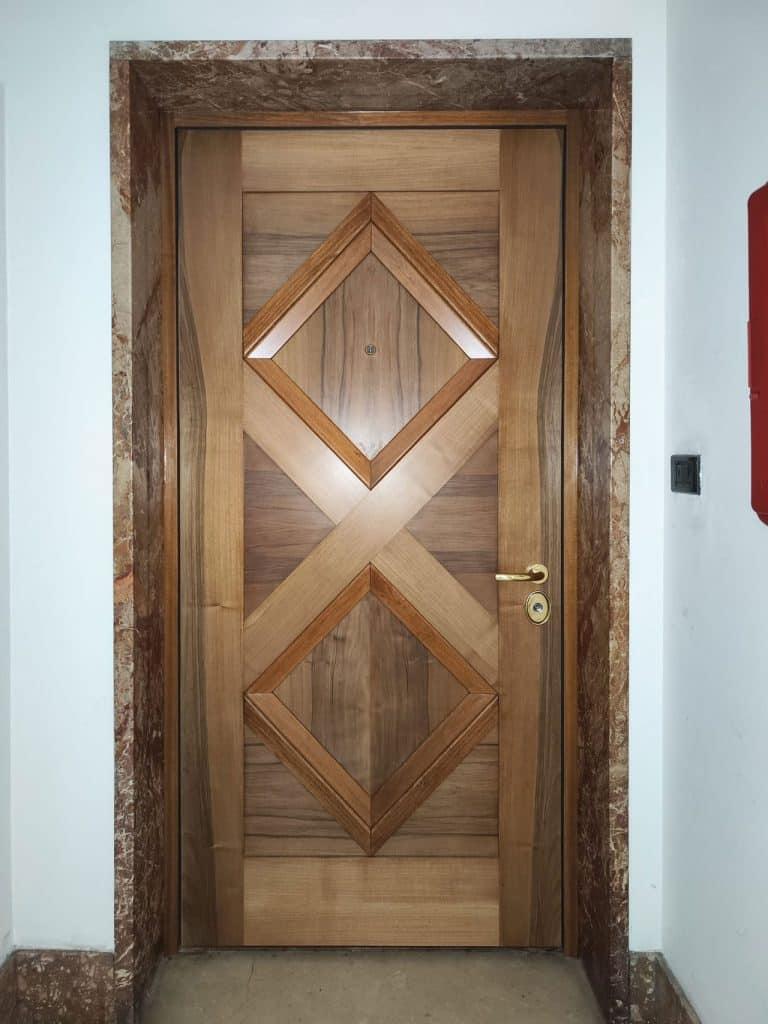
Materials and finishes of the reveal lining
The reveal lining can be made from different materials depending on aesthetic and functional needs.
In classic settings it is common to find reveal linings in marble, stone or solid wood, while in modern builds lighter solutions are preferred, such as wood, plasterboard or MDF panels.
Alternatively, it can simply be plastered and painted in the same colour as the wall, creating a uniform and discreet effect.
Conclusion
The reveal lining is an architectural element that is often taken for granted, yet it has a decisive impact both on the look of an armoured door and on how it is installed.
Understanding its role helps you make more informed choices, especially when you need to replace a door and want to keep as much of the existing structure as possible to limit costs and reduce masonry work.
If the reveal lining is in good condition and compatible with the new door, it can be reused without any problem, achieving an excellent result both in practical and aesthetic terms.
On the other hand, if it is damaged or unsuitable, it is worth considering a rebuild, choosing materials and finishes that harmonise with the style of the door and the surrounding space.