
Omega reinforcement profiles for armoured doors are fundamental structural elements in how the door is built.
They are shaped steel profiles, welded to the inner sheet of the leaf, designed to increase its rigidity and its resistance to break-in attempts.
Their name comes from their shape, which recalls the Greek letter Ω (omega), and refers to a geometry developed to stiffen the structure without weighing it down too much.
What omega reinforcement profiles are
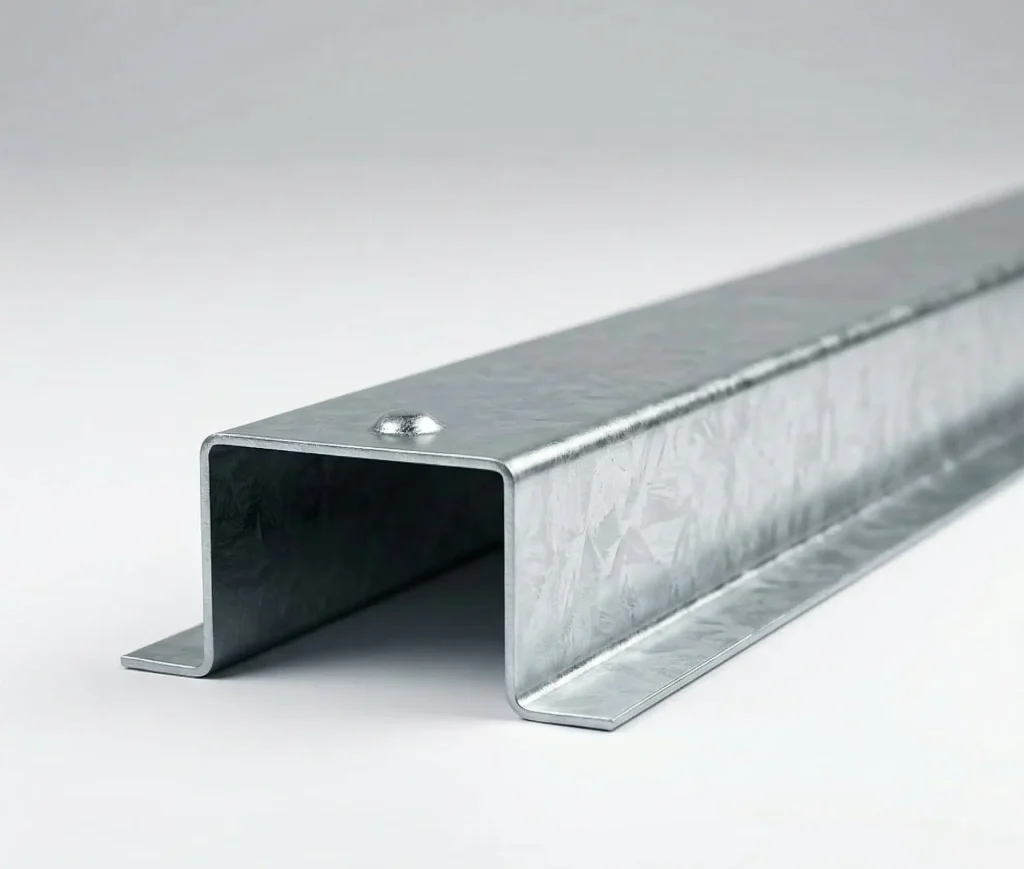
Omega reinforcement profiles are metal profiles made of steel, generally produced from folded sheet metal.
Their cross-section is typically U-shaped or omega-shaped, a form that increases resistance to bending while keeping a good balance between strength and weight.
They are welded directly onto the structural sheet of the leaf, inside the door, before it is closed and finished with the other components.
Their main function is to prevent the sheet metal from deforming when it is subjected to external forces, such as those applied during a break-in attempt.
How they are arranged inside the door
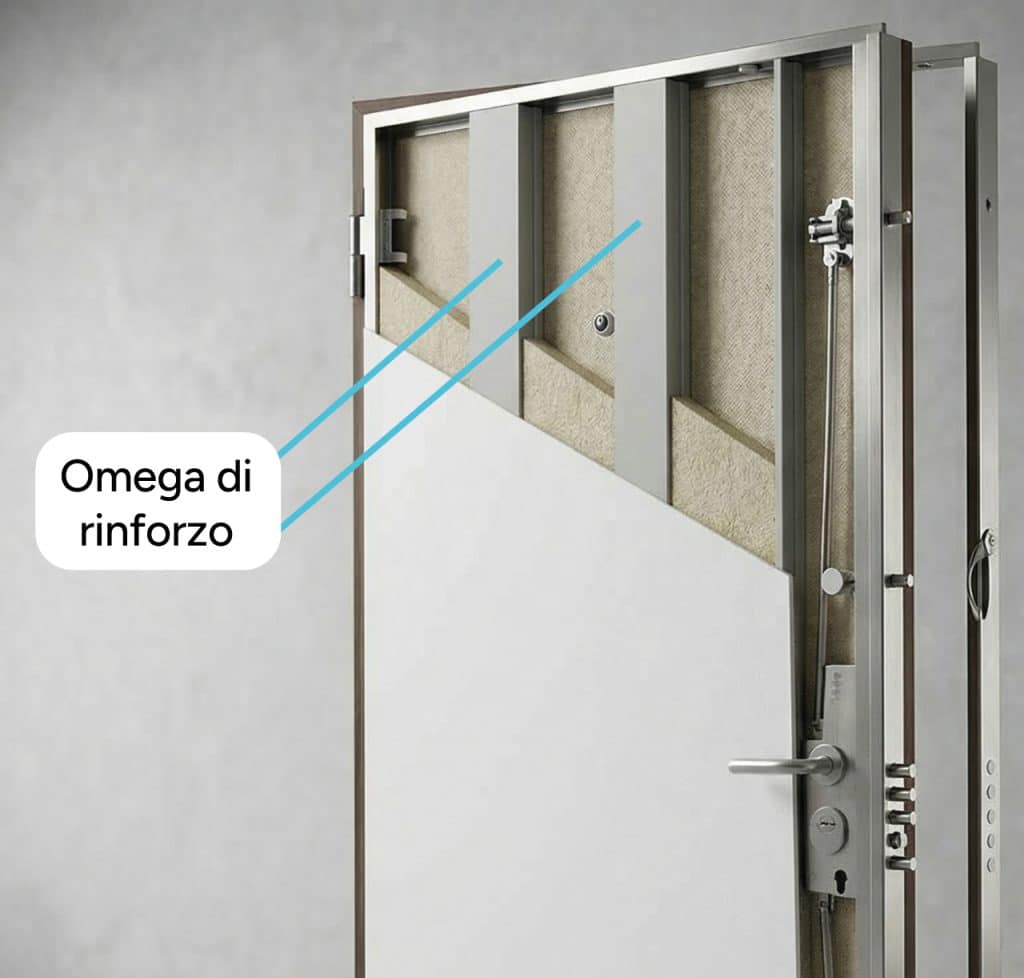
Inside an armoured door, the omega profiles can be positioned in different configurations, depending on the construction design.
In most cases they are found:
- vertically, along the full height of the leaf, to increase overall rigidity
- horizontally, in the most stressed areas, such as the lock region
This arrangement creates a more rigid internal structure, reducing the chance that the sheet metal will bend or deform at specific points.
What they really do
The role of omega reinforcement profiles is mainly structural.
Their presence increases the rigidity of the leaf and limits localised deformation, making it far harder to bend the door with break-in tools such as levers or crowbars.
Sheet metal without reinforcements tends to give way at its weakest points. The omega profiles counter this behaviour, making the surface more resistant and less vulnerable.
This translates into a greater ability of the door to resist break-in attempts, especially those based on deforming the leaf.
How they are fitted into the structure
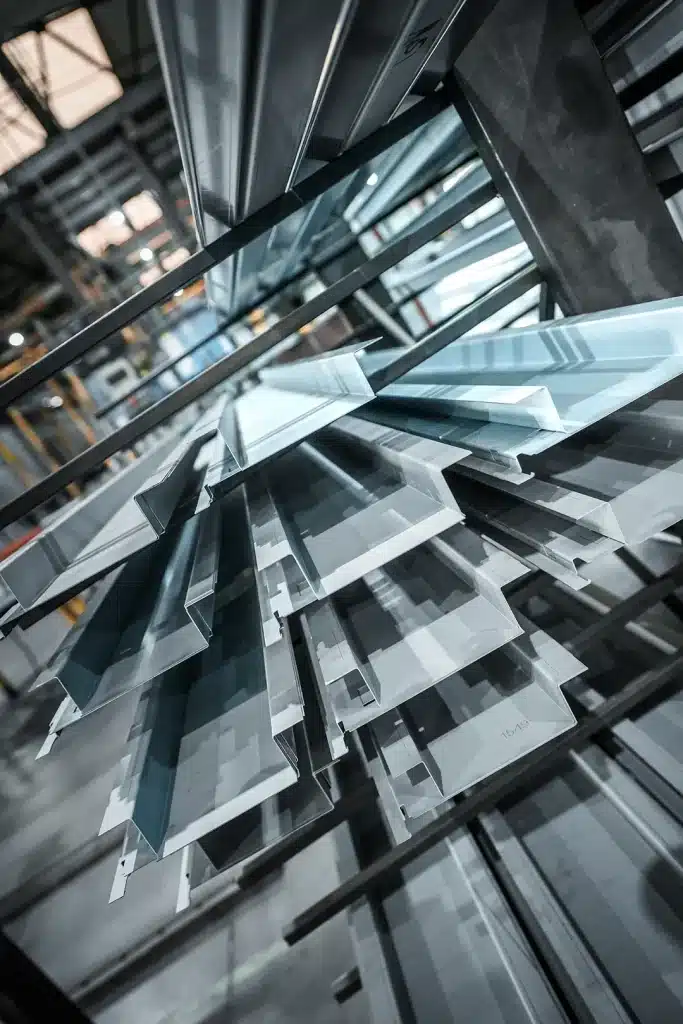
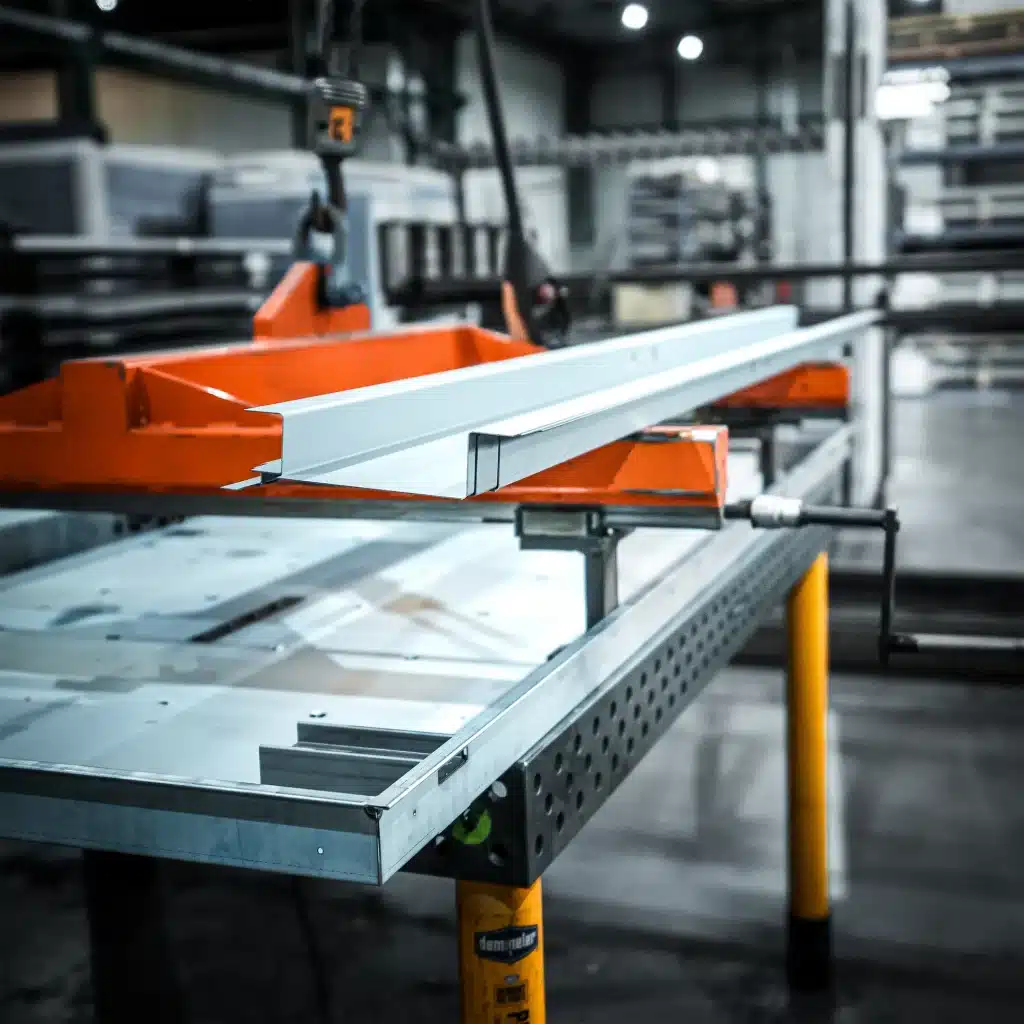
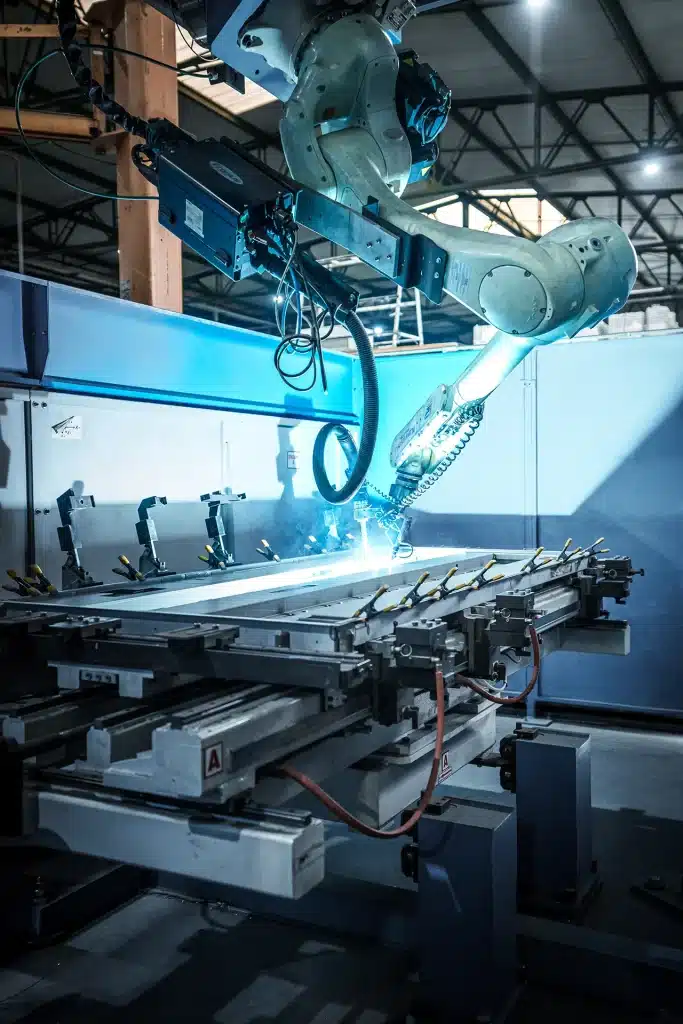
Fitting and welding of omega reinforcement profiles during the production of an Ariete armoured door
Omega reinforcement profiles are an integral part of how the armoured door is built and are fitted during the production stage.
Once the sheet metal has been worked, the profiles are welded onto the inner surface of the leaf, creating a more rigid and stable structure. Only afterwards is the door completed with the lock, hinges, frame and finishes.
This process makes it possible to obtain a leaf designed as a single system, in which every element contributes to the overall strength.
Omega profiles, single-sheet and double-sheet doors
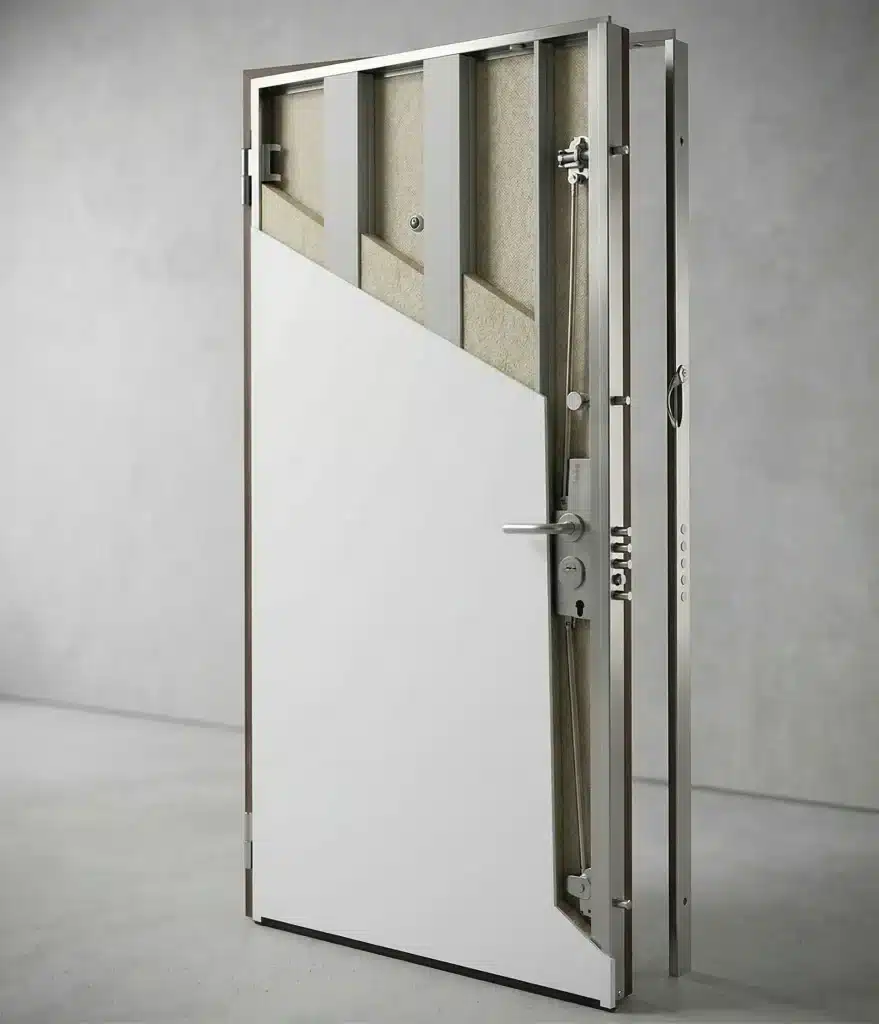
How effective omega reinforcement profiles are also depends on the type of door structure.
In single-sheet doors, the omega profiles are the main system for stiffening the sheet metal.
In double-sheet doors, by contrast, the structure is more advanced: the reinforcements are integrated between two sheets of steel, further increasing rigidity and resistance.
In general, a double-sheet structure with well-designed internal reinforcements offers superior performance in terms of security and long-term stability.
Omega reinforcement profiles and other structural systems
The term “omega reinforcement profile” is technically correct and identifies a specific type of shaped profile.
In commercial use, other terms may also be used, such as “reinforcement tubes”, to indicate structural elements inside the door. These definitions, however, are not always consistent and can vary from one manufacturer to another.
For this reason, rather than the name, what matters is assessing the real quality of the door’s internal structure.
Conclusion
Omega reinforcement profiles are an invisible yet decisive element in the quality of an armoured door. They have no effect on the appearance, but they make a big difference in terms of resistance and behaviour under stress.
A well-designed door, with adequate internal reinforcements correctly welded in place, offers greater protection against break-in attempts and keeps its structural stability over time.
When choosing an armoured door, it is therefore essential to consider not only the visible components, but also what lies inside.