
The thermal insulation of an armoured door is the door’s ability to reduce heat exchange between inside and outside, improving living comfort and limiting energy loss.
A thermally insulated armoured door helps keep the home warmer in winter and cooler in summer, while also helping to cut consumption and energy bills.
When you assess the efficiency of an entrance door, one of the key parameters to look at is thermal transmittance, shown on the spec sheet as the U-value.
As a rule, the lower this value, the better the door can limit heat loss and improve the energy efficiency of the home.
Throughout this article we will look at which elements really affect the thermal insulation of an armoured door, exploring the role of the frame, subframe, seals and installation.
We will also see how to read thermal transmittance correctly on the door’s spec sheet and which values to consider when choosing a genuinely efficient solution.
We will further explore the main causes of draughts, condensation and heat loss, looking too at the concrete benefits in terms of living comfort, sound reduction and energy saving.
What thermal insulation of a door is and how to measure it
Good thermal insulation helps keep the indoor temperature of the home more stable, improving living comfort in every season.
An underperforming entrance door can lead to draughts, heat loss and temperature swings, increasing the home’s energy consumption.
To assess the efficiency of a door, the U-value of thermal transmittance is often taken as the benchmark: the parameter that shows the door’s level of heat loss.
Without getting too technical, it is enough to know that a lower U-value generally corresponds to a better insulating ability.
Modern insulated solutions are designed precisely to limit the passage of heat between inside and outside, helping to reduce the consumption linked to heating and cooling.
The overall performance of an armoured door does not, however, depend solely on the transmittance shown on the spec sheet.
Insulating materials, internal structure, seals and frame also have a significant effect on the efficiency of the entrance door.
In particular, proper frame insulation helps limit thermal bridges, air infiltration and condensation along the perimeter of the door.
For this reason, when choosing a high-performance solution it is important to assess the whole structure of the door and not only the thermal transmittance figure.
A well-designed door manages to combine security, comfort and energy efficiency, improving the quality of living all year round.
Insulating materials and the structure of insulated armoured doors
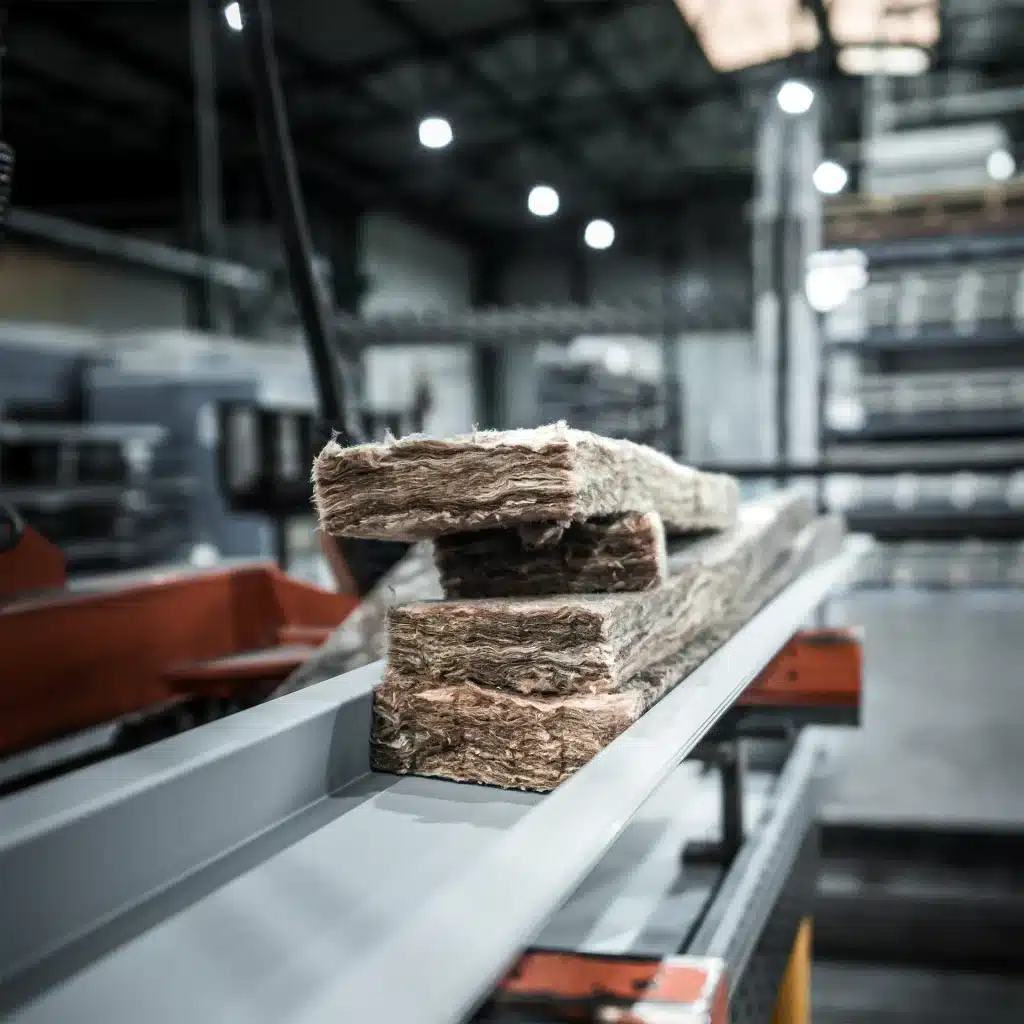
The performance of a thermally insulated entrance door depends above all on the quality of the materials used inside the structure and on how they are assembled.
In a modern armoured door, thermal insulation is the result of several elements working together to limit heat loss between inside and outside.
The structure is generally made up of a double steel sheet, inside which insulating materials are fitted to improve energy efficiency and living comfort.
This internal make-up is known as the stratigraphy of the door and directly affects the thermal performance of the door.
Among the most widely used materials is expanded polyurethane, valued for its high insulating ability and for its microcell structure that slows the transfer of heat.
Rock wool is also very common, a technical material that, as well as improving thermal insulation, contributes to sound reduction and fire resistance.
Thanks to its fibrous structure, rock wool helps reduce both energy loss and the passage of noise coming from outside.
Some models also use panels of expanded polystyrene (EPS) or other high-density materials designed to increase insulating performance without weighing down the structure too much.
Beyond the materials, the internal design of the door also plays a key role in limiting heat loss.
The most advanced solutions use multilayer structures and thermal break systems, designed to interrupt the continuity between the inner and outer metal surfaces.
This measure makes it possible to reduce the formation of thermal bridges, the areas where heat tends to escape more easily.
The frame, subframe and seals also have a significant effect on the overall performance of the entrance door.
Good design of these elements makes it possible to improve air tightness, reduce draughts and limit issues such as condensation and damp along the perimeter of the door.
For this reason, when choosing a high-performance solution, it is important to assess not only the declared transmittance value, but also build quality, insulating materials and attention to structural detail.
Frame, subframe and seals: where heat escapes

When assessing efficiency, it is important not to focus only on the leaf, but to consider other parts of the armoured door as well, such as the frame, subframe and seals.
It is precisely along the perimeter of the door that small heat losses can occur, capable of undermining indoor comfort over time.
The frame is one of the most delicate components because it is the connection point between the masonry structure and the door itself.
In less advanced models, the presence of continuous metal components can encourage the formation of thermal bridges.
A thermal bridge is an area of the structure where heat tends to transfer more easily towards the outside, creating energy loss and lowering the surface temperature of the door.
This can increase the feeling of cold near the entrance and, in the most obvious cases, also encourage the appearance of condensation.
To reduce this problem, the most modern solutions use thermal break systems, designed to interrupt the continuity of conductive materials and improve the overall insulation of the structure.
The subframe also affects the door’s performance, especially if the installation is not carried out correctly.
Proper fitting makes it possible to limit micro-cracks and invisible losses that, over time, can affect living comfort.
A key role is also played by the thermal seals, essential for improving the air tightness of the door.
The best-performing seals are made from technical materials such as EPDM, silicone or highly elastic rubber, able to keep their effectiveness even after years of use.
These components help limit the passage of cold air, damp and draughts, helping to make the indoor environment more stable and comfortable.
Careful design of the frame, subframe and locking systems therefore makes it possible to noticeably improve the overall performance of the door and the energy efficiency of the home.
Condensation, draughts and thermal bridges: causes and solutions
Condensation on the entrance door forms when some parts of the structure reach very low temperatures compared with the indoor environment.
In armoured doors, the most critical points are usually the frame, subframe and bottom threshold, especially where there are thermal bridges or metal components that are not properly insulated.
When the inner surface of the door cools down too much, the moisture in the air tends to turn into water, causing condensation along the frame or near the seals.
Over time, this can cause damp patches, mould or deterioration of the walls around the door.
Draughts too are often linked to poor sealing at the closing points or to installation that has not been carried out correctly.
Worn seals, micro-cracks between frame and masonry, or a poorly insulated subframe can all encourage the passage of cold air from outside.
To limit these problems it is important to choose a structure designed with a thermal break, high-performance seals and insulating materials able to reduce heat loss at the most sensitive points.
The most advanced solutions use frames designed to improve the continuity of insulation between door and masonry, reducing the formation of condensation and the cooling of inner surfaces.
The presence of multiple seals also helps improve air tightness and limit the passage of cold draughts coming from outside.
Another key aspect concerns the installation, which must be carried out carefully to avoid gaps or points of loss along the perimeter of the door.
Proper fitting makes it possible to preserve the insulating performance of the door over time and improve the living comfort of the whole entrance.
Thermally insulated armoured doors: benefits for comfort and energy saving
A thermally insulated armoured door helps keep the indoor temperature of the home more stable, improving living comfort all year round.
In homes that are more exposed to the cold, or where there are unheated stairwells, a well-insulated structure reduces the feeling of cold near the entrance and limits temperature swings between the various rooms of the home.
A better insulating ability also makes it possible to reduce heat loss and ease the workload of heating and cooling.
This translates into more efficient management of energy consumption and possible savings on bills over the long term.
Beyond thermal insulation, modern insulated solutions often also offer a good level of sound reduction, particularly useful in blocks of flats or homes in busy areas.
Insulating materials, high-performance seals and multilayer structures help reduce the passage of noise coming from outside, improving the indoor comfort of the home.
How to choose an armoured door with good thermal insulation
To choose an armoured door with good thermal performance it helps to start from a precise technical figure: thermal transmittance.
Transmittance indicates the amount of heat lost through the door when there is a temperature difference between inside and outside.
This parameter is expressed through the U-value or Ud, measured in W/m²K.
As a rule, a lower U-value corresponds to a better insulating ability of the door.
On the spec sheet of the armoured door, the transmittance is normally shown in the section dedicated to certified performance, together with figures such as air permeability, water tightness and acoustic insulation.
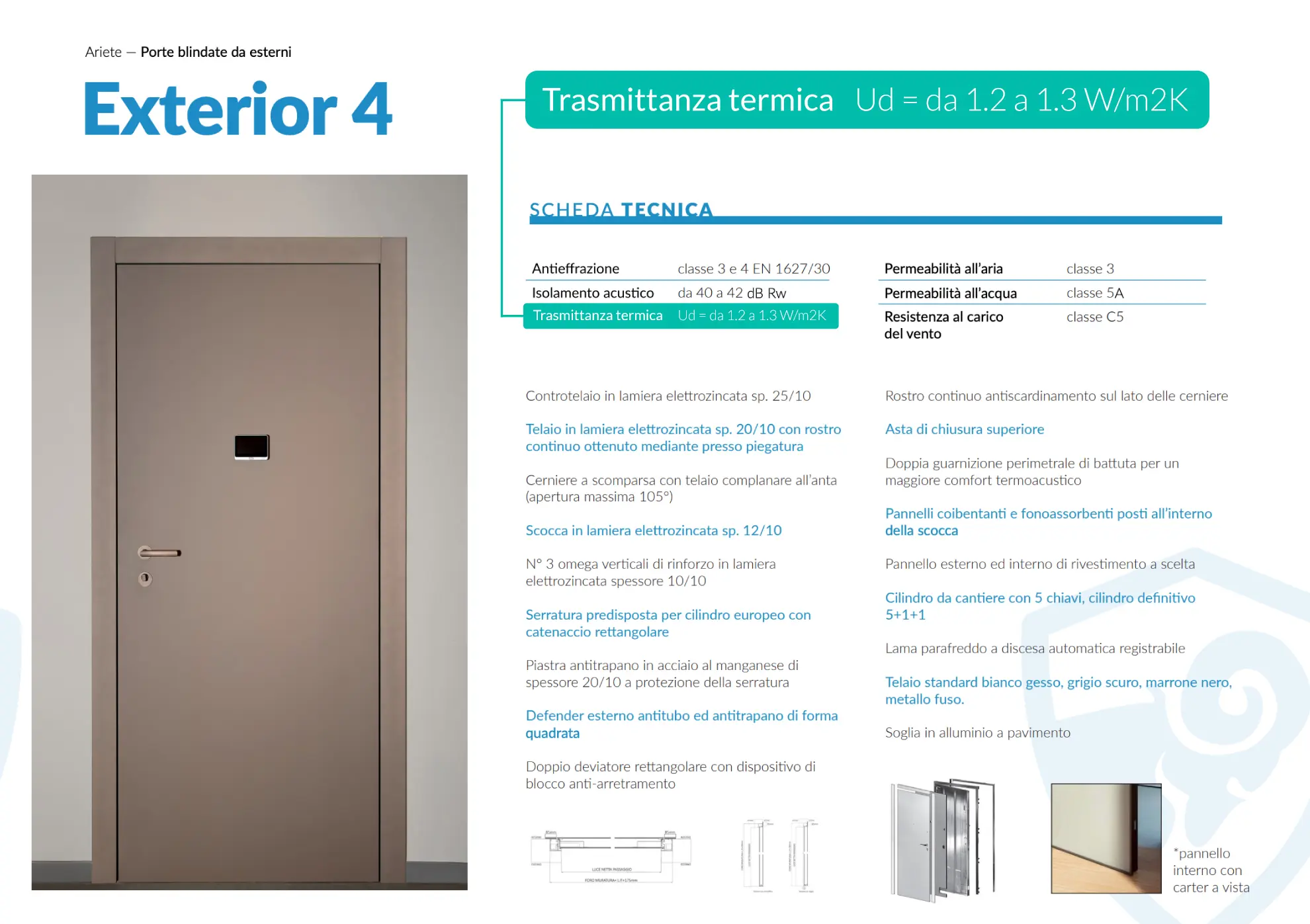
To give a practical reference, many standard doors show values between 2.0 and 2.5 W/m²K, while the most advanced solutions can reach values around 1.3 or 1.0 W/m²K.
In homes more exposed to the cold, a lower transmittance helps reduce heat loss and keep the temperature near the entrance more stable.
An armoured door with better insulating performance can also have a real effect on heating and cooling costs, especially for entrances facing directly outside or onto unheated stairwells.
Switching from a door with transmittance of 2.5 W/m²K to a more advanced solution with values around 1.2 or 1.0 W/m²K makes it possible to noticeably reduce the amount of heat lost through the entrance.
According to several studies on improving the building envelope, replacing old windows and the entrance door can help reduce heat loss (and save on bills) by as much as 25-35% in the most critical cases.
The saving naturally varies depending on climate zone, the home’s exposure and the system used, but a better-insulated structure makes it possible to improve both living comfort and the management of energy consumption over the long term.
Another important element concerns the design of the frame, bottom threshold and seals, the areas where losses and air infiltration most easily concentrate.
The most advanced structures use thermal break systems and multiple seals designed to improve air tightness and limit the risk of condensation.
Installation carried out correctly is also essential to avoid gaps or losses along the perimeter of the door.
If you are considering the installation of a new armoured door, having a clear idea of the costs is an essential first step. To help you get your bearings in a concrete way, use the form below to request a personalised quote based on your needs.
Conclusions
The thermal insulation of the entrance door has a direct effect on the comfort of the home and on the management of energy consumption, especially in spaces more exposed to the cold.
A well-designed structure helps reduce draughts, heat loss and the formation of condensation, improving living well-being all year round.
To obtain genuinely effective performance it is important to assess not only the leaf, but also elements such as the frame, subframe, seals and quality of the installation.
In the most advanced solutions, insulating materials and thermal break systems also make it possible to improve acoustic comfort and the stability of the indoor temperature.
Choosing a door designed with care in terms of insulation therefore means investing in a solution able to combine security, comfort and energy efficiency over the long term.
Frequently asked questions
The simplest way is to check the U-value shown on the door’s spec sheet. As a rule, a lower value indicates a better ability to limit heat loss between inside and outside. Elements such as the frame, seals and quality of the installation also affect the overall performance of the structure, however.
A well-insulated entrance door helps reduce heat loss and keep the indoor temperature of the home more stable. This makes it possible to ease the workload of heating and cooling, encouraging more efficient management of energy consumption.
Condensation appears when some parts of the door reach very low temperatures compared with the indoor environment. The problem is more frequent where there are thermal bridges, draughts or metal components that are not properly insulated. A structure designed with thermal break systems and high-performance seals helps reduce this problem.
Yes. Insulating materials, multilayer structures and high-performance seals also help reduce the passage of noise coming from outside. This makes modern insulated solutions particularly suitable for blocks of flats or homes located in busy areas.
The most delicate areas are usually the frame, subframe and bottom threshold, especially if they are not designed with adequate insulating systems. Installation that is not carried out correctly can also encourage draughts and invisible losses along the perimeter of the door.
An insulated armoured door generally offers superior performance in terms of thermal comfort and energy efficiency. Structures designed with insulating materials and thermal break systems help reduce losses, draughts and the formation of condensation over time.
