
How thick does an armoured door need to be to be genuinely secure?
It is one of the first questions you ask yourself when you look at a quote or compare two models.
A good-quality armoured door usually has a leaf around 70-90 mm thick, but that figure on its own does not tell you how secure the door is. What matters far more is how it is built inside and, above all, its burglar resistance class, which is measured with break-in tests rather than with a tape measure.
The trouble is that the word “thickness” gets used for different things. There is the thickness of the leaf, the thickness of the steel sheet inside it, the overall depth with the panels fitted, and the thickness of the frame. These are figures that tell very different stories, and confusing them leads to the wrong choices.
In this guide I explain:
- what the various thicknesses of an armoured door are and what they mean
- which one really matters for strength
- why the millimetres are not enough to tell you how secure it is
- how thickness also affects noise and draughts
Let us go through it point by point, starting with the answer you are looking for.
How thick an armoured door should be
Let us start with the substance. A good-quality armoured entrance door generally has a leaf between 70 and 90 mm thick, but this figure is only the starting point.
When we talk about thickness, we are really talking about four different measurements, which should never be confused.
The leaf thickness is that of the leaf itself, in other words the body of the door that opens and closes. It is the figure you are usually given first.
The thickness of the internal steel sheet is the figure that genuinely affects strength, and it is measured in millimetres or in tenths of a millimetre.
The overall depth with the panels is the total thickness once the decorative finishes have been added to both faces, and it is what you see once the door is fitted.
The thickness of the frame and subframe, on the other hand, concerns the structure that anchors the door to the wall. Let us look at them one by one, because each one carries its own weight.
| Measurement | What it indicates | Reference value |
|---|---|---|
| Leaf thickness | The body of the leaf that opens and closes | 70-90 mm (rarely below 70) |
| Internal steel sheet | The hidden steel wall: the figure that measures real strength | from 20/10 (2 mm), with extra sheets at critical points |
| Depth with the panels | The total thickness you see once the door is fitted, finishes included | panels from 6 to 30 mm per side (does not indicate security) |
| Frame and subframe | The steel structure that anchors the door to the wall | good-thickness steel, assessed together with the leaf |
The leaf thickness and what is inside it
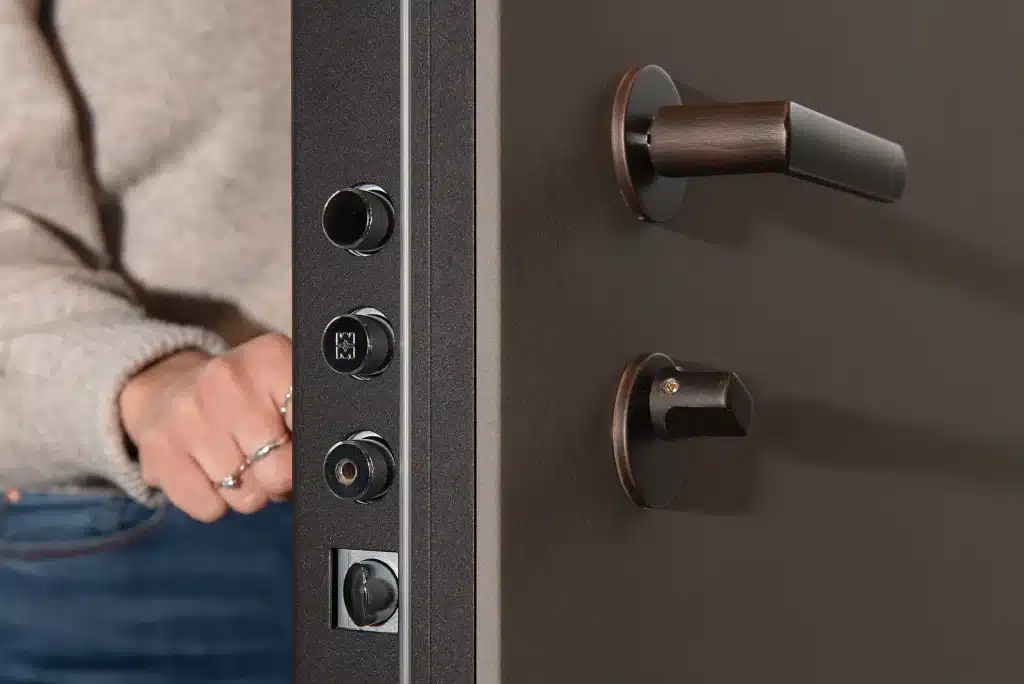
The leaf is the heart of the door, and its thickness tells you what has been put inside it. A thicker leaf can house more layers and therefore more protection and more insulation.
Inside an armoured leaf there is no solid steel. There are one or more steel sheets that provide the resistance, a structure of reinforcements that stiffens the whole thing, and an insulating material that works on noise and temperature.
The thicker the leaf, the more room there is for these layers. That is why a serious armoured door rarely goes below a 70 mm leaf: below that threshold it becomes difficult to combine strength and insulation.
Be careful, though, not to read the leaf thickness as a security score. A thick but poorly built leaf is worth less than a well-designed one, because what counts is how the layers work together, not just how many millimetres they take up.
The thickness of the steel sheet
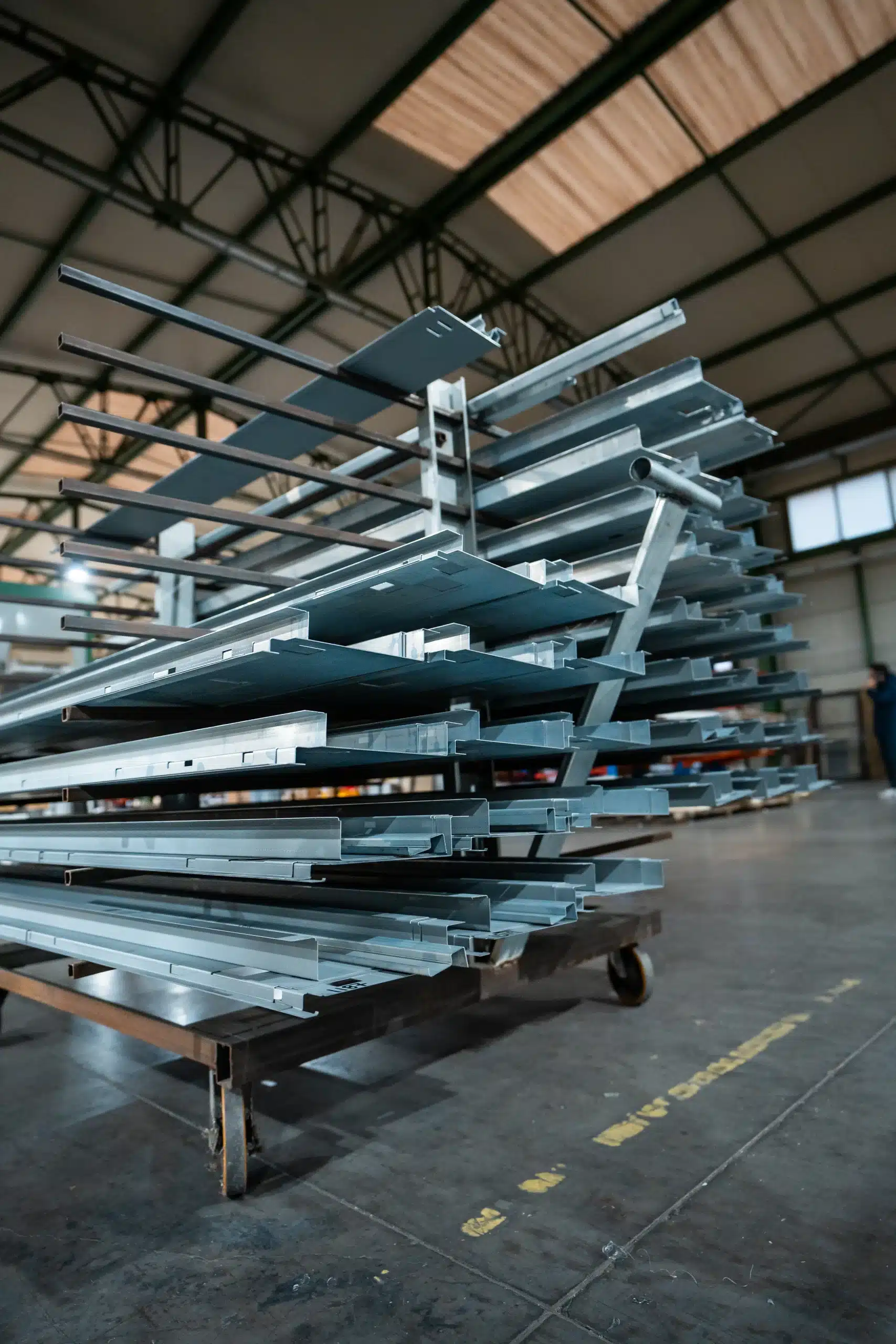
If there is one figure that measures real strength, this is it. The thickness of the internal steel sheet is what physically resists the break-in attempt, far more than the total centimetres of the leaf.
The sheet is the hidden steel wall inside the door. It is measured in millimetres or in tenths: a 20/10 sheet, for example, is 2 mm thick. It may sound like very little, but it is steel, and it is what a break-in tool has to manage to bend or drill through.
The strongest doors use several layered sheets or thicker sheets at the most attacked points, such as the area around the lock. This is where the difference is decided between a door that holds out for minutes and one that gives way quickly.
This is also why two doors with the same leaf thickness can be worlds apart in terms of security: it depends on how much steel sheet there is inside and what kind, not on how bulky the door is.
How thick an armoured door is with the panels
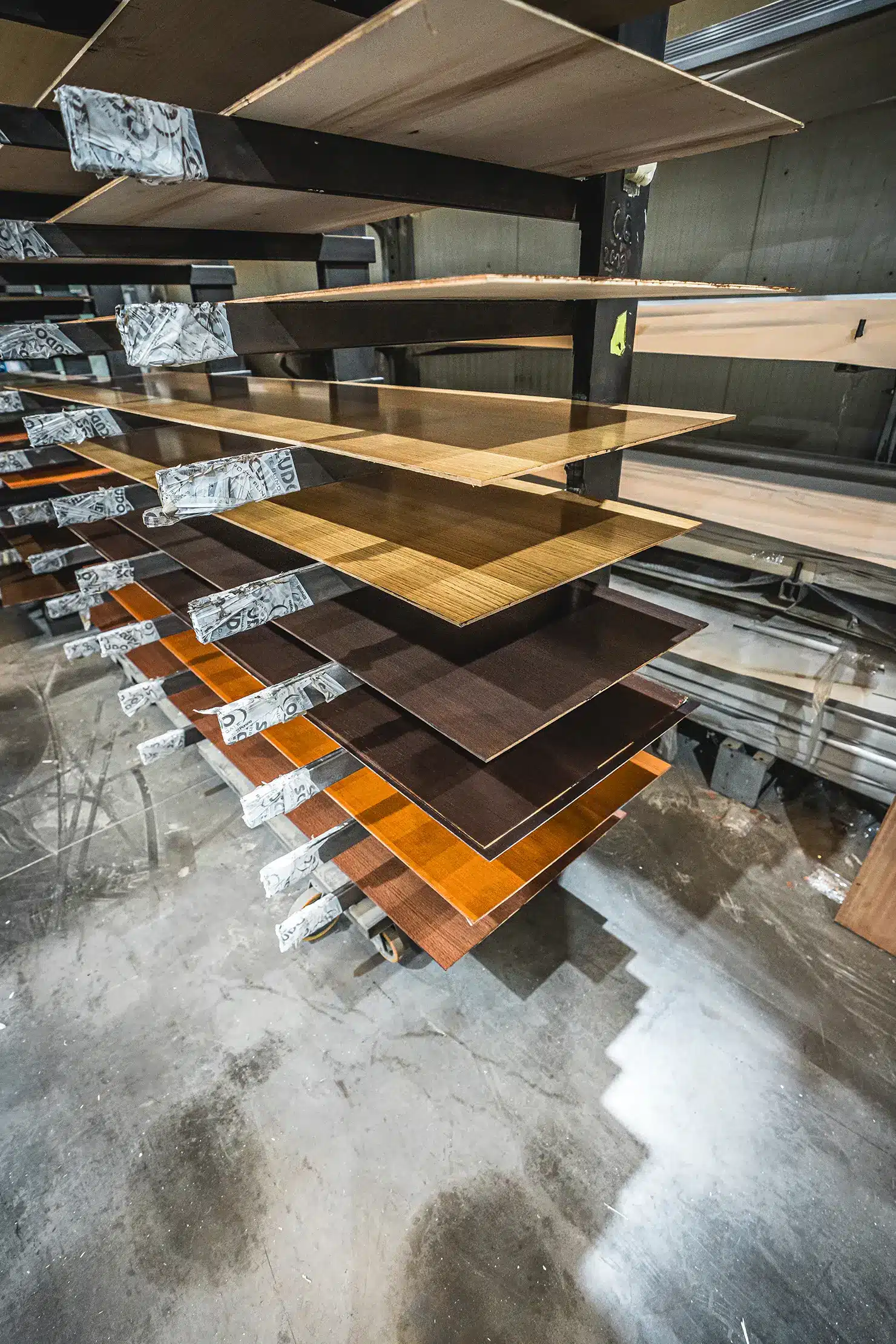
This is where much of the confusion comes from. The thickness you see once the door is fitted also includes the decorative panels, the ones that clad the leaf on the inside and the outside.
The thickness of a panel depends on how it is worked. A smooth panel is generally between 6 and 9 mm, a routed one between 9 and 15 mm, while a panel crafted in the joinery, with raised bosses or mouldings, reaches between 21 and 30 mm.
It is these millimetres, added up on both faces, that change the overall depth of the door. The same leaf can therefore look more or less thick depending on the finishes chosen, without the security changing one bit.
Bear this in mind when you compare two quotes: a higher figure may come purely from thicker panels, not from more steel. To understand the strength you have to look at the leaf and the steel sheet, not the final depth with the finishes.
The panels do play a part, though, because they contribute to the look and partly to insulation. If you want to understand how a door is put together as a whole, I explain it in detail in how an armoured door is made.
The thickness of the frame and subframe
A door is only as secure as its anchoring to the wall. The frame and the subframe are the steel structure that holds the entrance door firmly in the wall, and their thickness matters too.
The subframe is the surround that is built or fixed into the opening. The frame is the part the leaf hooks onto. If they are made of good-thickness steel, the door cannot be levered off by working on the perimeter.
An excellent armoured door with a weak frame is a contradiction: the thinnest point decides how well the whole thing holds up. That is why the thickness of the frame should be assessed together with that of the leaf, never on its own.
Then there is a factor that ties everything together: whoever fits the door. A sturdy frame fitted out of square or poorly anchored loses much of its function, and here the quality of the installation becomes central again.
Does thickness determine the burglar resistance class?
We come to the point that almost no one explains well. Thickness does not determine the burglar resistance class of an armoured door. You may find it written that “70 mm equals class 3”, but that is inaccurate information.
The burglar resistance class is established with standardised break-in tests, described by the EN 1627 standard. A technician tries to open the door with increasingly aggressive tools and, based on how long it holds out and which tools are needed, it is assigned a class from 1 to 6.
This means that a door is in class RC3 or class RC4 because it has passed a real test, not because it has a certain number of millimetres.
Thickness is one of the ingredients that help it pass the test, but the result depends on the whole: steel sheets, lock, cylinder, defender, frame and anchoring.
I have described them all in the article on the burglar resistance classes of armoured doors.
Are you weighing up an armoured door and unsure whether the thicknesses you are being offered are right?
Tell us what your home is like and what kind of door you are looking for: we will help you work out which level of security makes sense, without making you chase a number.
Fill in the form with a few details about your situation: we need it to prepare you a proper quote tailored to your home.
Thickness and thermal and acoustic insulation
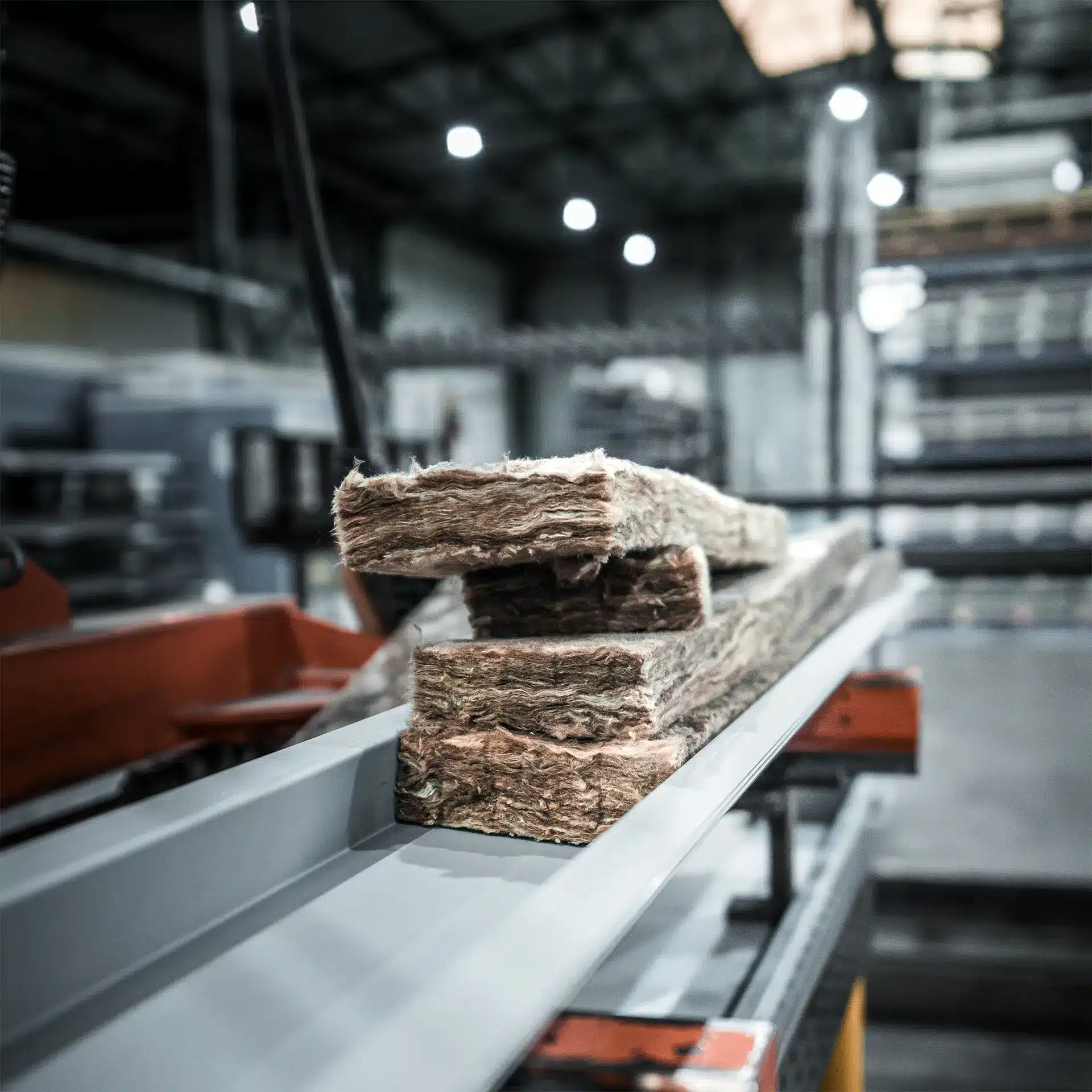
Thickness does not only work for security. A thicker, well-structured leaf insulates better against noise and temperature, because it has more mass and more insulating material inside it.
A thin entrance door lets in the noise of the stairwell, draughts and the cold more easily. An armoured door with a sturdy leaf and effective seals reduces all of this noticeably.
Here too, though, thickness alone is not enough: the seals, the threshold and the quality of the installation count, as they close off the points where air and sound get through. If insulation is what interests you, you will find everything in the article dedicated to the thermal insulation of the armoured door.
Ariete armoured doors
Our approach starts from a simple principle. A door is not secure because it is thick, but because every one of its elements works together with the others. Thickness is one part of a system, not the final score.
Ariete doors bring together a sturdy leaf, a square defender with chamfered corners that defeats the scaffolding pipe technique, a patented cylinder with a key that cannot be copied at an ironmonger’s, and a frame anchored to the highest standard. No break-in attempt has ever succeeded on an Ariete door, and that result comes from the whole, not from a single millimetre.
Then there is the installation, which often decides everything. Our technicians are trained at the Accademia della Posa in Opera, because even the thickest armoured door, if poorly fitted, becomes a false sense of security.
Finally, it is worth remembering that the structural thickness is a different thing from the door’s passage measurements. If you need to work out the width and height of the opening, read the guide on how to measure an armoured door.
Conclusions
The thickness of an armoured door is a useful figure, but it has to be read with judgement. A leaf between 70 and 90 mm is the norm for a quality door, yet the number on its own does not tell you how well that door truly resists a break-in attempt.
What counts is the whole: the internal steel sheet, the frame, the lock, the cylinder, the defender and a properly done installation. The burglar resistance class, established with real tests, sums all of this up far better than any measurement in millimetres.
If you are choosing a new entrance door and want to understand which thicknesses and which class your home really needs, request a quote for your armoured door: we will help you read the right numbers and choose with no surprises.
Frequently asked questions
The leaf of a good armoured door is generally between 70 and 90 mm thick. That is a reasonable starting point, but real security depends on how it is built inside and on its burglar resistance class, not just on the millimetres.
There is no fixed thickness that “makes” class RC3. The class is assigned with standardised break-in tests, not on the basis of the millimetres. A class RC3 door generally has a sturdy leaf and adequate steel sheets, but it is the resistance test that determines its class, not the other way round.
Not necessarily. What counts is how much steel sheet there is inside and what kind, along with the lock, the frame and the installation. Two doors with the same leaf thickness can have very different levels of security.
The total thickness once the door is fitted also includes the decorative panels, which add a few centimetres per side. A higher figure may come purely from thicker panels, not from more steel: for strength, look at the leaf and the steel sheet.
Yes. A thicker, well-insulated leaf insulates better against noise and cold, because it has more mass and more insulating material. The final result, however, also depends on the seals, the threshold and the quality of the installation.
