
Ariete Security Doors
Two-tone armoured door
The colour of your building outside, the colour of your home inside.
The colour of your building outside, the colour of your home inside.
A two-tone armoured door has two faces and two colours: one on the side that looks outward, one on the side you see from inside the home. It is the same armoured entrance door, dressed in two ways. People looking for it also call it a 2-colour armoured door, and two-tone doors work both in a block of flats and on a detached house: outside you tune it to the building or the facade, inside you choose with an interior designer’s eye.
The two faces of a two-tone door
The same leaf changes completely depending on the side you look at it from. The most requested combination is the white and brown armoured door: brown on the landing, where it echoes the look of the other doors in the block, and white inside the home, where it opens up the entrance and reflects the light. Before choosing the two shades it helps to see them side by side: the one others see and the one you see every day.
Why two faces work better than one
We asked colour designer Chiara Bevegni why a door that speaks two languages keeps everyone happy. The answer comes down to something simple: your front door lives in two worlds. Outside it belongs to a shared space, where harmony with the others matters and sometimes a building rule as well. Inside it belongs to you alone, to the light and the colours of your home. Asking a single colour to work in both worlds is a compromise. Two-tone does away with it: each side answers to whoever is looking at it.
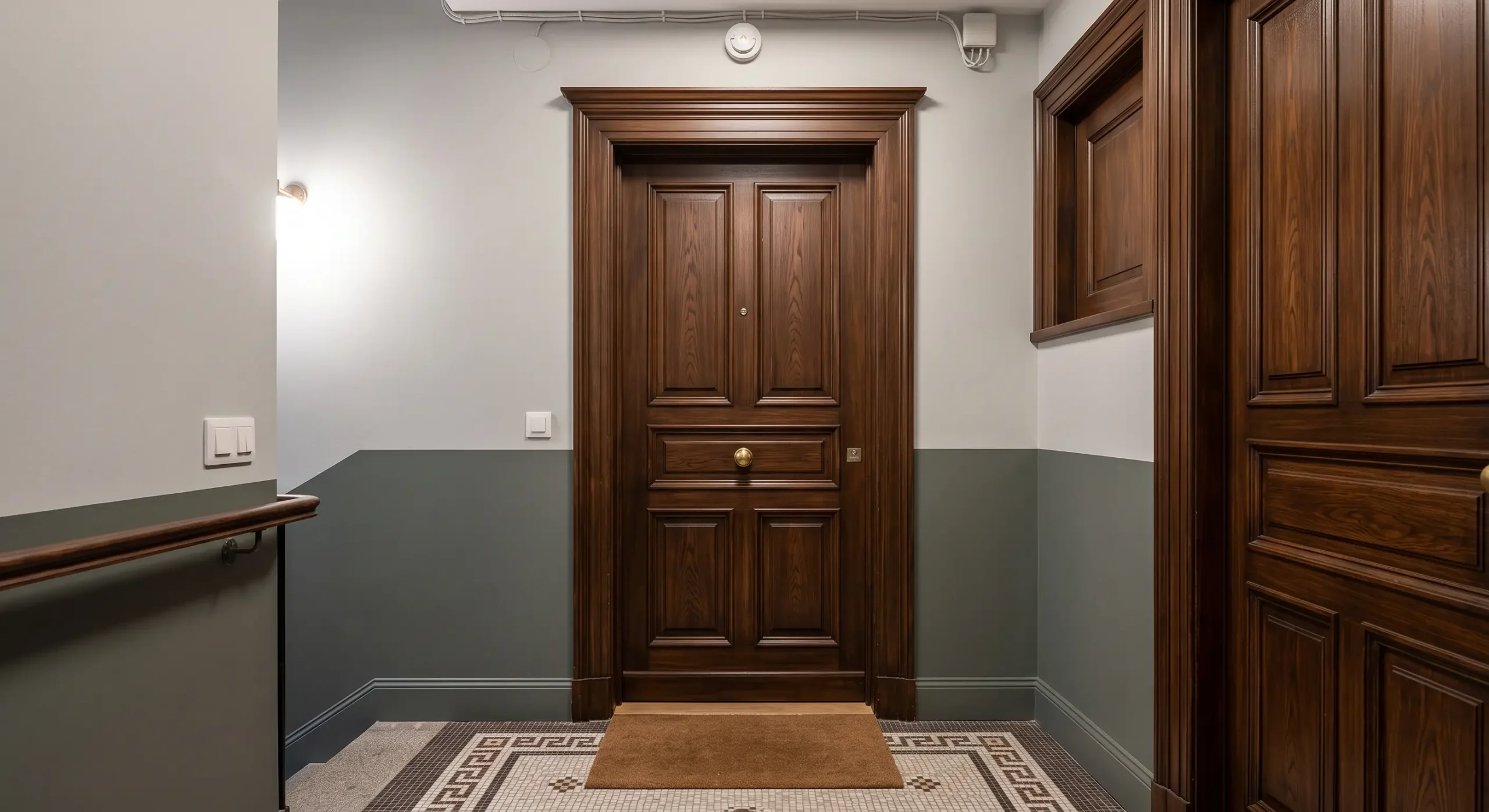
The outer side speaks with the building
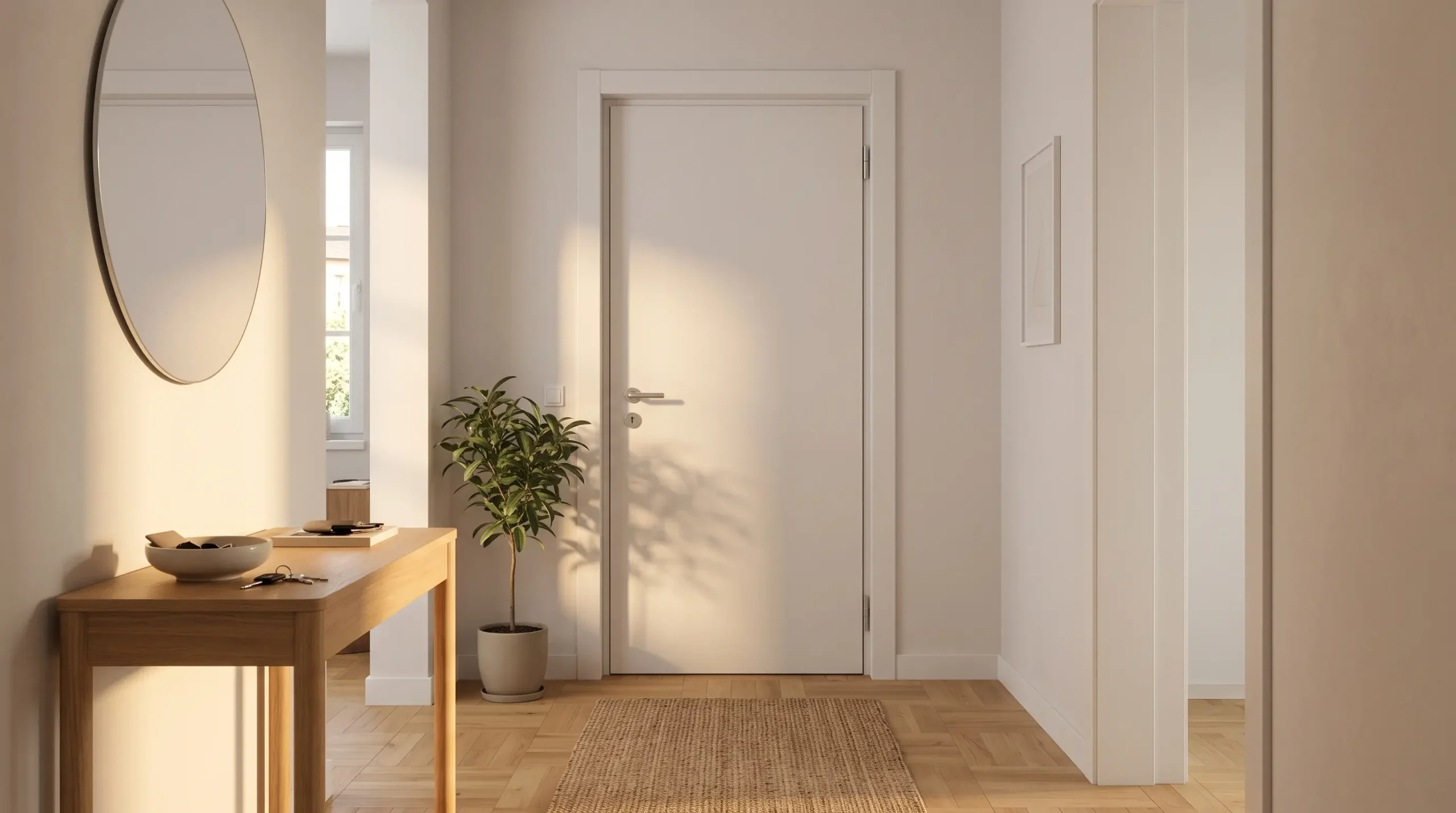
The inner side speaks with your home
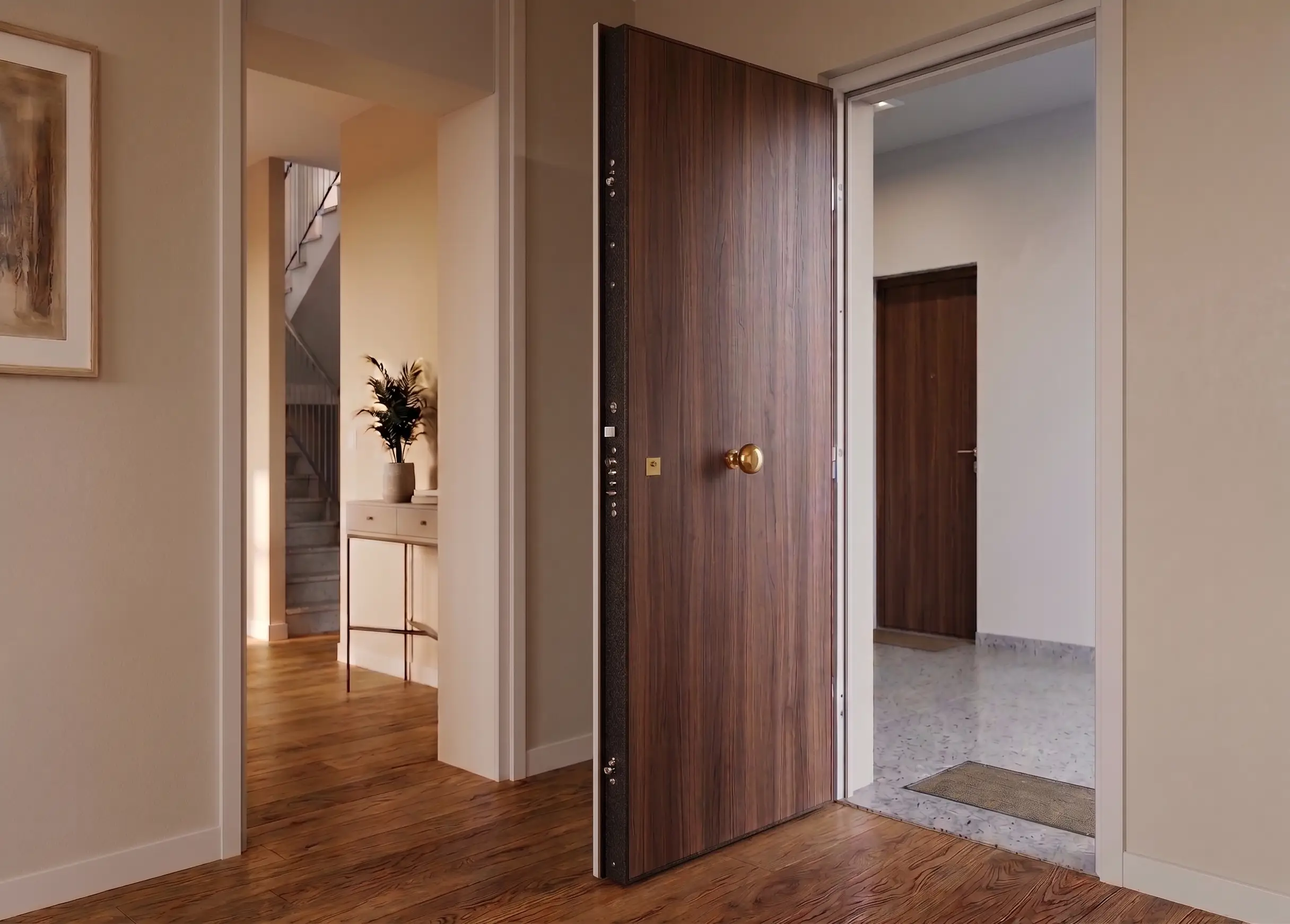
White inside, brown outside
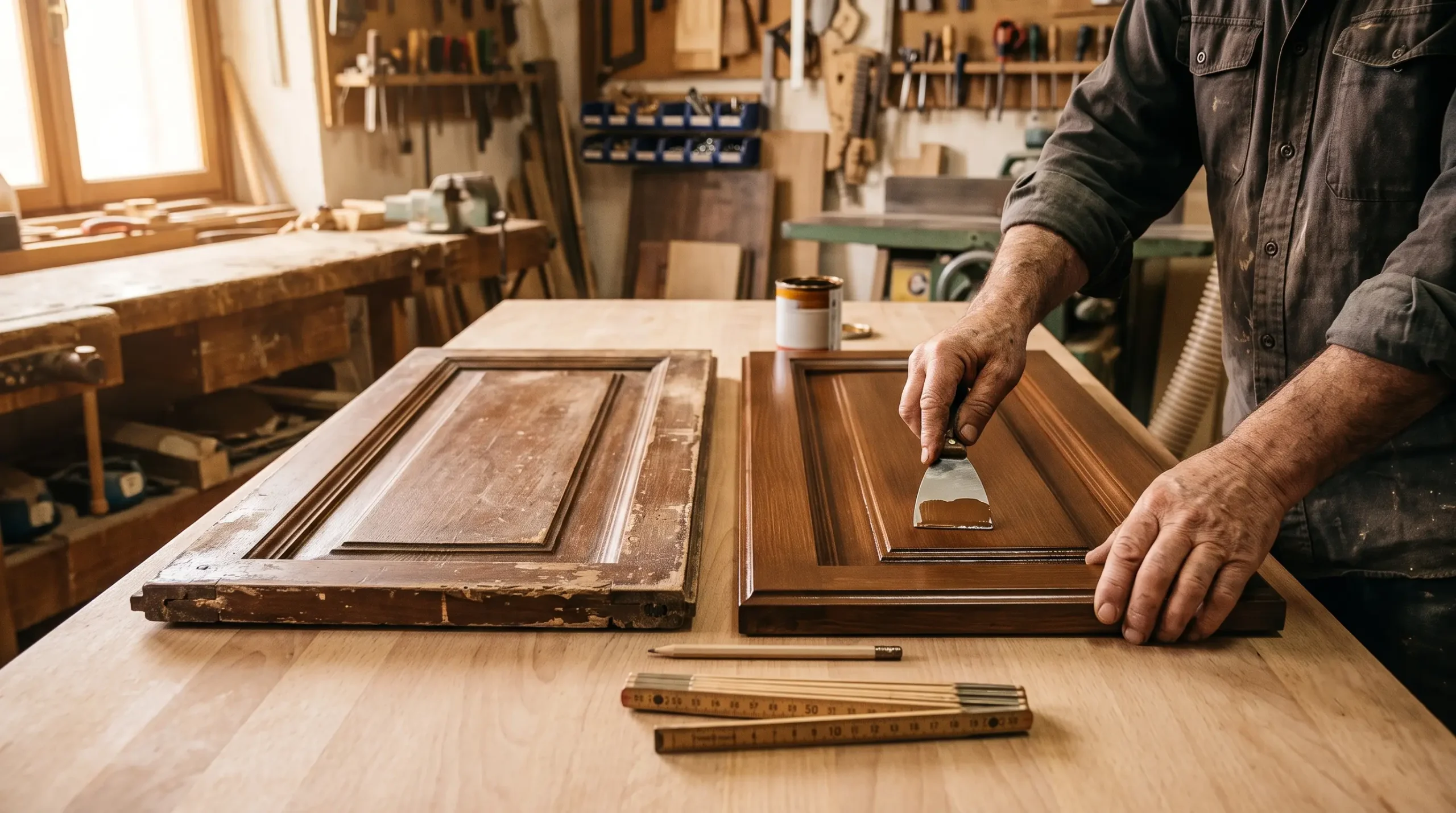
The building's panel, reproduced
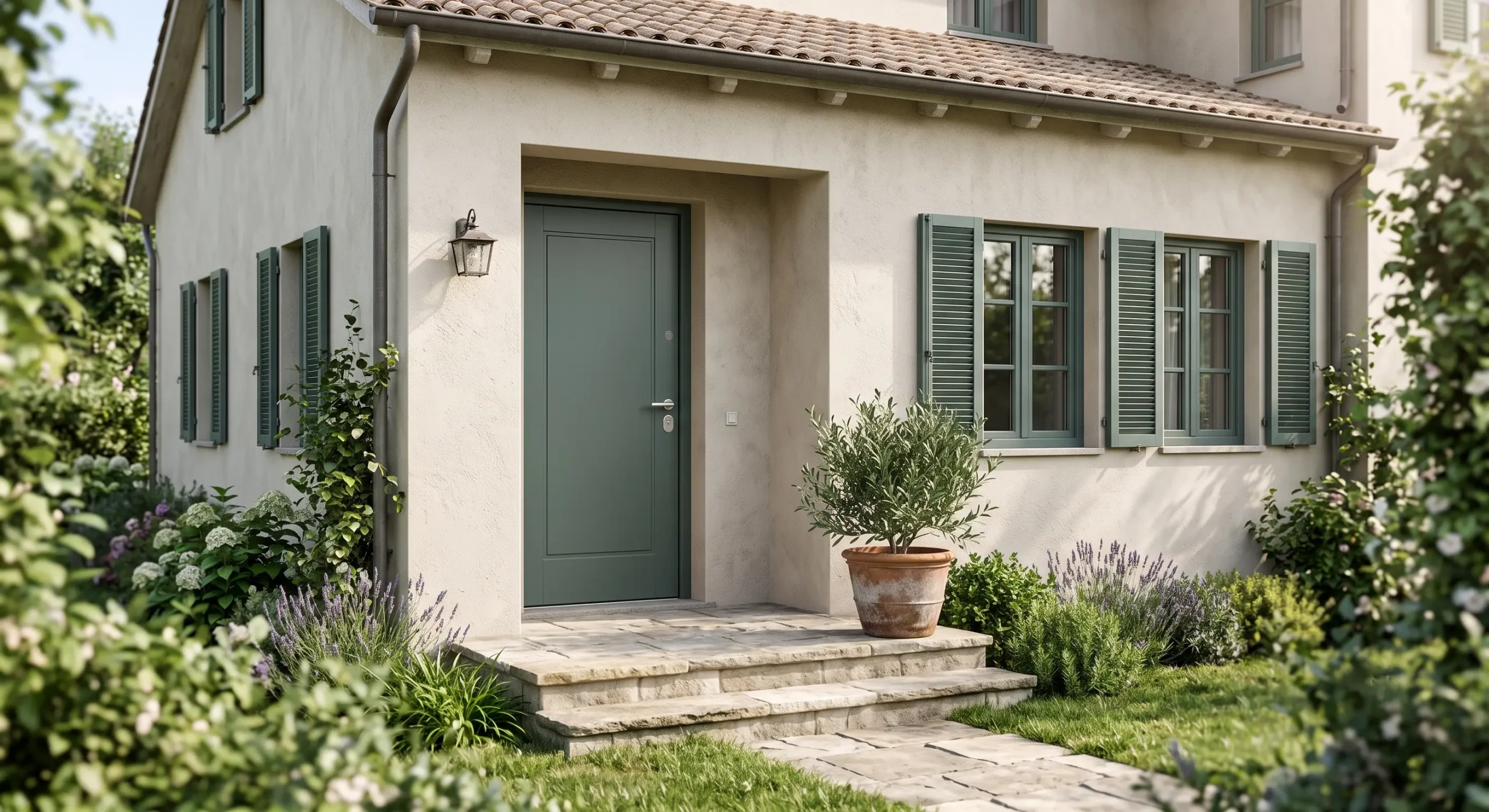
On a detached house too
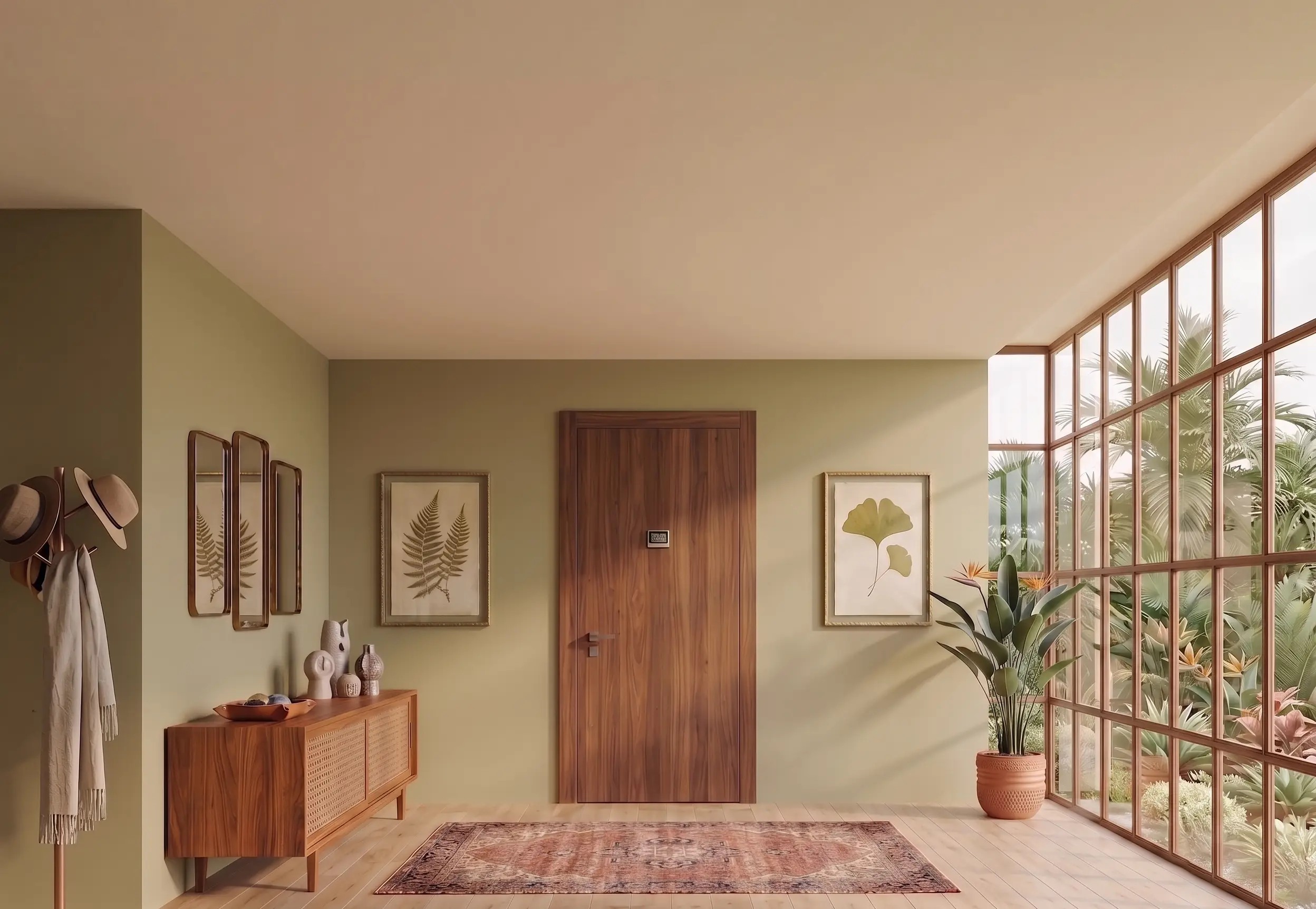
The security stays the same one

The colour designer
Chiara Bevegni
Interior and colour designer, Genoa
She designs the colour of spaces by listening first to the people who live in them, working across colour consultancy, interior design and home staging. She is the voice behind the colour section of this page.
You can have two-tone across the whole Ariete range
The double face works on any Ariete armoured door, because the colour lives in the panel and there are two panels, one per side. It works for the internal two-tone armoured door, the flat door that faces the stairwell, and it works just the same for the external doors of detached houses and independent entrances, where the outer face tunes in with the facade and stands up to the weather. Right through to the glazed and electronic ranges: the outfit changes, the security stays the same.
Every home has its own combination
You build the combination yourself, and every pairing tells a different story. Some keep a restrained colour outside to fall in line with the landing and allow themselves a bold shade inside, others echo the building’s wood outside and go light inside to let the entrance breathe. These are the pairings we start from most often.
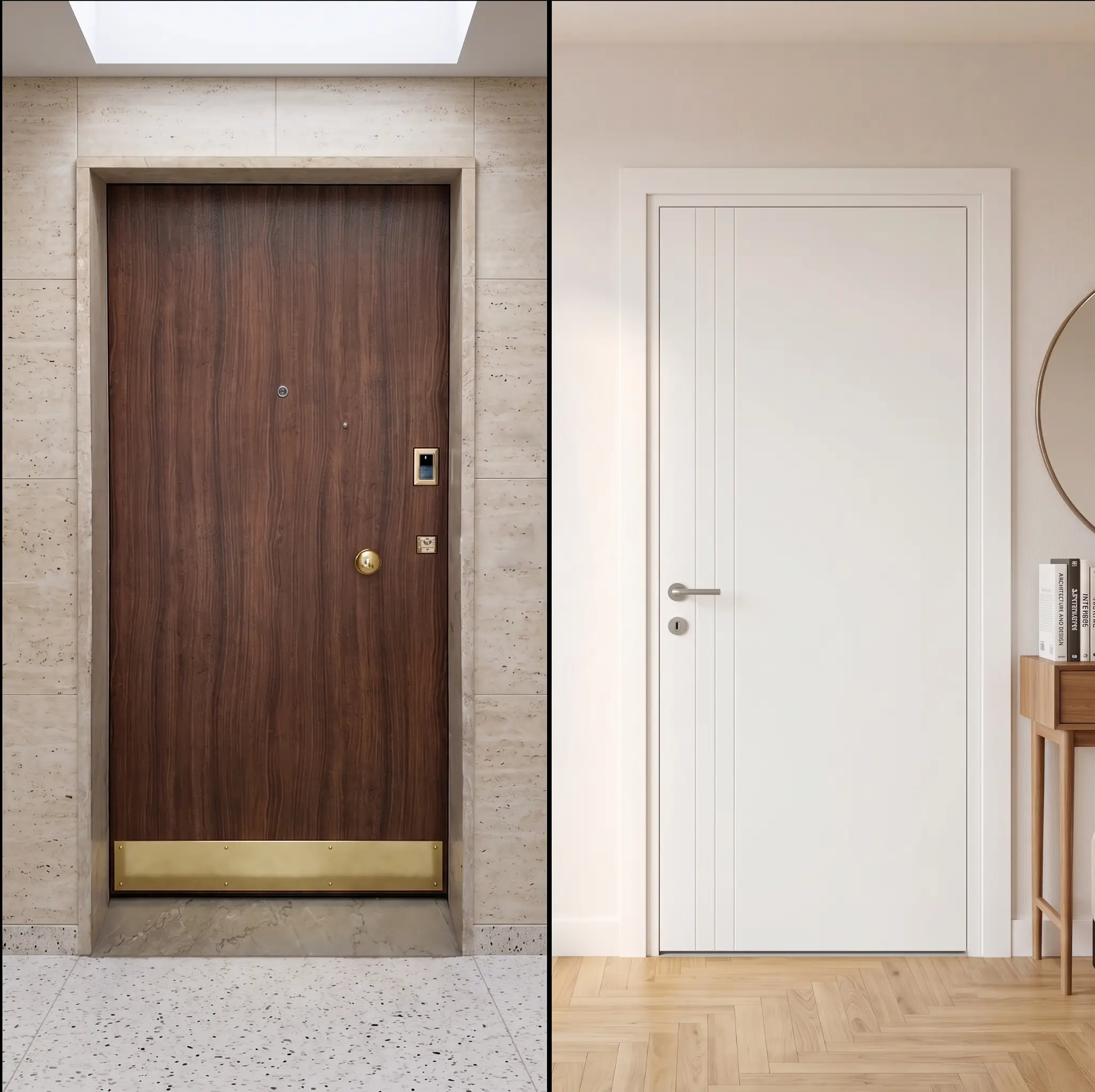
Brown outside, white inside
- Outside: brown like the other doors. Inside: white.
The most chosen combination of all. Outside, the brown falls in line with the landing and respects the rules; inside, the white reflects the light and lets the entrance breathe, even when it is narrow.
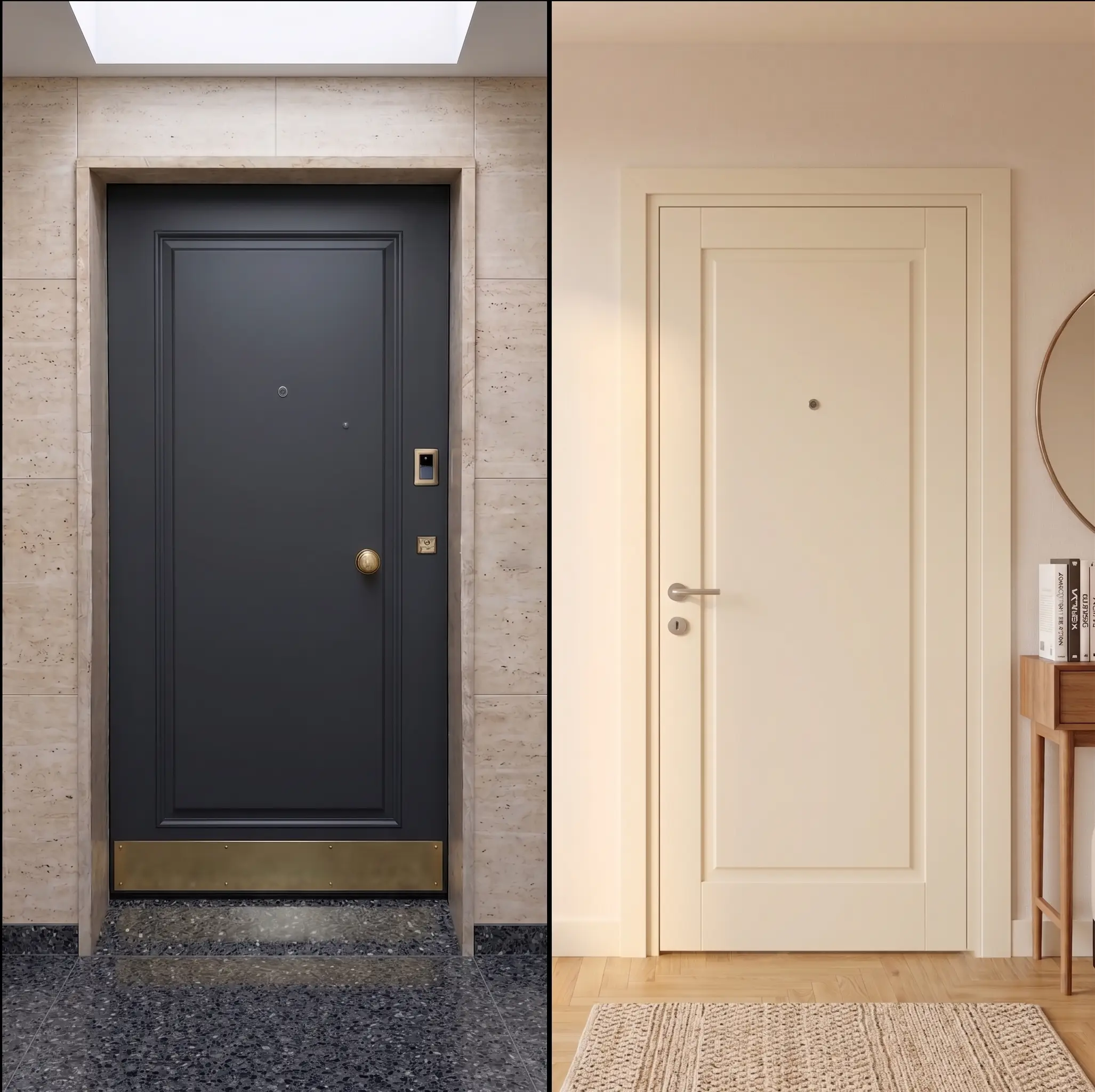
Dark outside, light and warm inside
- Outside: dark and discreet. Inside: light and warm.
Outside a deep colour that sits well on almost any landing; inside a bright shade that softens the room and tunes in with your furniture.
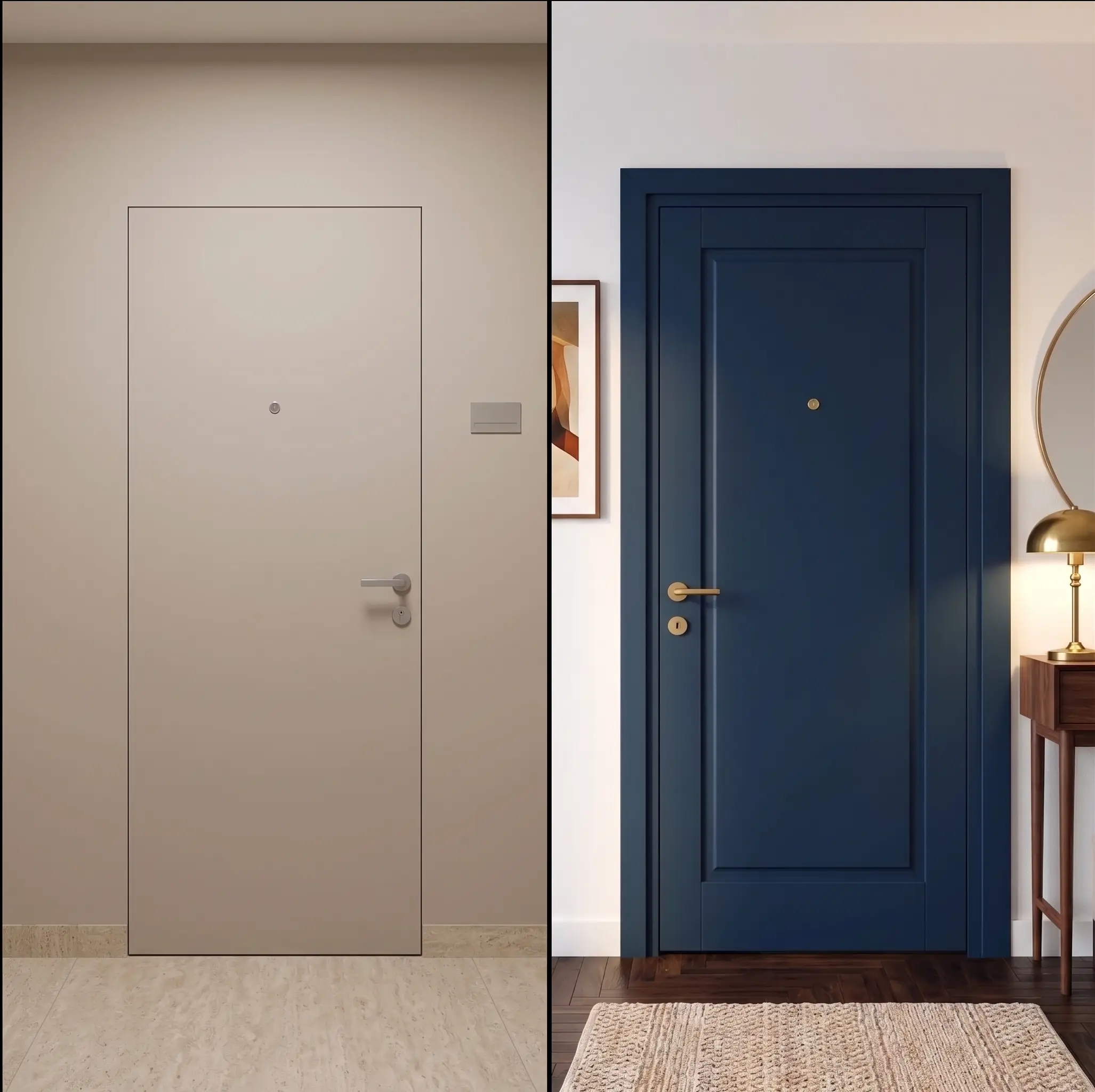
Neutral outside, bold inside
- Outside: neutral. Inside: a colour that gets noticed.
For anyone who prefers to go unnoticed outside and wants a splash of colour inside. The door becomes a decorative detail only on the side you see.
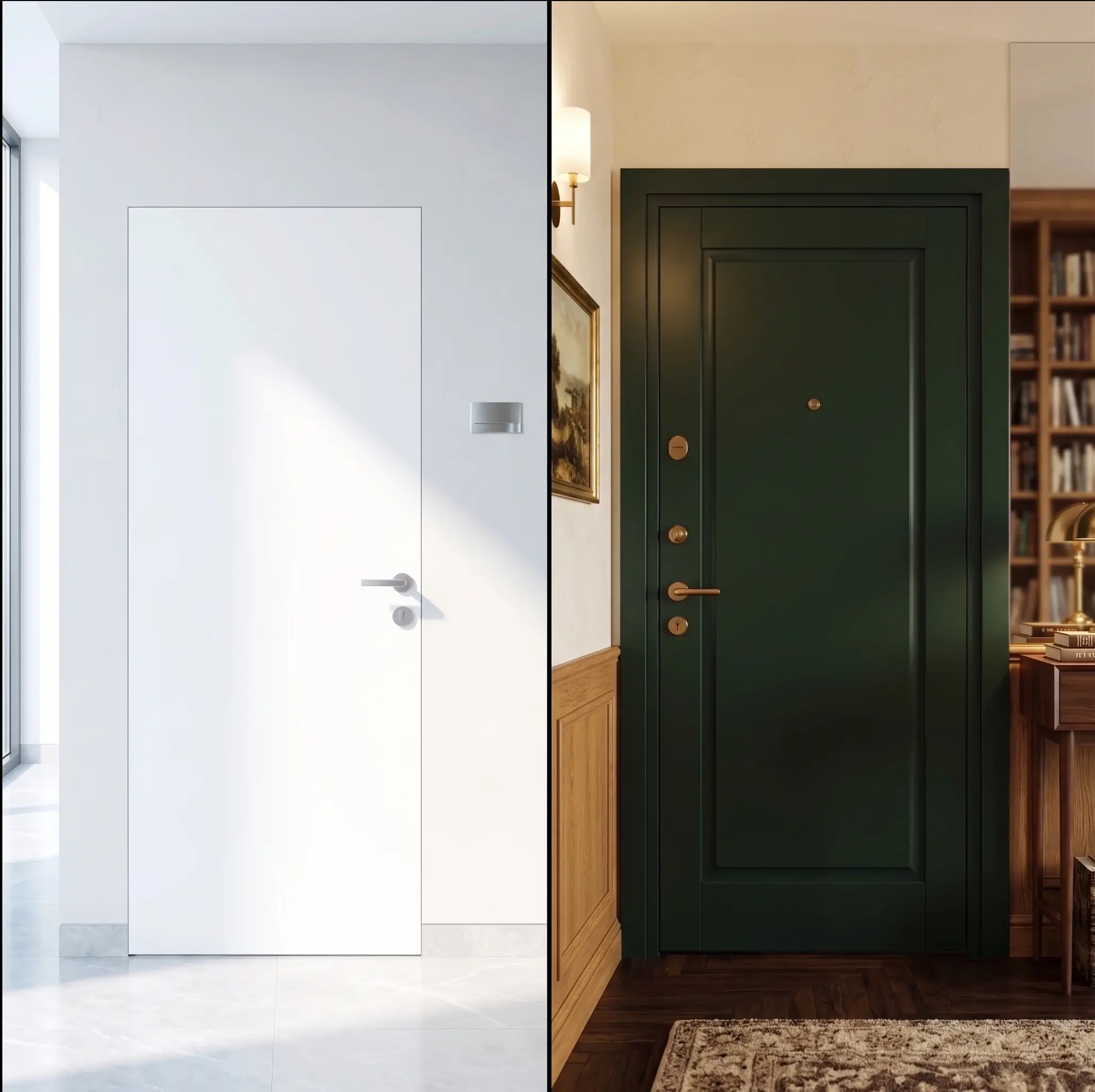
Light outside, enveloping inside
- Outside: light. Inside: a deep shade.
Outside a light colour that widens the landing and catches the light; inside a deep tone that draws the entrance in and frames the home.
How to choose the right combination
You build the combination in four steps: you start from outside and finish inside the home.
| Step | What to look at |
|---|---|
| 1. Start from outside | Look at the context: the landing if you are in a block of flats, the facade and window frames if you have a detached house. And check whether the block requires a specific panel. |
| 2. Then think about inside | Which shade goes with the floor, the walls and the furniture in your entrance. |
| 3. Give the inside a role | Should it blend into the wall or stand out? That decides how far to push the colour. |
| 4. Compare in person | Put the two shades side by side in your home's light, with the samples in your hands. |
Outside and inside, the combinations you can make
Outside, the door follows the context: in a block of flats often the building itself, and if it requires a specific panel we remake it in our joinery workshop even when it has been out of production for years; on a detached house the facade, the window frames and the shutters. Inside, you decide. Combinations are born from this double freedom.
These are just eight examples. The faces are chosen one by one, so the possible combinations are practically endless: the one your landing needs, the one you want at home.
Three things that matter more than the colour
Beautiful to look at on both sides, impossible to force.
Behind the two faces there is first of all a real armoured entrance door, in burglar resistance class RC3 or RC4. The colours are the outfit; underneath is the most secure armoured door in Italy.
Italy's most secure armoured door
The quiet you take back
Goodbye draughts, inside and out
What Ariete puts behind every door

Italy's best armoured door
Voted the country's most secure by the industry's leading trade websites: Edilportale, Porte-blindate.info, Ediltecnico and Infobuild.

Pay in instalments, interest-free
From 12 to 84 months interest-free: take the security you want and spread it over time, without a euro in interest.
2-year warranty
Two years of official warranty on materials and operation, on every model in the range.

100% Made in Italy
Designed and built in Italy, with an in-house joinery workshop that makes the panels to measure.
How it is made, beneath the two colours
Two-tone is possible because of the way the door is built: an armoured structure, and over it two decorative panels, one per face. The colours sit in the panels, the security in the structure. That is why fitting two different ones is a standard job.
The same as a single-colour door. The number of colours leaves the protection exactly where it is.
Insulating, sound-absorbing panels on both faces, to keep the voices of the stairwell outside.
On the external ranges, down to 1.2 W/m²K on the internal ones. A double perimeter seal at the rebate and the Ariete draught-excluder blade against draughts and smells from the landing.
As standard the frame stays a single colour. The two-tone frame of the armoured door is a dedicated option, carrying the matching colour on each side and taking the coherence of the two faces right up to the wall: it is a job in its own right and is added to the quote, while the two panels stay standard.
Weather-resistant external panels when the outer face gives onto the street or garden. Visible or concealed hinges with a frame flush to the leaf and opening up to 105°, the square Ariete defender beneath both panels.
Frequently asked questions about two-tone armoured doors
It means a door with one colour on the outer side and another on the inner side: two faces, two shades. Outside it usually tunes in with the building, inside with your own taste. The most requested version is the white and brown armoured door.
Yes, and it is done often. On a detached house or an independent entrance the outer face tunes in with the facade, the window frames and the shutters, with panels that stand up to rain and sun; the inner one follows the decor of your home. Two-tone works just as well in a block of flats as outside one.
The cost of a two-tone armoured door depends on the model, the size and the work you choose. Fitting two different panels, one per side, is a standard thing on an Ariete made-to-measure door. Our consultant gives you the exact figure after an appointment in the showroom.
Yes. We have an in-house joinery workshop that reproduces the panels of a block of flats, even out-of-production ones, so your door stays identical to the others on the landing. Inside you can choose the colour and the design you want.
If the regulations say so, the outer side of the armoured door has to respect them. The inner side is always your own free choice, and the building regulations stop there.
Practically any, and you choose the combination face by face, in complete freedom: what you picture outside and what you want inside. You can see the combinations in the showroom, in the right light.
As standard the frame stays a single colour. If you want it to follow the two faces there is the two-tone frame option, carrying the matching colour on each side: it is a dedicated job and is added to the quote.
It stays identical. The colour lives in the decorative panel, the security in the armoured structure: burglar resistance class RC3 or RC4, just as on a single-colour door.
Come and see the two faces of your door in person
A two-tone door is chosen with your eyes, comparing the two shades in your home’s light and with your block’s panel in front of you. In the showroom we place the samples side by side, show you the colours on both sides and help you decide what to keep outside and what to keep inside.
Other ways to dress your Ariete door
Two-tone is one of many ways to personalise an Ariete door. Under the panel the armour is identical: the colour changes, the security stays.